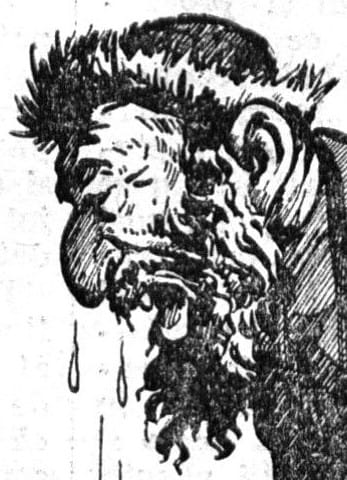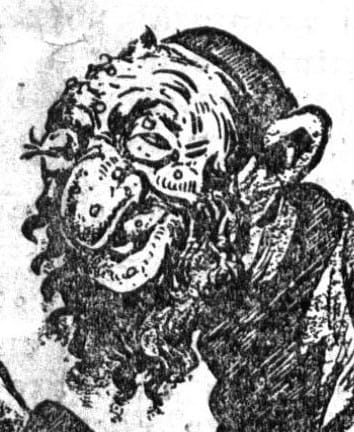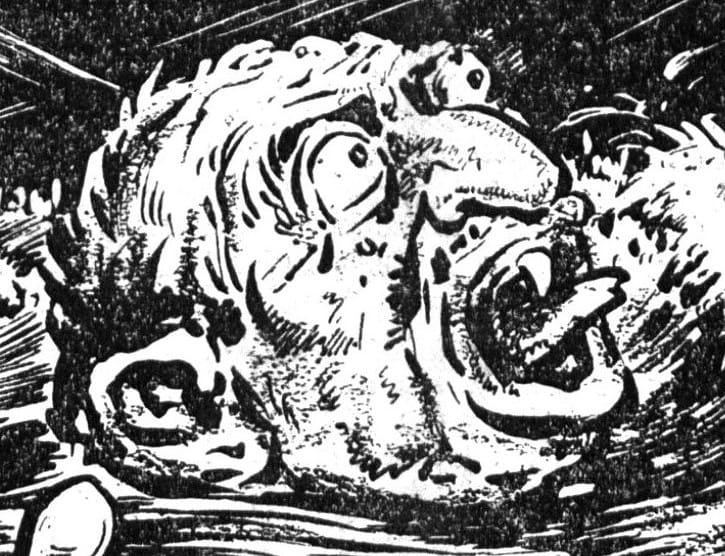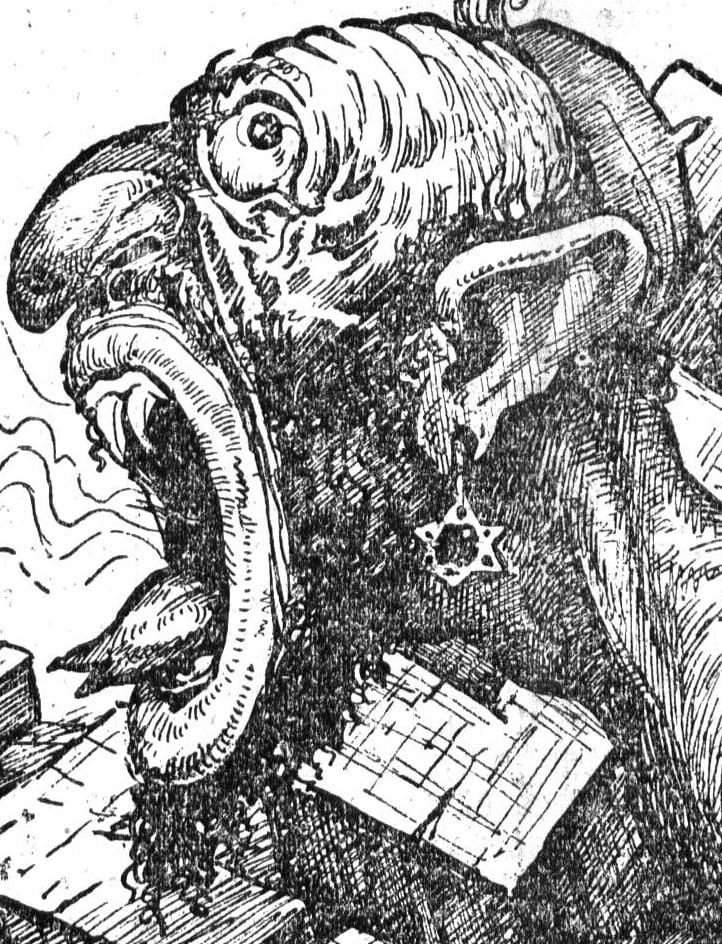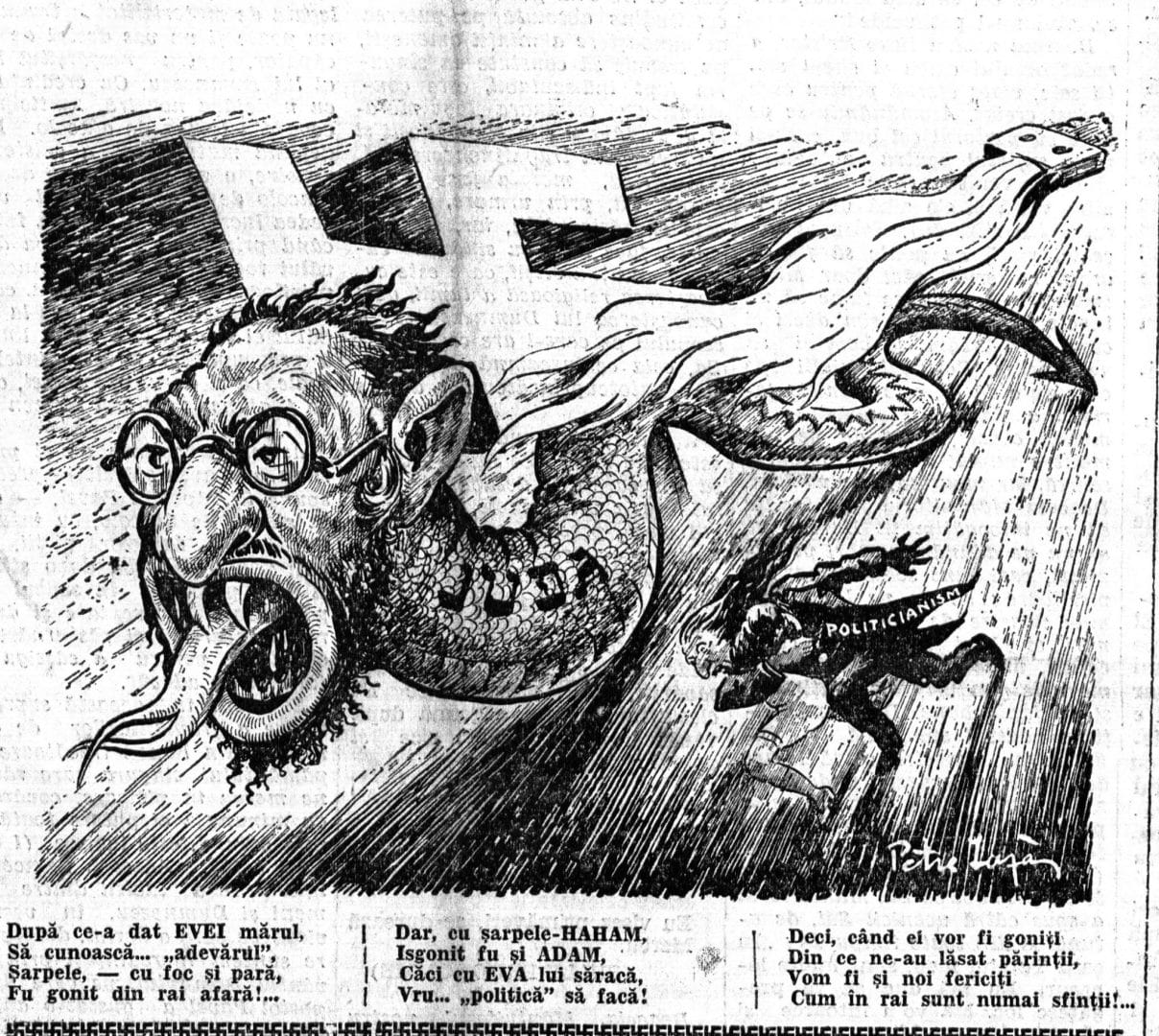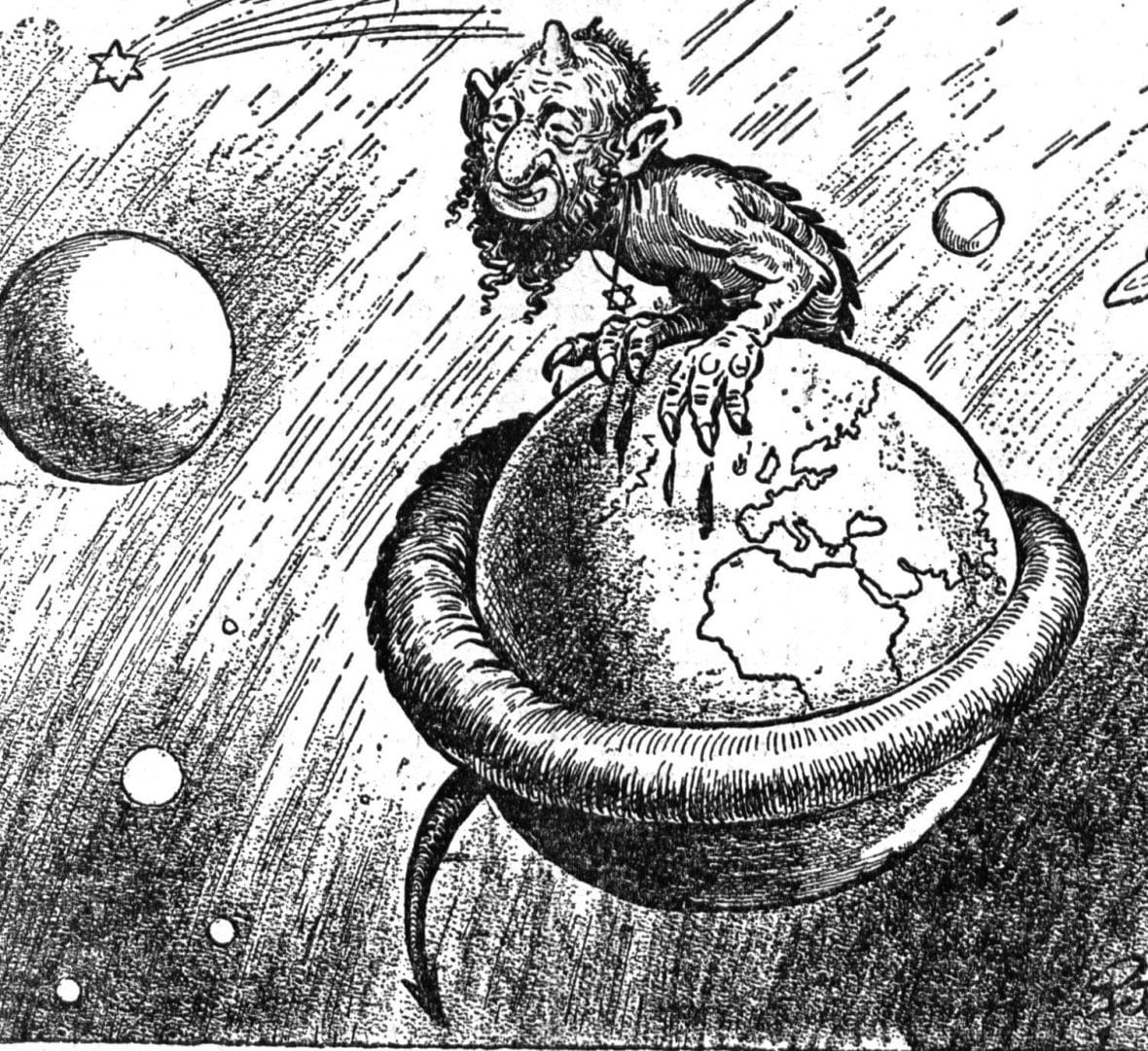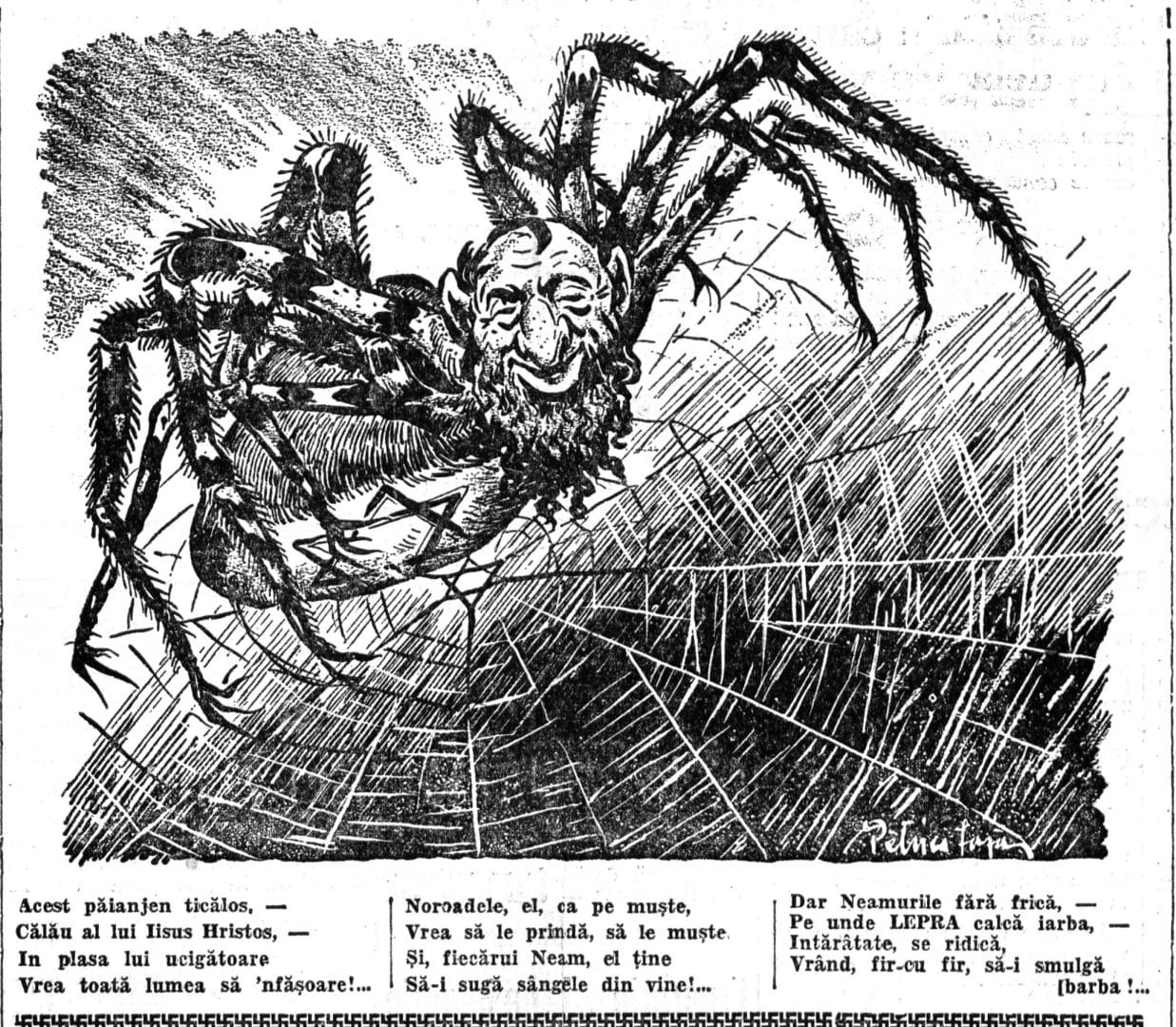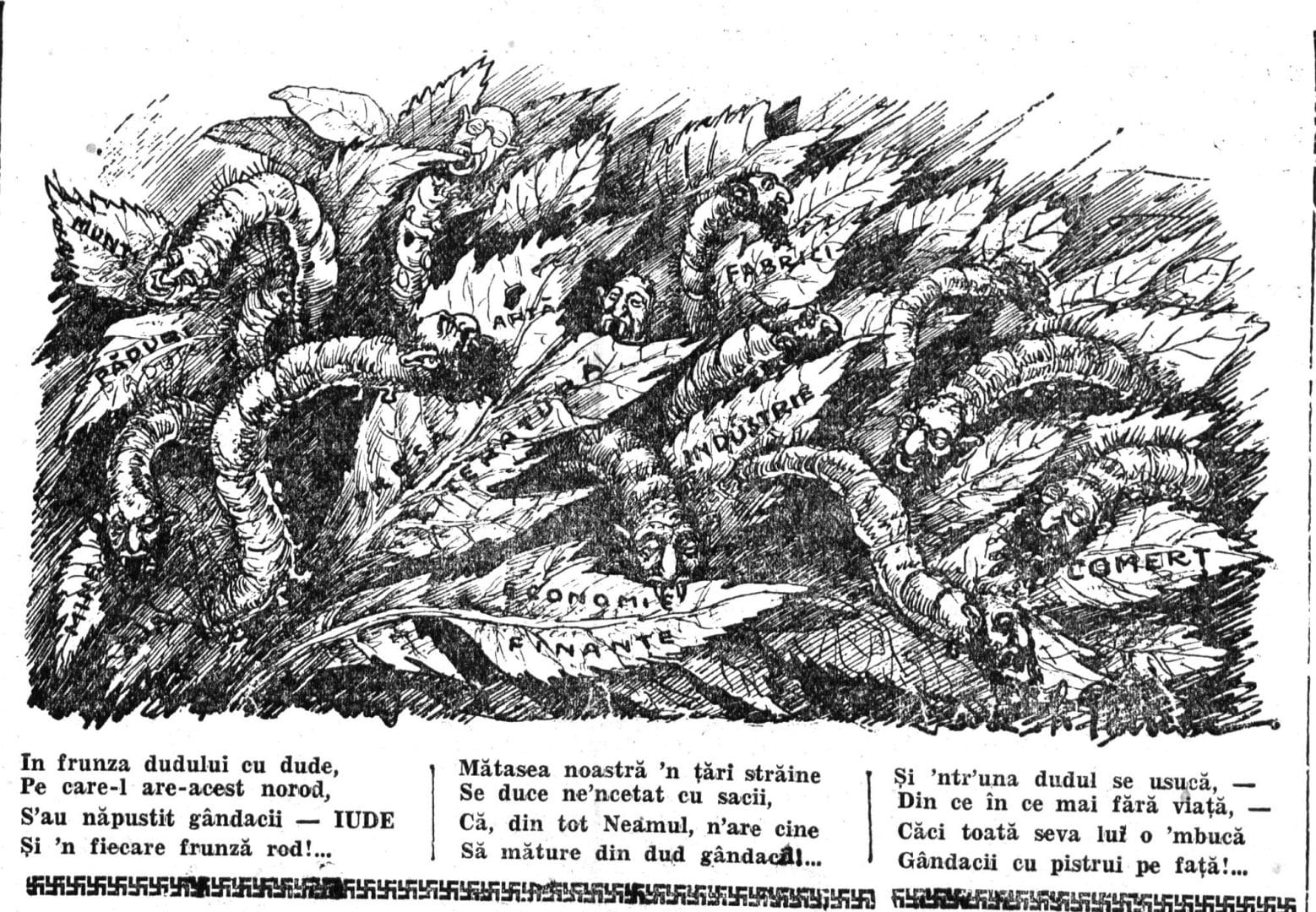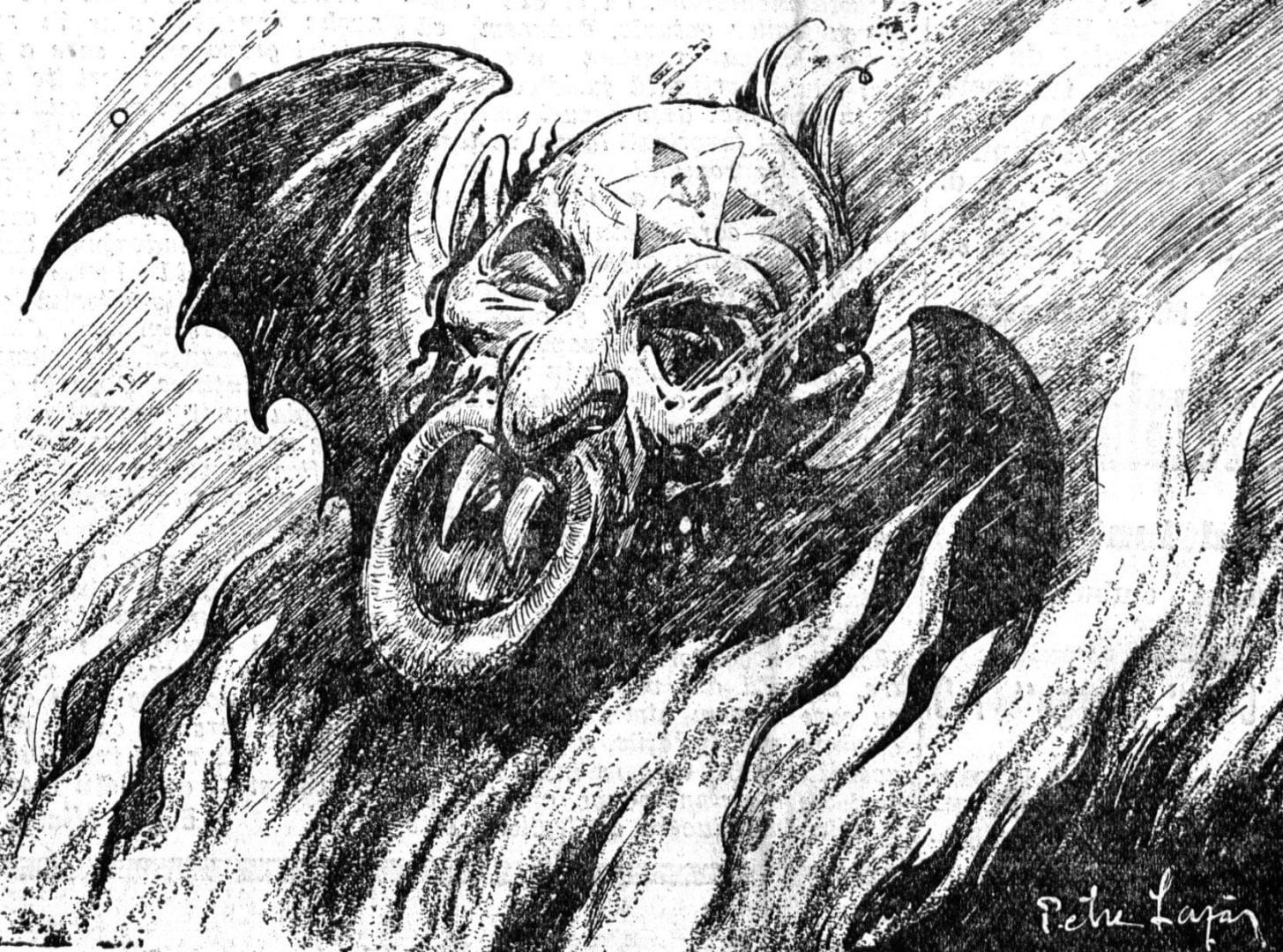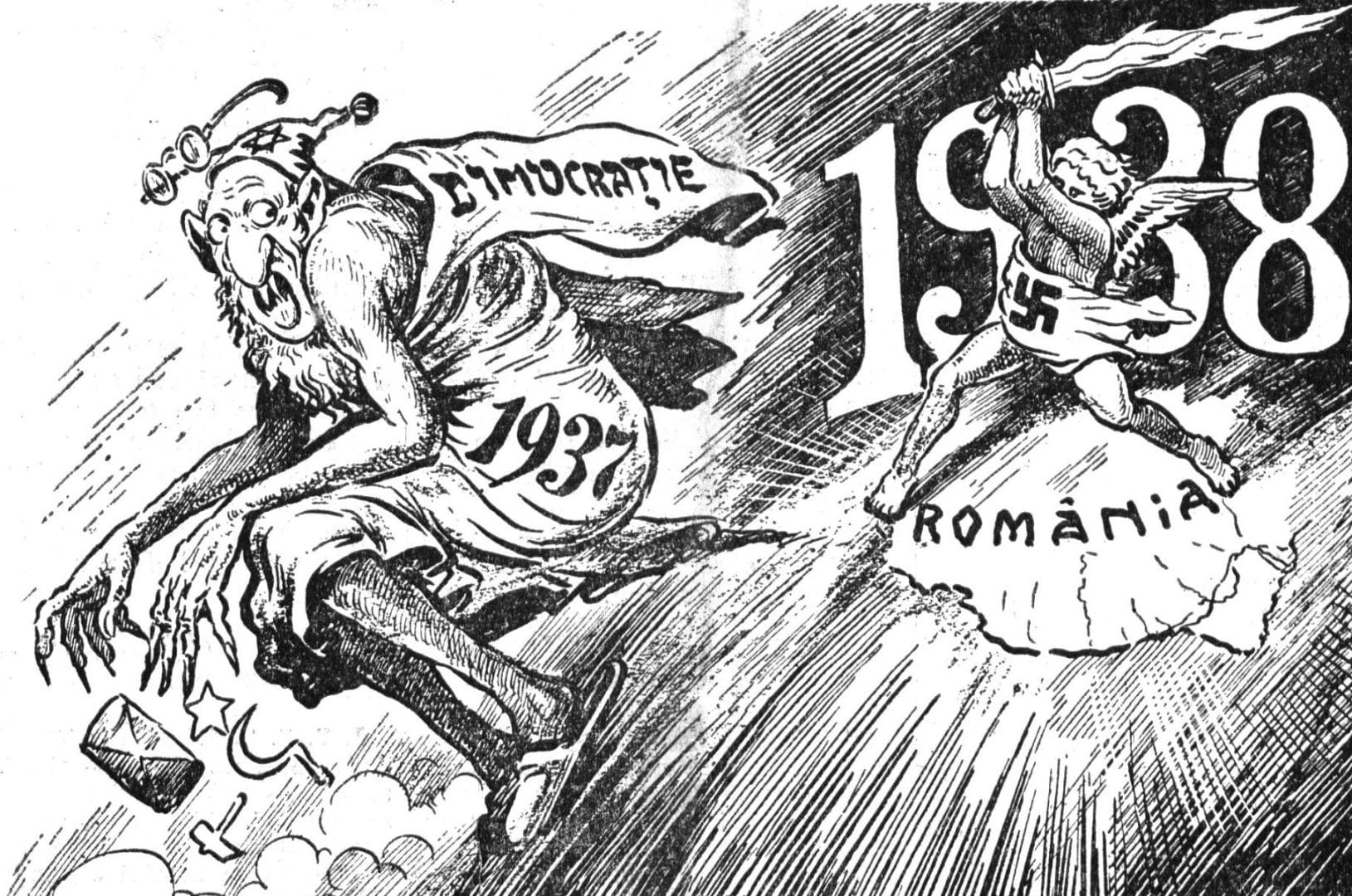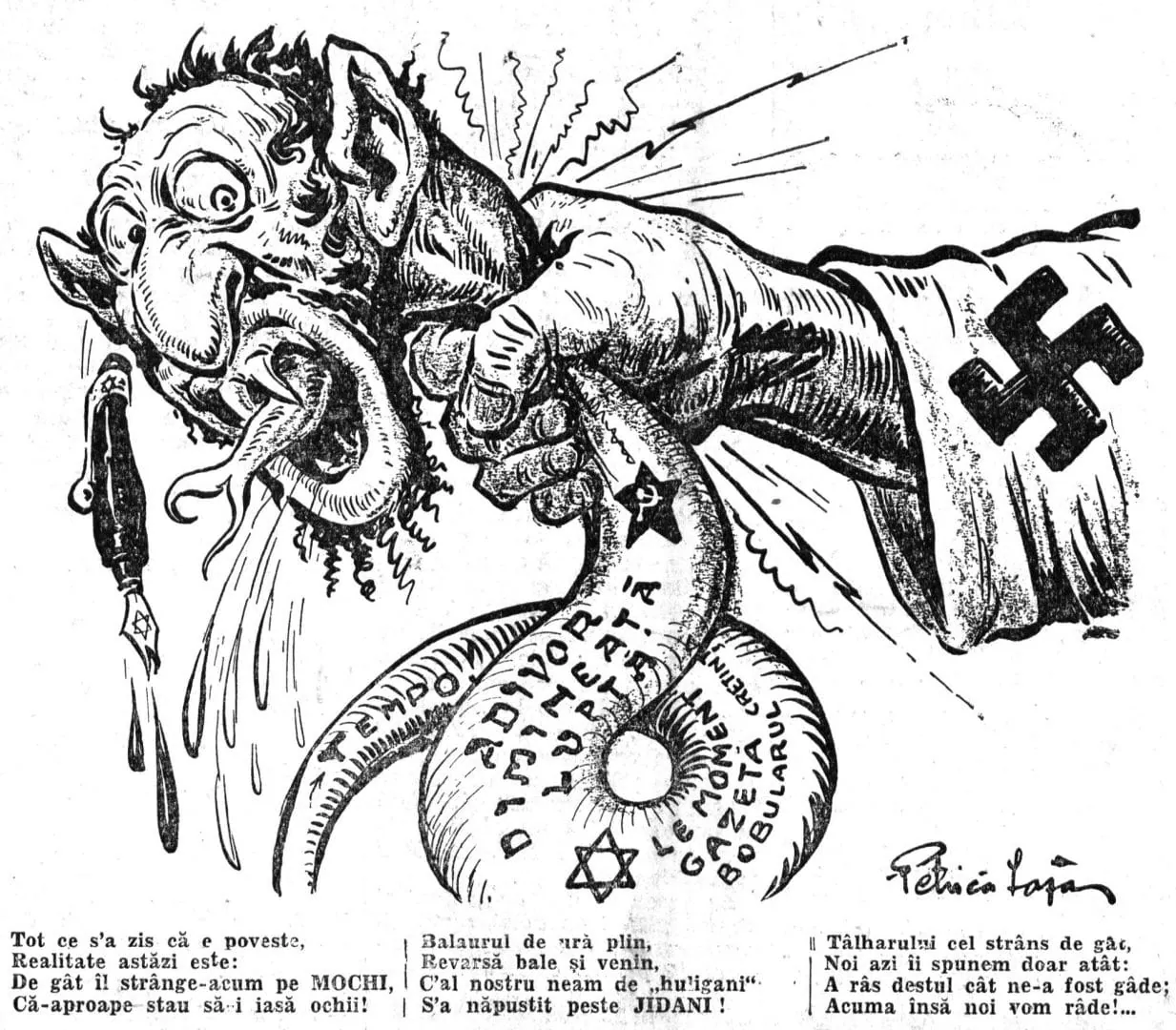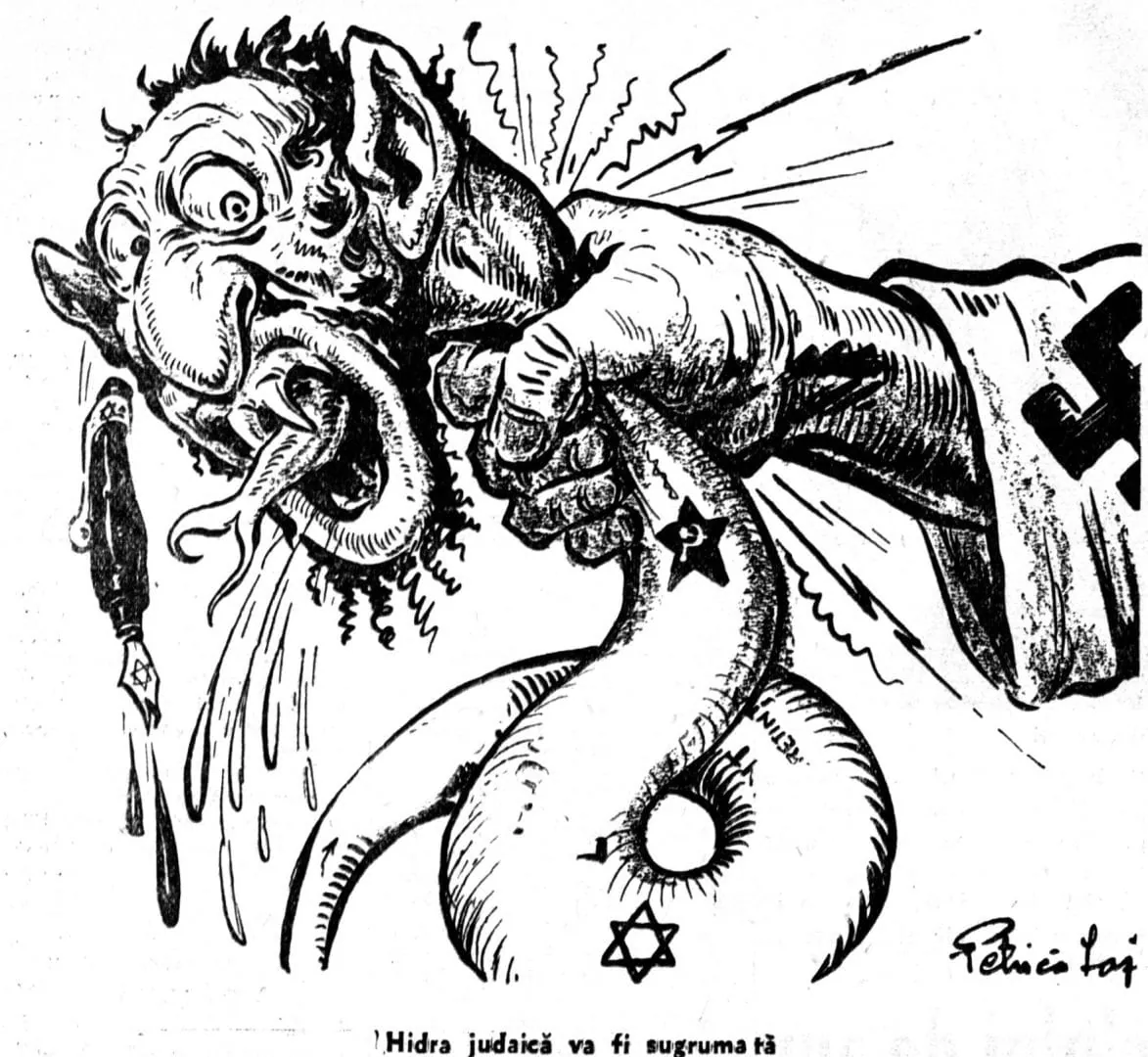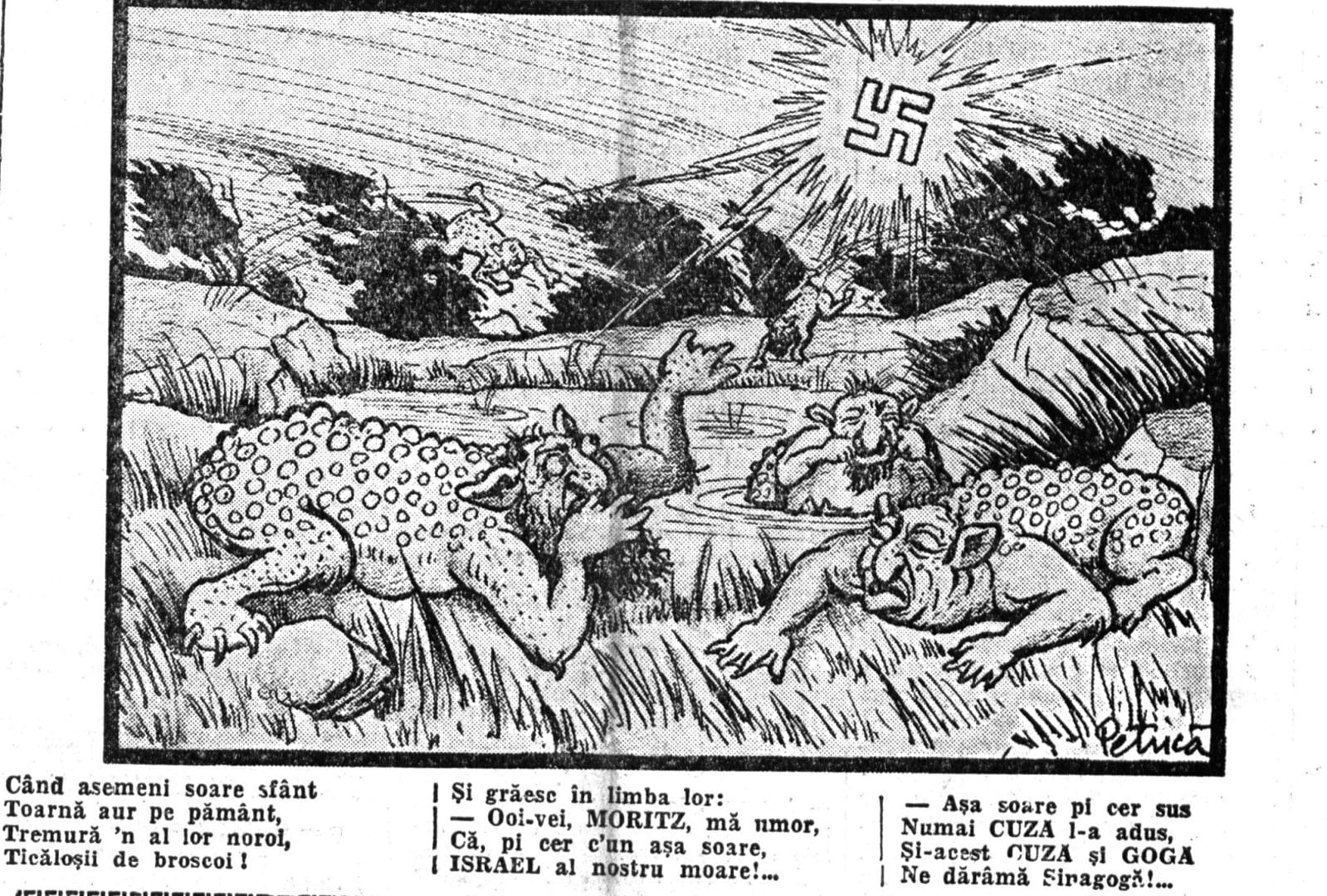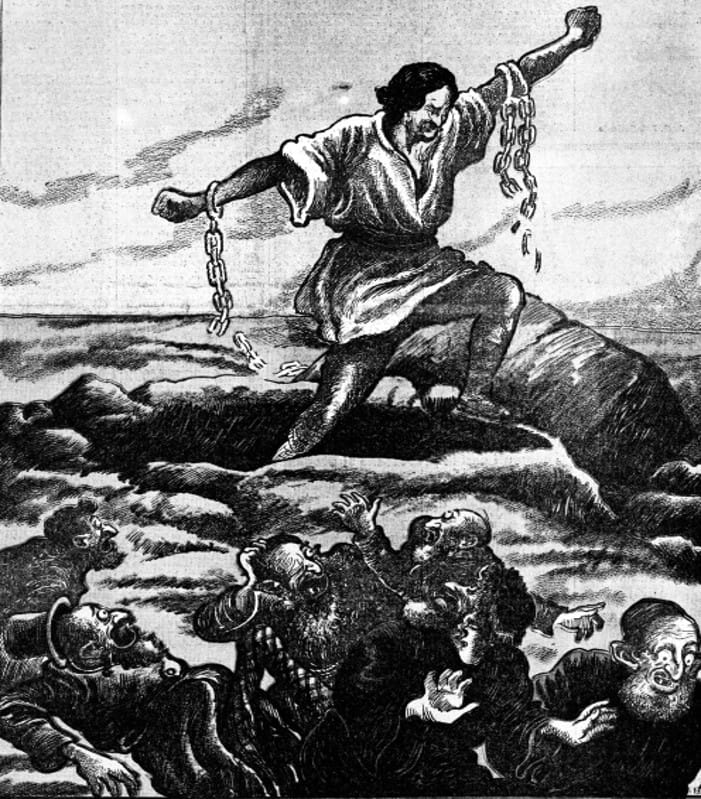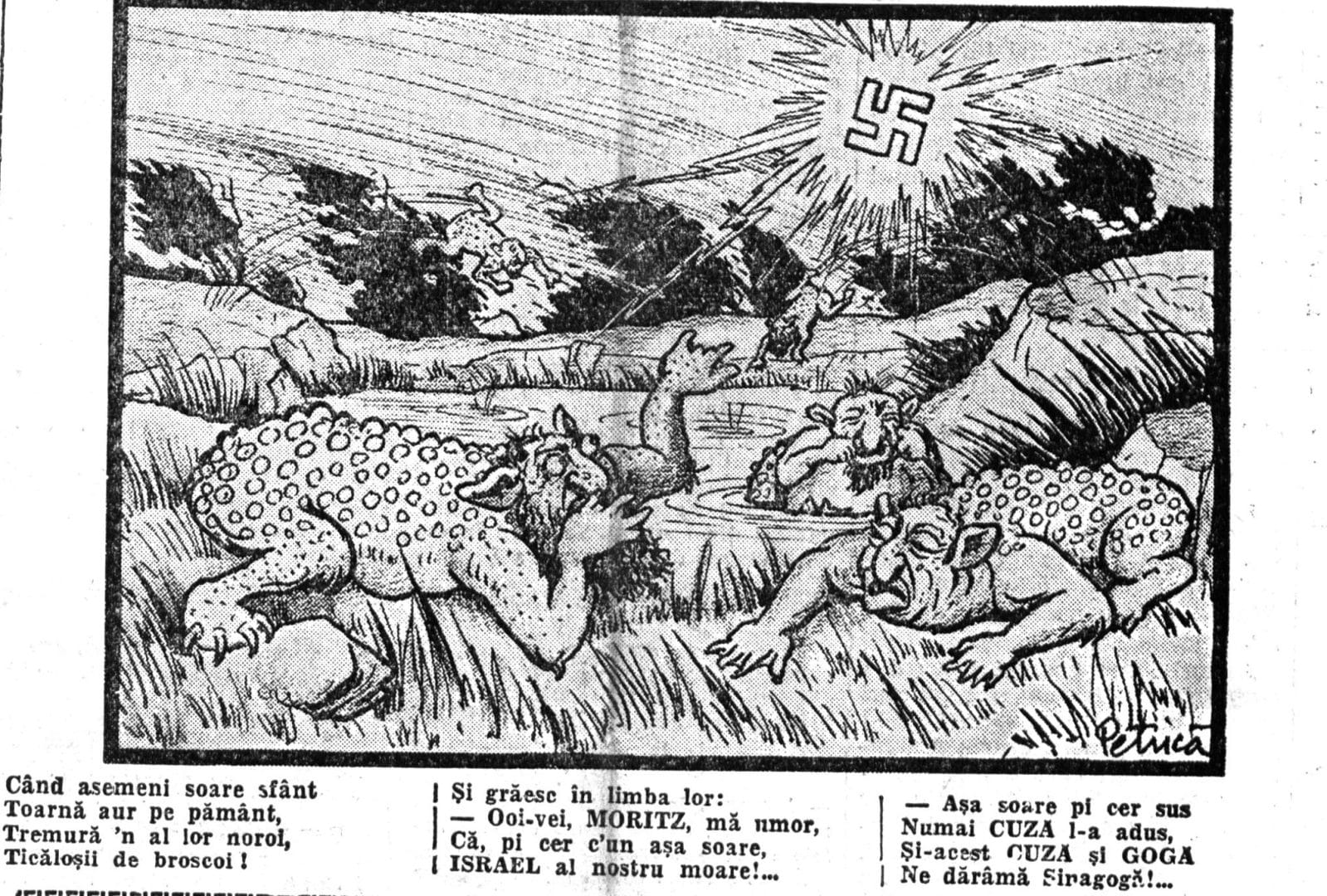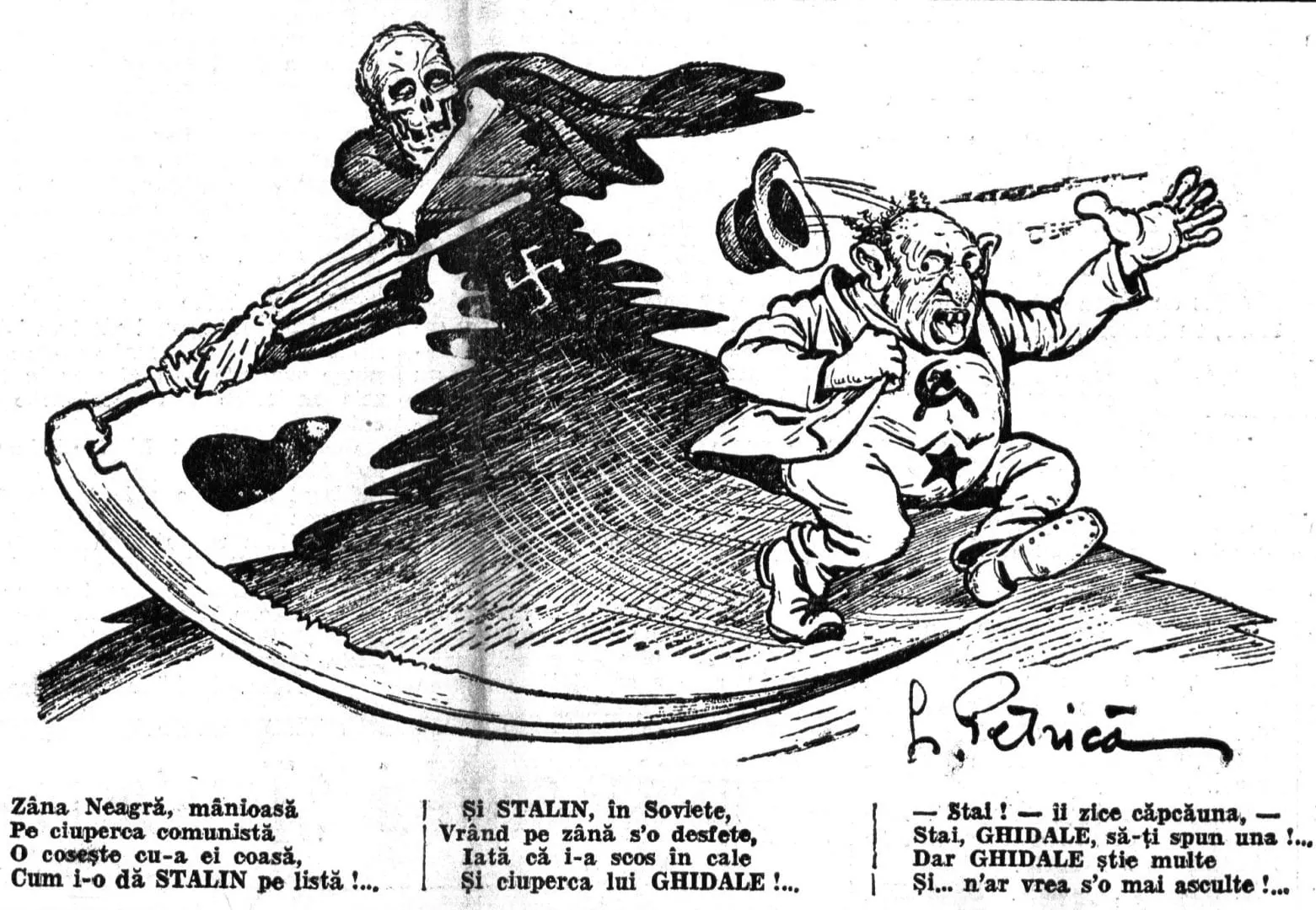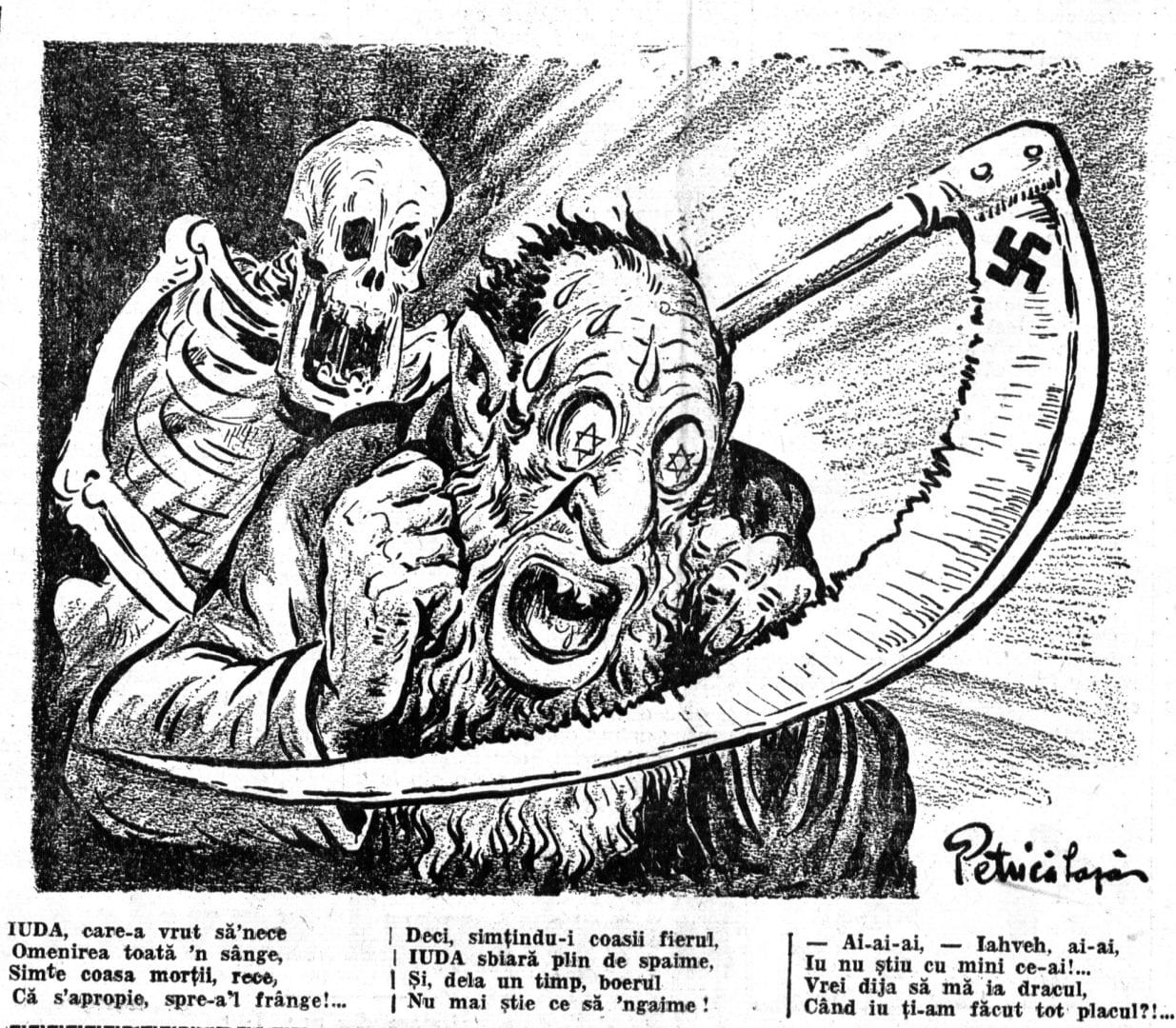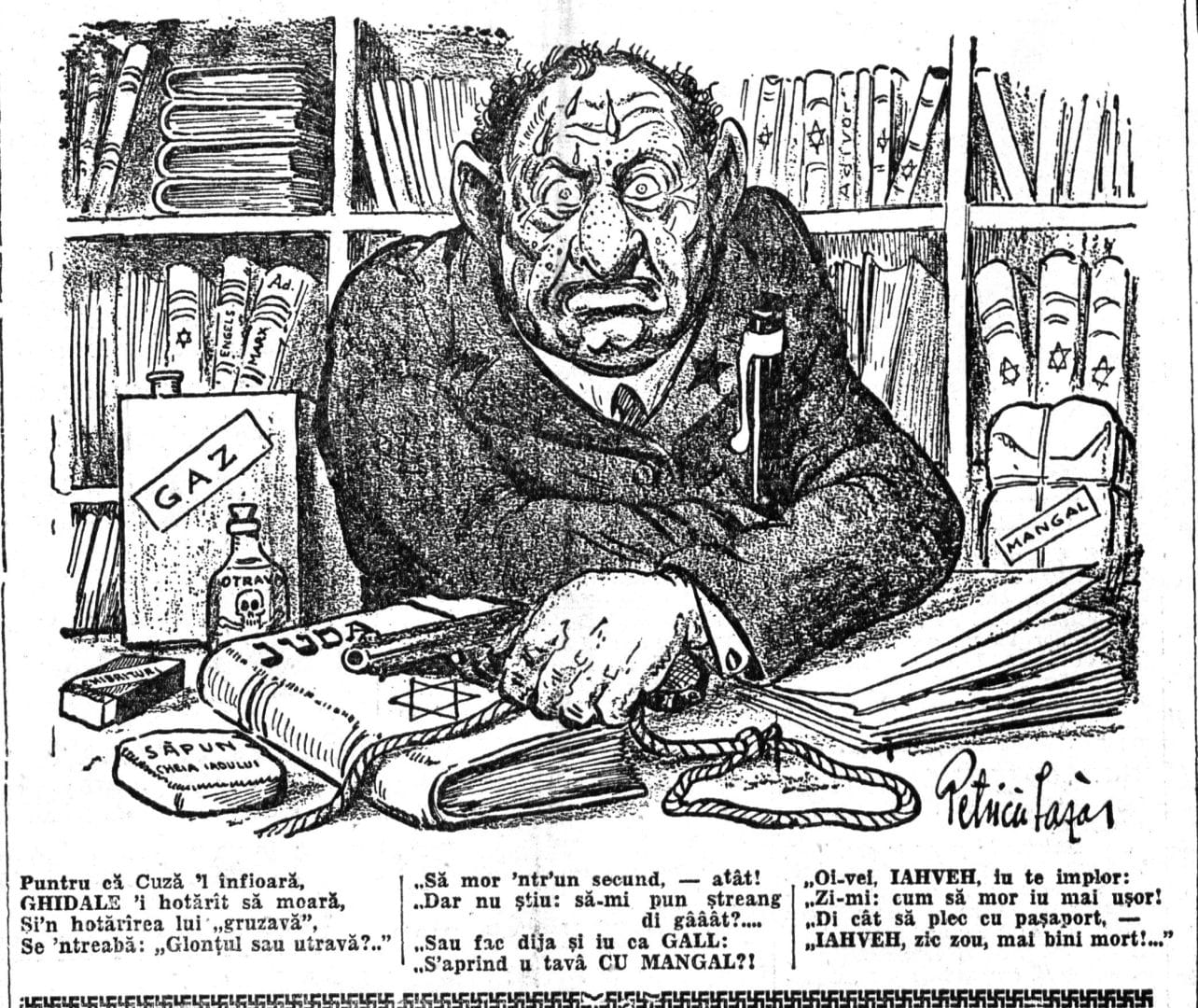

Unlike the anti-Semitic texts of any period, the caricatures — as images — allow us to grasp a particular, and due to their post-factum character, ungraspable knowledge of the past. An image is never intelligible on its own but is deciphered by the onlooker only through the actualization of already stable categories. In other words, “we can grasp in an image only what is already known,”[1] as humans always apply previous knowledge to what they see.[2] As Petăr Petrov emphasized, the caricatures serve as a source for studying the mental images shared by an epoch, providing a tool to identify the attitudes and perceptions specific to the historical period in question.[3] To understand the image proposed by the caricaturist, the public must be familiar with the symbols used.[4] Equally important, to gain the public’s attention, the artist should be familiar with the symbols shared by the target audience, as caricatures often lean against existing stereotypes and representations.[5]
By using symbols shared by the public, the caricatures provide access to a form of basic social knowledge specific to the time. To identify the character of a caricature as Jewish, the public must see the said character as circumscribing the normative fit socially ascribed to the category of the Jew. In other words, the public must have some knowledge regarding the content of this category. In Allport’s terms, to recognize a form as a tree, you need to know what a tree is. Following Allport, we will define the category as “a cluster of associated ideas” that engender meaning in the world.[6] Categorization is intrinsic to our cognitive life, enabling us to organize and make sense of the world. However, one must acknowledge that after categorization, any visual input has psychological significance.[7] The cognitive structure that contains the information associated with the category, as well as what we expect from it, represents the stereotype, which encompasses all the knowledge, beliefs, and expectations that individuals link to a category.[8] We always select and interpret. Still, these processes do not work independently, as what we sense, perceive, and think about the items circumscribed to the same category becomes blended into “one knowledgeful act of cognition”.[9]
This study aims to reassess the portrayal of the Jewish community through caricatures published in interwar Romanian press, focusing on Porunca Vremii, a notable journal of the far-right political frame that frequently employed this visual tool. Given the unique nature of these caricatures and their ability to evoke shared attitudes and stereotypes among their audience, this research examines how these images reflect and influence societal perceptions.
The author of all caricatures discussed in this paper is Petrică Lazăr. Most of the caricatures discussed are accompanied by a lyrical text.
Building on this theoretical approach, we will examine how Jewishness and Judaism are portrayed in these caricatures. What insights do the caricatures offer regarding the anti-Jewish stereotypes held by the public? Equally important, what new perspectives do they contribute to the understanding developed from written sources?
Markers of Jewishness: scope, allegiances, and tools
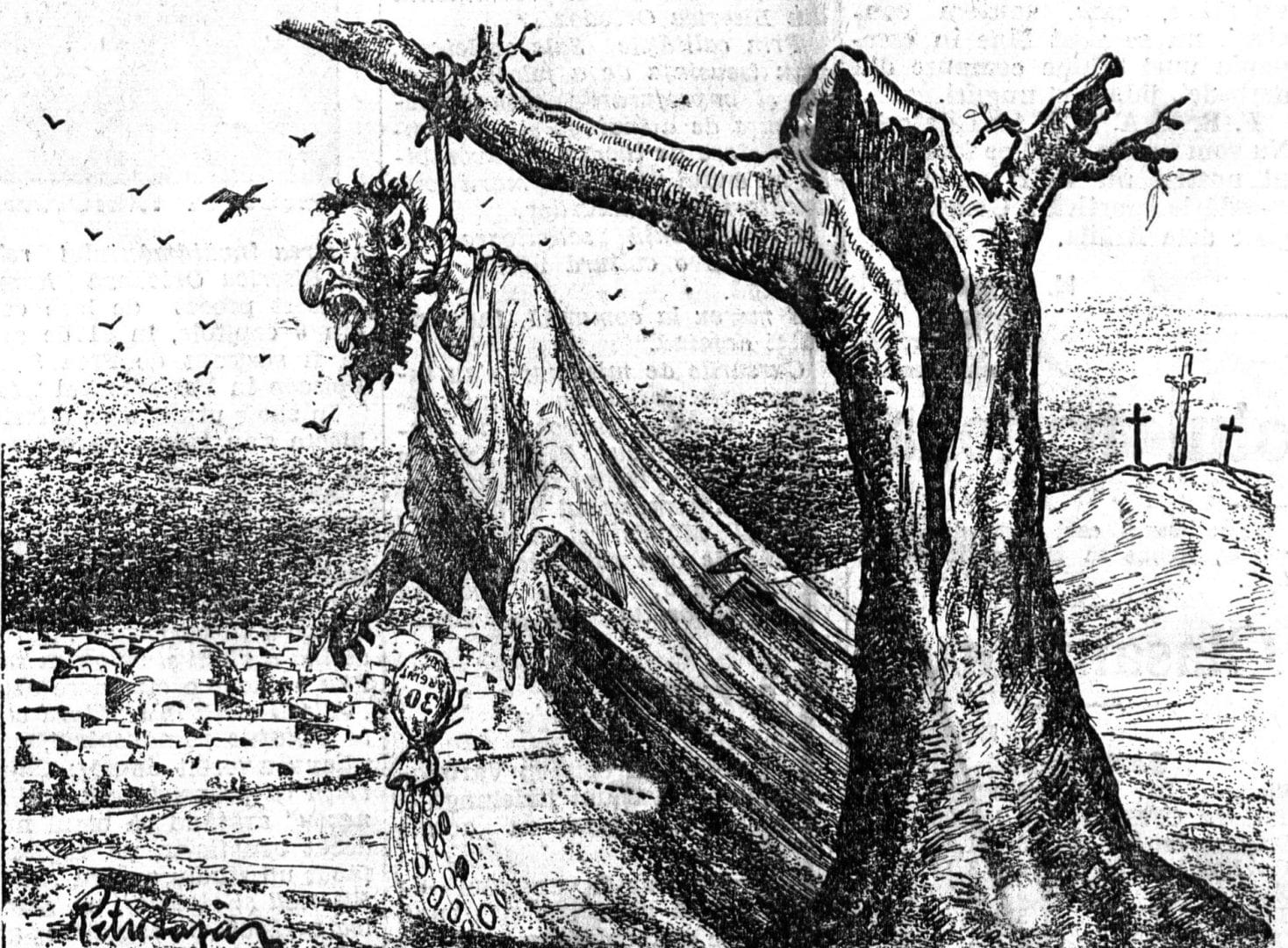
I will start with an image that, in my opinion, represents the generic frame used to define Jewishness in the analyzed materials (see Figure 1).
In the foreground, we see a man hanging from a tree, a small bag of money tumbling to the ground beneath him. In the background, three crosses stand silhouetted on a hill. This image instantly evokes strong associations for a Christian audience, immediately recalling the crucifixion of Christ and the subsequent suicide of Judas. It captures three potent symbols from this narrative: the hanged man, the thirty pieces of silver, and the three crosses.
The text added to the drawing helps the reader to put this story of the past in a presentist perspective: just like Judas betrayed and killed Christ, the Romanian nation is now destroyed by its own Judas (Iude), traitors sold to Israel.