
14. SURAZH
When I arrived at the forest camp, it was buzzing with activity. Osyp’s kurin was preparing to head out on a mission against the Soviet partisans. I had no further details about the operation because the unit was ready to march out, leaving no time for questions. I knew that Kruk’s kurin was also setting out at the same time as Osip’s, which meant a major confrontation with the Soviet partisans was imminent. Since I didn’t have a weapon, sotnyk Yurko quickly handed me an old rifle, and the men in his sotnia provided me with ammunition and a single grenade. I was disappointed not to have a pistol, and even more so by the poor quality of the rifle, but there was nothing I could do about it.
The chotas [platoons—tr.note] were led by the same leaders as before. For the time being, sotnyk Yurko assigned me to his chota. Burlachenko, who hadn’t yet been assigned, asked if he could join me on the mission, and Yurko agreed. So I had an old friend by my side, and together we walked at the rear of the column, chatting as we marched toward the Surazh Forest. It was the afternoon of July 22.
Toward evening, our kurin reached the village of Peremorivka and set up camp for the night. In this new unit, surrounded by unfamiliar riflemen and commanders, I felt somewhat out of place. At our quarters, together with kurin commander Osyp and sotnyk Yurko, it was difficult at first to strike up a conversation, but eventually we began talking. It turned out that both had once been members of the OUN(m) organization and now took a very sober view of the UPA’s struggle. From the very beginning, when the partisan movement started in the spring, they had joined their fellow villagers in the OUN(b) and had remained there ever since. They were opposed to the “gruesome” actions of the Bandera supporters but could not speak out openly. When the subject of disarmament arose, kurin commander Osyp remarked that painful topics should not be broached and steered the conversation toward plans for the next day.
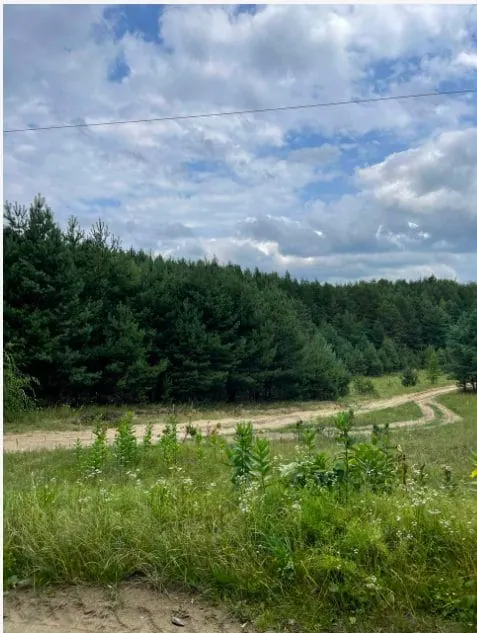
After dinner, the sotnyks and chota commanders were called to a starshyna meeting. Kurin commander Osyp spread a detailed topographic map on the table and began outlining the planned operation for the next day. It was then that I learned the precise details. On a high point in the Surazh Forest, not far from the village of Teremne (Shumsk District), there was a camp of Soviet partisans. The garrison consisted of 200 Bolsheviks and about 300 Poles with their families, who had fled from nearby villages. The Soviets and some Poles were well-armed, with rifle positions dug around the camp. By their presence, the Soviet partisans had paralyzed UPA communications and plagued the surrounding villages with constant raids for food, clothing, and other household goods. The UPA command had ordered that this “Bolshevik-bandit nest” be eliminated at all costs.
According to the plan, Osyp’s kurin would approach the Soviet camp from the east and Kropyva’s kurin—from the west. (Kropyva was appointed kurin commander for the duration of the operation.) Together, they would close the encirclement. The main commanders of the operation were Kruk and Major Holubenko.
Their own forces were as follows: Osyp’s Dubenskyi kurin consisted of three sotnias—Yurko’s 1st Sotnia, Borsuk’s 2nd Sotnia, and Berkut’s 3rd Sotnia, which remained behind to guard the forest camp.
Armament: in addition to standard issue weapons—rifles, automatic weapons, and three light machine guns per squad—Yurko’s sotnia had a “Maxim” heavy machine gun squad and two mortar squads: one 50 mm and one 82 mm. Kropyva’s Kremenets kurin consisted of three sotnias, led respectively by Hamaliia, Kamin, and Petro. Their armament was the same as the Dubenskyi kurin, except for the absence of one 82-mm mortar. The operation was scheduled to begin at 3 a.m. on the second day—July 23. The Kremenets kurin’s staging area was the village of Soshyshchi.
After tasks were assigned to individual commanders, kurin commander Osyp appointed me Deputy to sotnyk Yurko. The meeting concluded. The sotnia commanders were to make final preparations in their units: check ammunition, load all machine-gun magazines, and maintain strict guard duty to ensure no civilians left the village. During these preparations, an unfortunate incident occurred in Borsuk’s sotnia—a machine-gunner, while cleaning his weapon, carelessly left a round in the barrel. Another soldier, seeing the magazine removed, pulled the trigger and accidentally shot his comrade, who was sitting at the table.
This incident seemed to foreshadow misfortune for the next day—it was a bad omen. All night, couriers and scouts arrived at our quarters, bringing reports and updates—mostly about the Soviets’ situation—yet the operation plan remained unchanged.
In the morning, a thick fog hung in the air, and it was cold. Two hundred men from our kurin entered the outskirts of Teremne from the direction of the forest, not making a single sound. Because it was still dark and visibility was poor, we decided to wait until the sun rose and the wind cleared the mist. After setting up sentry posts, the troops spread out along both sides of the road. Half an hour into our vigil, a cart carrying Soviet partisans emerged from the forest. As we later learned, they were heading into the village for bread—and drove straight into our sentry post.
Our sentries opened fire, and the Soviet partisans, abandoning their cart, fled. Premature exposure could have jeopardized our plan, so, faced with this turn of events, we immediately set off in single file, sotnia by sotnia, toward the high ground.
Our guides—local villagers—weren’t entirely certain where the Soviet camp was, so they led us through the forest.
Borsuk’s sotnia led the way and was to occupy the left flank of the encirclement, while Yurko’s sotnia was to take the right. Before we had fully entered the forest, about fifteen mounted Soviet partisans appeared in a clearing behind us and began shouting for negotiations. Our machine-gunner responded with several bursts, and the riflemen at the forest’s edge opened fire as well. The horsemen jumped off their mounts, took cover, and returned fire. Several quickly led their horses behind a hillock. Within minutes, not a single Soviet was left in the field—they had vanished into thin air. Kurin commander Osyp was furious that the Soviet partisans now knew we were advancing and would be waiting for us, fully prepared.
That’s exactly how it happened. When our sotnia fell a bit behind, Borsuk was the first to approach the high ground where the Soviet-Polish partisans’ camp was located. They allowed him to get within 50 meters—and in some places even 25 meters—before opening fire. In the very first volley, Borsuk’s sotnia suffered heavy losses: eight men were killed and seven wounded. Borsuk himself was wounded in the head, as a bullet grazed his skull. When we arrived with Yurko’s sotnia, we saw that the high ground where the Soviet-Polish partisans were entrenched was protected by a deep ditch, encircling the peninsula-like elevation in a horseshoe shape. Spring water ran through the ditch. To advance, we had to cross it without any cover. Borsuk’s sotnia was stuck in the ditch, unable to move forward or back—the Soviets had pinned them down. We could hear their cries for help. To the right, the ditch grew gradually shallower, and 200 meters uphill, it leveled off with the surface of the high ground, merging with the plain of the neighboring mountain.
Kurin commander Osyp ordered Yurko’s sotnia to break through the Soviet resistance and charge across the plain into the enemy camp. The sotnia launched its assault. Soviet “cuckoos” in the trees began thinning our ranks. The worst part was that the Soviets could see us as clearly as the palm of their hand, while we could not see them. The intensity of the fire was so overwhelming that we were forced to retreat to our starting positions—also on a hill level with the Soviets’ position, separated only by a valley. As the crow flies, 100–150 meters separated us from the Soviets. The sotnia began to dig in, and I was ordered to retrieve a horse-drawn cart with a “Maxim” machine gun and another cart carrying mortars from the village of Teremne, where we had left the supply train and medical unit. Navigating the unfamiliar forest roads with the convoy was difficult, but after about an hour of maneuvering between the trees, we reached the destination.
Borsuk’s sotnia was still in the trench. Immediately, our “Maxim” gunners took up positions and opened sustained fire on the enemy. The Soviet partisans fell silent; only curses could be heard from their side. Sych, who had also participated in the operation near Stizhok, distinguished himself on that same “Maxim.” A squad of mortar gunners—mostly Georgians (eight men from a former gang led by Aliosha had joined Yurko’s sotnia in the UPA)—searched for a suitable position. Finding a good mortar spot in the forest was not easy, but eventually they found a gap between the treetops and dug in.
The first 82-mm mortar round soared upward, but as it reached the treetops, it veered straight down and landed near our position without exploding. The second round whistled through the air and exploded somewhere beyond the Soviet camp, where the Kremenets kurin was advancing. The third shell barely left the mortar before getting stuck in the ground—defective shell fuses were to blame. I ordered the mortar moved aside, but the same issue occurred with the second mortar. Sotnyk Yurko then instructed us to abandon the mortars, form a rifle squad from the mortar crew, and send them to reinforce one of the front sectors. After heavy fire from our “Maxim” and the entire sotnia, Berkut’s sotnia emerged from the trench and straightened the front, taking up positions with our line on the left flank. It was impossible to evacuate the wounded and dead from the trench; we had to wait until dusk.
Of all our heavy weapons, only the “Maxim” remained in action. The Kremenets kurin intensified its fire, and one of its companies joined our left flank. On our right, the encirclement ring remained incomplete; we lacked enough troops to close such a large perimeter. Kurin commander Osyp sent a messenger to headquarters to request reinforcements.
During a lull in the fighting, our men called out to the Soviet partisans, shouting:
“Surrender, and we’ll spare your lives—but woe to your commanders.”
The Soviets replied:
“You won’t capture us anyway; you’d better retreat!”
The firing soon intensified again, and the trench warfare dragged on. By evening, rifle positions had been dug along our entire front, and machine guns were set up for night defense. We expected the Soviet partisans to attempt a breakthrough during the night.
As darkness fell, we sent out a rii [squad—tr.note] led by Burlachenko to retrieve our wounded and fallen. The crunch of debris beneath their feet betrayed our intentions, prompting the Soviets to intensify their fire. Our men’s shouts echoed in the darkness as they searched for the wounded, but after some time, we managed to carry out the exhausted men who had lain in the trench all day without water, food, or medical attention. This was especially difficult because they had to pretend to be dead and lie motionless; otherwise, the Soviets would have shot them. Several of the fallen were not found and remained there. After our sortie, the Soviets also tried to use the cover of night to reach the water source in the same trench where our wounded and dead lay. We intensified our fire and cut off their access to water. They attempted to break through several times during the night, but our men repelled every attempt.
Late in the evening, Ostrohy’s sotnia (from Ostrozhchyna) arrived to support us. Their presence was invaluable, as they closed the gap between our sotnias and chotas. The most striking sight of the night battle occurred when sustained fire erupted along the entire line, and the glint of gunfire formed a semicircle. Those flashes outlined our positions and made it clear we had the Soviets firmly surrounded. In the silence, the roar of gunfire grew even louder, merging with the echoes of the Surazh Forest.
Wagons carried the wounded to headquarters in Antonivtsi, where they would also collect a fresh supply of ammunition the next day, as our stock was dwindling by the hour. We spent the night without sleep. In the morning, around 10:00 a.m., kurin commander Osyp gathered nearly the entire command staff and began issuing orders and instructions for the day. He advised us to enter the Soviet camp with caution—there might be mined areas. Today, we had to finally close the ring of our encirclement. He suggested:
“Let’s go to the right flank and survey the terrain from the high ground.”
Our last positions ended near the road that climbed the hill and turned sharply from east to west, cutting across an unguarded section of high ground where the Soviet camp was located. Our machine-gunners kept such a close watch on this road that the Soviets couldn’t break through in large numbers.
As we talked, we stepped out beyond our positions and onto the road. Kurin commander Osip lightly caught his foot on a cord running along the sand-covered road. Jokingly, he remarked:
“That’s either a mine or a cord leading to the alarm bell from the outpost to headquarters—a Soviet outpost was stationed here just yesterday. If anyone has a knife, pass it to me—I’ll cut it.”
One of my comrades handed me a knife. Kurin commander Osyp bent down to cut the cord—and suddenly, a powerful explosion tore through the air. Sand filled our eyes; some of us fell, while others ran from the spot. I looked around and saw, just five meters away, the kurin commander’s body, torn apart by the mine. Shaken, everyone instinctively rushed to him and carried his body back to our positions. Sand had gotten into my face; blood ran down Burlachenko, who couldn’t see—his eyes were filled with both sand and blood. No one else was injured. Fortunately, the kurin commander had bent down and absorbed the force of the high-explosive mine with his own body; otherwise, there would have been even more casualties. Later, we learned that a massive mine made from a large artillery shell had been buried a few meters further on. Had the kurin commander triggered it, the entire command staff would have been killed.
Kurin commander Osyp’s body was sent to headquarters. The riflemen and commanders were deeply grieved by his loss. Dark thoughts and a sense of fear toward this treacherous weapon crept in unbidden. The news was relayed along the line, and Kruk arrived, visibly shaken. He said:
“It’s hard, it’s a pity, but such is his fate… And the fight must go on.”
Sotnyk Yurko took over for kurin commander Osyp, and I was entrusted with command of Yurko’s sotnia.
Before lunch, a fresh supply of ammunition and shells for kurin commander Kropyva’s mortar arrived. Fire rained down across the entire sector. One after another, 180 shells exploded with precision in the Soviet camp. The riflemen silently avenged their kurin commander’s death. From the Soviet side came screams, moans, and curses—the shouts revealed that panic had broken out among them.
The order was given along our line: “Forward, to the attack.” A chorus of “Glory!” rang out as we left our dug-in positions. The Soviets, mustering their last reserves of strength, repelled our advance. We were forced to take cover, narrowing the encirclement. The order was given to dig in. In some places, we were only 30 meters from the Soviets; fortunately, they had no grenades, or the offensive would have cost us dearly.
Once our defensive positions were dug in, we heard the command: “Grenades!” We threw what few grenades we had—since not everyone was equipped—and soon ran out. The front stabilized, and the firefight continued. The Soviets had been without water for two days. Their brave men who went into the ditch for water the previous night still lay dead today. Our command called off the advance, believing the Soviets would have to surrender; if they tried to break through, we would capture them without suffering losses of our own.
Kurin commander Kropyva’s mortar continued to rain death upon the Soviet camp, and the battle raged all day and night. Toward dawn on the third day of the siege, the Soviets began escaping one by one through a section we had left unguarded. (We hadn’t surrounded that area because, after kurin commander Osyp’s death, we feared the entire road was mined—and it was.) As dawn broke, we launched a general assault and captured the Soviet partisan camp. The campsite was littered with corpses, and the foul air stung our noses. Craters from our mines and the number of casualties showed we had fired accurately. The trees were pierced by our arrows. At the camp, we captured about 20 prisoners, who reported that, by the end, they were desperately short on ammunition and food. Bread crusts were scattered throughout the trenches, and for lack of water, they chewed on green leaves and herbs.
There were 54 dead at the campsite (including Poles), while the rest of the Soviets—mainly officers, including their chief commander, Major Behma—managed to escape the encirclement on the last night, thanks to the Poles who knew the terrain. Some were captured by our medical guard in Teremne. Among the prisoners were the chief sapper, a senior lieutenant, and an aviation lieutenant. In the camp, along with weapons, we seized Soviet headquarters documents and portraits of the commanders, drawn in colored pencil by an artist stationed in their camp. One cart, loaded with items looted from Ukrainian peasants, had been booby-trapped. Four of our riflemen, rummaging through the cart for a “Finnish knife,” were killed by the explosion. The blast blew the cart to pieces, scattering only feathers from the blankets at the scene.
This incident highlighted the Soviets’ cunning and that it was our first real encounter with mines. Warnings to the riflemen about the danger fell on deaf ears; even kurin commander Osyp’s death had not served as a lesson. Although we had won and captured the enemy camp, there was no sense of triumph. Across the two kurins, 19 were killed and more than 15 wounded (among the 19, several were seriously wounded and later died in hospitals).
Nine riflemen, including a chota commander, were buried in the cemetery of Teremne. We must pay tribute to the local Ukrainian population, who—without a single order or appeal from the UPA—brought us food and water to the trenches throughout those two days of battle. Along the entire front, near the riflemen’s trenches, dishes of food appeared in peasant pots and bowls. There was even warm borshch and varenyky with sour cream.
Despite the rain, a large crowd gathered at the funeral, and with deep sorrow and sympathy, all mourned the loss of those they called “their defenders against the Soviet rabble.” The villagers’ kindness and thoughtfulness moved more than one rifleman and commander to tears of gratitude and national pride. We returned all the belongings that the Soviets had looted to the wronged villagers.
After clearing the camp of corpses and the road of mines (which were removed by the very sapper we had captured—a senior lieutenant), and after the funeral, the kurin and the sotnias returned to their camps.
On July 26 (Monday), a grand funeral for kurin commander Osyp was held in the village of Antonivtsi. His kurin, fully armed, served as the honor guard. Maxym Ruban (Lebid) and UPA group commander Eney attended, while kurin commander Kropyva served as parade commander. Osyp was laid to rest in the cemetery next to the church, beside the church’s late rector.
The weather was beautiful on the day of the funeral. Machine-gun posts were set up around the church. The speech was delivered by Maksym, the political instructor of the “South” group, who effectively served as the supervisor and leader of Bandera’s OUN within the UPA units.


The source text presented here is an excerpt from the much larger memoirs of Maksym Skorupskyi, an active figure in the Ukrainian nationalist underground, born in Antonivtsi (now Kremenets district, Ternopil oblast). In these memoirs, he recounts his experiences in the underground, first with the OUN(m) and later with the UPA. The narrative begins in 1939 and ends in May 1944, when Skorupskyi, fearing he might fall victim to the OUN’s Security Service purges, decided to escape the UPA and head farther west.
According to Skorupskyi, these memoirs were originally written in 1944, but he edited and published them in Chicago in 1961. By then, he likely had some temporal distance from the events he described and had been influenced by diaspora narratives about the activities of both the OUN(b) and OUN(m). The two factions often clashed and promoted their own heroic narratives within the nationalist underground, frequently accusing each other of misdeeds. When reading Skorupskyi’s memoirs, it is important to consider his sympathies and his initial affiliation with the OUN(m). He often criticized the OUN(b) in his writing, especially expressing strong disapproval of the policies of the OUN’s Security Service.
Skorupskyi begins his account of World War II with the events of 1939, following the Soviet occupation of Volhynia. He writes that he immediately sought ways to cross the border, having heard rumors that the OUN had begun operating in the General Government (one of the Nazi-occupied zones of Poland, established on October 12, 1939). Eventually, he succeeded in crossing the border. In his memoirs, he describes in detail how he established contact with the OUN(m) and underwent the necessary military training. He also recounts his sense of “exhilaration” upon joining the organization: “Romantically swept up by the desire to join the ranks of legendary fighters who know no compromise, who know nothing of the personal, the petty, or the insignificant—upon hearing that we—members of the Organization of Ukrainian Nationalists—felt like different people. People for whom daily worries no longer existed, but only the order that would throw us into the maelstrom of struggle” [1]. In 1941, with the outbreak of the German-Soviet War, Skorupskyi moved to western Ukraine with the German troops and briefly joined the Lviv police force. However, he makes no mention of the Jewish pogrom that took place in the summer of 1941.
Later, Skorupskyi moved to Volhynia—to Rivne and Kremenets. He briefly describes his life under Nazi occupation, but more details emerge as his narrative shifts to 1943 and his time in the UPA. Maksym Skorupskyi initially joined the unit led by Mykola Nedzvetskyi (“Khrin”), formed in the Kremenets forests in March 1943 and subordinate to the Melnyk faction of the OUN. Skorupskyi participated in one of the first attacks on Polish villages in southern Volhynia, which took place on the night of May 2–3, 1943—an attack on the village of Kuty. Two UPA units carried out the attack: the “Khrin” detachment, subordinate to the OUN(m), and the detachment led by Ivan Klymyshyn (“Kruk”), subordinate to the OUN(b). This was a joint, coordinated operation by the OUN(m) and OUN(b)—anti-Polish sentiment temporarily united the rival factions. Although the local self-defense force managed to repel the attack, there were many casualties, and most Polish residents decided to leave the village and march to Shumsk. Skorupskyi described his participation in subsequent attacks on Polish villages in his memoirs with a sense of inspiration and romanticism: “Thus began our new life. Battles began, blood was shed, and casualties mounted. Yet spring was fragrant and in full bloom. We wanted to live, to rejoice in life, to revel in our victories. No one thought about death or wounds. It seemed to everyone that the only victory lay ahead, as magnificent as the spring all around, as magnificent as those May nights. Beginning with our operation in Kuty, day after day, as soon as the sun set, the sky was bathed in the glow of fires. Those were the Polish villages burning” [2].
The Polish population adopted various means of survival. Some surviving residents of Kuty moved to Shumsk after the UPA attack, where the men received weapons from the German gendarmerie. Some likely joined the Schutzmannschaft, while others relocated to the larger town of Kremenets. Many Polish refugees were eventually sent to perform forced labor in Germany.
Another survival strategy for Polish residents in this rural area was based on the adage, “the enemy of my enemy is my friend.” They sought refuge with Soviet partisan detachments, political rivals of the UPA. Some men even took up arms, joining the Mykhailov Partisan Detachment commanded by Anton Oduha. In July 1943, this unit was stationed near the village of Teremne. According to Maksym Skorupskyi’s memoirs, UPA fighters were well aware not only of the unit’s strength and presence but also that over a hundred Polish civilians had found temporary shelter and protection there.
The excerpt from Skorupskyi’s memoirs presented here focuses on the events of July 25–26, 1943, when the UPA decided to attack Soviet partisans near Teremne. The likely aim was twofold: to defeat the Soviet partisans and to kill or drive out the camp’s inhabitants, including Polish civilians. The attack resulted in a bloody battle that claimed the lives of many fighters on all sides, as well as Polish civilians.
This source provides insight into the local triggers that influenced the outbreak of mass violence against Polish civilians. As Scott Strauss observed, “Recent comparative studies of genocides confirm a similar conclusion: genocide is usually not the primary choice of political leaders, but rather the result of a process of escalation—a kind of ‘final solution’” [3]. Among the factors driving the escalation of anti-Polish violence, the involvement of the Polish population and their search for protection from Soviet partisan units played a significant role. This only intensified the hostility of UPA commanders and fighters.