
Emotions
Filter by periods:
Primary Sources
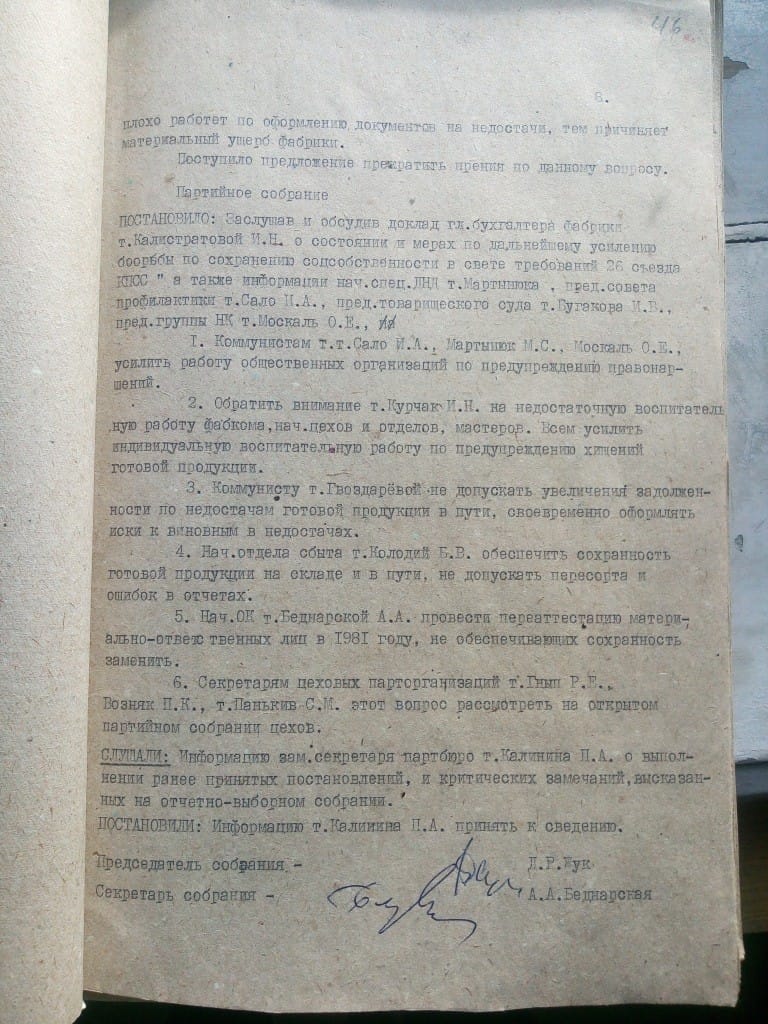
Party Meeting of Communists of the Party Organization of the Lviv Tobacco Factory, 1981
This document is an excerpt from the minutes of a meeting of the party organization at the Lviv Tobacco Factory in Vynnyky, which addressed issues such as theft, shortages, defects, and other — mostly minor but very common — violations. Most of those present at the meeting were members of the Communist Party, yet the discussion focused on the factory’s operations and every employee’s performance. This illustrates the party’s “leading and guiding” role, its omnipresence in both ideological and productive spheres, and its importance for both vertical and horizontal integration. The minutes were recorded in Russian, the dominant language in the public sphere during the late Soviet era. The minutes present a systematic...

Attitudes towards “Leninopad” in interview responses of Euromaidan’ participants, 2013-2014
The quotes from the interview published here are part of the project "The Voices of Euromaidan in Global Protest and Solidarity Studies". The project focuses on the edited and thematically organized materials from the collection of oral history interviews called "Voices of Resistance and Hope," that were recorded in two stages, the first in December 2013 and the second in February 2014 (more then 100 interviews). They were gathered in the base "Intimate Chronologies of the Euromaidan", which is available on Urban Media Archive website. This collection includes 17 themetical categories. “Leninopad” is one of them. The answers given in this category indicate the attitudes towards Lenin's monuments, to specific forms of urban...

“It Feels Good in America”, song about emigration, recorded in 1949
The song highlights the difference between life in America and life back home, in Europe. Unlike the songs that mention disappointment from the unfulfilled hopes in the United States, this piece shows work as a safeguard for higher economic status. America allows immigrants to lead a comfortable lifestyle, one of the attributes of which is a pocket watch. But the conflict of the song is built on the opposition of the wealth of the migrant and the poverty of his wife and children at home. Despite the economically comfortable life, there is a problem of emotional discomfort and a feeling of alienation from family and home.