
Petro Dolhanov
Historian, Associate Professor of the Department of Teaching Methods at the Rivne Regional Institute of Postgraduate Pedagogical Education, a member of the Mykola Haievoi Center for Contemporary History, editor of the section “Overcoming the Past” and guest editor of a special thematic issue on the Holocaust in the journal Ukraina Moderna.
Research interests: Holocaust history, theory and practice of nationalism, politics of memory.
Related sources:

Volhynia in 1943 in Mykola Androshchuk’s “Notes of an Insurgent”
These memoirs, written by one of the organizers of the UPA in the Mizoch district, were first published in 2011 as part of the Chronicle of the UPA series. Rivne-based researcher Ihor Marchuk, who edited the series, discovered the typescript in the Sectoral State Archive of the Security Service of Ukraine, where it was titled Notes of an Insurgent [1]. The author of the memoirs was born on December 8, 1913, in the village of Derman 1, Dubno powiat, Volhynia governorate. In the 1920s, after the village became part of Poland, it belonged to the Mizotch gmina in Zdolbuniv powiat, Volhynia voivodeship. In the 1930s, the Androshchuk family moved to the Ozery khutir...
Memoirs of UPA Fighter Maksym Skorupskyi (“Maks”) on Volhynia in 1943
The source text presented here is an excerpt from the much larger memoirs of Maksym Skorupskyi, an active figure in the Ukrainian nationalist underground, born in Antonivtsi (now Kremenets district, Ternopil oblast). In these memoirs, he recounts his experiences in the underground, first with the OUN(m) and later with the UPA. The narrative begins in 1939 and ends in May 1944, when Skorupskyi, fearing he might fall victim to the OUN’s Security Service purges, decided to escape the UPA and head farther west. According to Skorupskyi, these memoirs were originally written in 1944, but he edited and published them in Chicago in 1961. By then, he likely had some temporal distance from the...
Yona Oliker’s Testimony on the Holocaust in Volhynia
Another essential perspective for triangulating sources about World War II events in the village of Zelenyi Dub comes from the Jewish populations of Mizoch and Shumsk—the two largest shtetls situated equidistant from the village. In fact, no Jews lived in Zelenyi Dub itself. To understand how they came to be in the area during the German occupation, it's helpful to draw on Tim Cole’s interpretive approach. In his study of the Holocaust, Cole proposed examining it through the lens of landscapes: both the real and mental maps that Jews carried during the violence [1]. As German occupation policy evolved, these mental maps shifted in the perceptions of Jewish community members—some areas were seen...
The Volhynia village of Zelenyi Dub during World War II: an interview with Antonina Huk
This testimony is from Antonina Huk, the grandmother of the author of this commentary. The interview, recorded in 2021, is one of six conversations with her about the events of World War II in Zelenyi Dub, Volhynia. During the interwar period, the village belonged to Buderazh gmina in Zdolbuniv powiat, Volhynia voivodeship of the Second Polish-Lithuanian Commonwealth, with a population made up of roughly equal numbers of Polish and Ukrainian residents. Antonina, born in 1931 in the neighboring village of Ruska Huta, moved to Zelenyi Dub as a young child and, by 1943—the height of the Polish-Ukrainian conflict in the region—was a 12-year-old girl. Antonina Huk’s account of the past does not unfold...
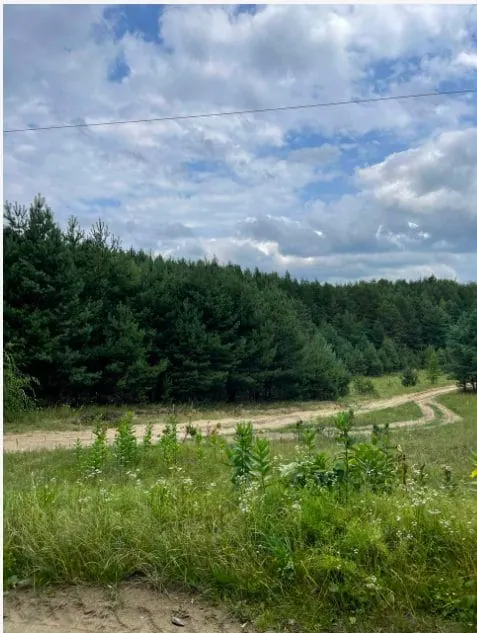
This module by Petro Dolhanov recounts the events of World War II in the Volyn village of Zelenyi Dub. The author analyzes the testimony of his grandmother, Antonina Huk, contextualizing it and cross-referencing it with other available source materials.