
Youthful energy and a wild spirit found their expression in sport. Track and field was popular, but fencing was a particular hit among students. They were taught to wield the saber and the foil, while the épée was an unfamiliar weapon. There was a French school of fencing — taught by Mr. Mari. From his tradition emerged many brilliant fencers. Meanwhile, the Italian schools were taught at “Sokil”. The German school of the heavy sabre, known as the “sevens” or “nines,” was essentially a dueling school. This school was most often taught in societies that emulated the German Burschenschaften (student corporations), whose members fought primarily with rapiers. These were ordinary sabres, quite long and heavy. The entire weight was concentrated in the heavy guard. Rapiers were used for so-called Mensur bout. These were friendly matches, where teams from two friendly associations faced off using sharp rapiers. These bouts were organized following the model of German and Austrian societies, whose membership consisted exclusively of university students.
Unlike sabre duels, such encounters involved extensive protection, leaving only the head, one shoulder, and the shoulder girdle exposed. The neck and underarms were bandaged, and they wore leather gauntlets up to the elbow. Both fencers stood facing each other in a wide stance, allowed to move neither forward nor backward — at most, they could only tilt their heads to the side or back. As a result, Mensur bouts were relatively safe, and rarely resulted in severe injuries. They usually resulted only in cuts to the face or head. These ‘honorable’ scars remained for life. Even today in Germany, one can see many elderly men in respected positions bearing these thin, straight scars. The last time I met such gentlemen was at the congress of the German Society of Urology in Berlin in 1959 […]
I started fencing when I was in sixth grade in gymnasium, training under the fencing master Mr. Sieliava. But I didn’t have much time for it, as I was heavily involved in football and athletics at the time.
As a first-year medical student, I switched from the Italian school of fencing to the German one.The reason for this was the following event: on December 5, 1910, at a youth evening in the City Casino, I had a dispute with a colleague, Kajetan Stroński[1], a second-year law student. I was eighteen, and Kajcio nineteen. It was about one turn of the waltz with a certain, most charming young lady. An insulted Kajcio demanded my card, and the next day deputed Grodzicki and Kuczyński[2] (later a professor at the Polytechnic) as his seconds. They demanded me to go to Stronsky’s house, accompanied by my representatives and dressed in a so-called anglaise (a long frock coat with silk cuffs, traditionally worn for the first state exam), to declare the formula of apology there. As I did not own an anglaise at the time — they were typically bought only in the second year for exams — and since it was quite expensive, costing around 50 crowns, I opted for a duel instead, as it worked out cheaper. Stronsky’s seconds set rather harsh terms for the bout: bandages only on the wrists and neck, no gloves. They wanted to intimidate me. My seconds, Eng. Vrubel and Leopold Scherautz[3], a Polytechnic student, agreed to these terms, and the duel took place a week later in the hall of the Lviv Fencing Club. As the conditions for the fight required heavy sabers, I devoted all my available time before the bout to visiting Leopolia (a student corporation). There, Vrubel, Velonsky, and Bachynsky trained me in the German school of fencing. During the duel, it turned out that we were both quite capable fencers. I intended to execute a volte[4], but barely moved my left foot when Emil Bachevsky shouted from the circle of spectators: “Watch out, Kajtek, a volte!” I changed my mind about executing the move because the window to catch my opponent off guard had closed, which I had managed to do flawlessly during training.
The encounter lasted for 20 minutes and was made up of seven clashes. I was slightly wounded in the arm, while Kajcio took a heavy blow from the flat of the blade across his entire shoulder. During the seventh clash, he suffered a hand wound that severed the tendon of his little finger, rendering him unable to grip the saber. Because the duel was supposed to last as long as the participants were capable of holding a weapon, the encounter was finished on that note; then we shook hands and went to have a drink at the Szkocka Café[5]. I still look back on those charming, high-flown, somber, and — let’s be honest — silly times of our youth. The following day, I asked my parents for 40 crowns(kronen) to get my watch, chain, and cigarette case out of pawns. That’s exactly how much the bout cost (renting the hall – 20 crowns, the doctor – 20 crowns).[…]
At that time, there were many conflicts in the city that ended in duels, mostly fought with sabers, and occasionally with pistols. The Boziewicz Code[6] was strictly observed. A refusal to provide satisfaction inevitably led to the seconds drawing up a so-called unilateral protocol, which disavowed one of the adversaries. Such a decision could only be overturned by a Court of Honor. In the coffee shops, one could often see four young men over coffee, drafting protocols or determining the terms of an upcoming clash.[…]
The Lviv Fencing Club had a large training hall, located first on Zelena Street and later on Panska Street[7]. These premises, located on the third floor of the wing, consisted of two rooms and a large hall. One room housed the Club’s office and hosted board meetings. Another room contained the armory (sabers, masks, and gloves), while the third, a large hall, was used for fencing practice and conducting duels. The floor was sprinkled with a special powder, a long chalk line was struck with two short transverse lines at either end — and the stage was set for the fight.
The second fencing hall was located in the semi-basement of the Academic Reading Room building, on the corner of Lozynsky[8] and Senatorska[9] streets. Duels took place there as well. Both clubs kept a stock of sharp dueling sabers, which had to be resharpened after every bout, as they always ended up more or less chipped.
The police directorate was well aware that fencing halls were used not only for fencing practice but also for saber duels. They turned a blind eye to this. Only once, a gentleman confessed to his wife that he would be having a duel that day (perhaps intentionally), and she reported it to the police. The agents arrived after the fact. The hall was empty; there was only Dr. Feuerstein[10], a small, elderly, grizzled gentleman.
— What’s with the bloody cotton and bandages?
Dr. Feuerstein calmly replied:
— I was called here for a young woman who was bleeding. (In a fencing hall!?)
The police were satisfied with this implausible explanation. […]
Before World War I, pistol duels also occasionally took place at Pohulianka. Most often, they ended bloodlessly. According to the Boziewicz code, smoothbore pistols had no rifling or front sights. The conditions: a three-time exchange of shots, and the distance was most often 25 paces.
One of the more serious pistol duels took place in 1926 between two Polytechnic students. An argument broke out between them in the dining hall, during which one of them, a huge fellow, struck his much shorter colleague in the face so hard that he fell off his chair onto the floor. The victim stood up and calmly said:
— Just wait, I’ll break those arms of yours.
Since both were reserve officers of the Jazłowiec Uhlan Regiment[11], they turned to the regiment, where harsh terms for a pistol duel to the point of incapacitation were approved — contrary to the provisions of the Boziewicz Code of Honor. Rifled pistols with front sights. The duel was overseen by the regimental commander, Count Przeździecki[12]. At 5:00 a.m., they set off for Pohulianka. The giant whistled, complaining about the mist and how hard it would be to see the front sight — his opponent was serious and focused, handing some papers to his second. They took their positions on the dueling ground, paced out the distance, and the presiding officer spoke, urging them one last time to reconcile, as custom dictated:
— I will consider your silence a refusal. My command will be: ready, aim, fire.
Both fired simultaneously; the giant staggered. The doctor rushed over, noted a massive hematoma and bruising on the right shoulder, and, seeing the situation, immediately declared his patient incapacitated. The struck man replied:
— Doctor, I am the one who decides when I am incapacitated.
The pistols were reloaded and the second exchange commenced, during which the offended man struck his opponent in almost the exact same spot, only slightly higher. The bullet shattered his collarbone and exited through the upper part of his shoulder blade. After the duel, the presiding officer said:
— Exquisite marksmanship, Lieutenant.
— Oh, I’ve lost my touch; I should have finished him with the first shot.
Everything ended relatively happily; the wounded man was transported to the Surgical Clinic. The military hushed up the case.
It was worse when, in a duel with pistols, Tiger[13] wounded in the stomach Węgrzynowski, the younger brother of Lesław Węgrzynowski[14], the nephew of Professor Gluziński[15]. The entire transverse colon, torn by a pistol bullet, had to be removed. Assistants from both clinics were on duty in shifts. The wounded man recovered after two weeks. Causing death in a duel was punishable by three months in a fortress. The director of the bout, the seconds, and the doctors were all subject to punishment. Due to the fact that the patient recovered and no complaint was filed, the case was successfully hushed up.
Original in Polish:
Żywiołowość i bujny temperament młodych wyżywały się też w sporcie. Popularna była lekkoatletyka, a zwłaszcza dużym powodzeniem cieszyła się wśród studenterii szermierka. Uczono się głównie władania szablą i floretem, szpada była bronią nieznaną. Istniała szkoła francuska – uczył pan Marie. Z jego szkoły wyszło wielu doskonałych szermierzy. Szkoły włoskiej uczono w Sokole. Szkoła niemiecka na ciężkie szable, tzw. siódemki lub dziewiątki, była właściwie szkołą pojedynkową. Uczono się jej najczęściej w stowarzyszeniach naśladujących niemieckie burschenschafty (korporacje), których członkowie bili się głównie na rapiery. Były to proste szable, dość długie i ciężkie. Cała waga spoczywała właściwie na ciężkiej gardzie. Te szable używano do tzw. menzur. Menzury były to przyjacielskie spotkania, w których drużyny dwu zaprzyjaźnionych towarzystw stawały do walki na ostre repiery; walki te wzorowano na zwyczajach stowarzyszeń niemieckich i austriackich, których czlonkami była wyłącznie młodzież akademicka.
Spotkania te różniły się od pojedynków szablowych tym, że obaj szermierze byli tak okryci, iż właściwie odsłonięta była tylko głowa, jedno ramię i bark. Szyja i pacha były zabandażowane, na ręce wciągano długie do łokcia rękawice skórzane. Obaj szermierze stali na szeroko rozstawionych nogach, zwróceni przodem do przeciwnika, i nie wolno im się było poruszać ani naprzód, ani w tył – co najwyżej mogli odchylać głowę w bok lub do tyłu. Wskutek tego te menzury nie były groźne i podczas walki nie dochodziło do poważniejszych zranień. Zwykle kończyły się na ranach twarzy lub głowy. Te „zaszczytne” blizny zostawały na całe życie. Jeszcze dzisiaj widać w Niemczech wielu starszych ludzi na poważnych stanowiskach, noszących cieniutkie, równe blizny.Ostatnio spotkałem takich panów na zjeździe Towarzystwa Urologów Niemieckich w r. 1959 w Berlinie. […]
Szermierkę zacząłem uprawiać będąc uczniem szóstej klasy gimnazjalnej. Uczyłem się u fachtmistrza pana Sielawy. Nie miałem jednak wiele czasu na lekcje szermierki, gdyż wówczas uprawiałem intensywnie piłkę nożną i lekkoatletykę.
Będąc studentem I roku medycyny przerzuciłem się ze szkoły włoskiej na niemiecką. Było to spowodowane następującym zajściem: 5 grudnia 1910 r. na wieczorku młodzieżowym w Kasynie Miejskim miałem sprzeczkę z kolegą Kajetanem Strońskim, studentem II roku prawa. Ja miałem lat 18, Kajcio 19. Poszło o jedną turę walca z pewną bardzo milą panienką. Obrażony Kajcio zażądał mego adresu, po czym na drugi dzień przysłał swoich sekundantów, Grodzickiego oraz Kuczyńskiego (późniejszego profesora Politechniki). Sekundanci zażądali, abym w towarzystwie swoich zastępców, ubrany w tzw. anglez (długi surdut z jedwabnymi klapami, w którym zdawało się pierwsze rygorozum), udał się do domu Strońskiego i tam wydeklamował formułkę przeproszenia. Ponieważ nie posiadałem wówczas anglezu, który kupowało się dopiero na II roku, by w nim zdawać egzaminy, a anglez był dość drogi, kosztował ok. 50 koron, zdecydowałem się raczej pojedynkować, gdyż wypadało to taniej. Zastępcy Strońskiego postawili dość ostre warunki starcia: bandaże – tylko puls i szyja, bez rękawic. Chcieli mnie nastraszyć. Moi zastępcy, inż. Wróbel oraz Leopold Szerauc, student Politechniki, zgodzili się na te warunki i pojedynek odbył się w tydzień później w sali Lwowskiego Klubu Szermierczego. Ponieważ warunki starcia przewidywali ciężkie szable, przez czas, jaki mi został do dyspozycji przed pojedynkiem, chodziłem stale do Leopolii (korporacja akademicka), gdzie Wróbel, Weloński i Baczyński uczyli mnie niemieckiej szkoły pojedynkowej. Przy pojedynku okazało się, że obaj byliśmy niezłymi szermierzami. Chciałem wykonać woltę, ale zaledwie poruszyłem lewą stopę, Emil Baczewski krzyknął z grona widzów: „Uwaga Kajtek, wolta!” Zrezygnowałem z wykonania wolty, gdyż minął moment zaskoczenia przeciwnika, co mi się bezbłędnie udawało na treningach.
Pojedynek trwał 20 minut i składał się z 7 starć. Zostałem lekko ranny w rękę, Kajcio otrzymał potężne uderzenie płazem przez całe ramię, w 7 starciu odniósł ranę ręki, która spowodowała przecięcie ściegna palca piątego i niemożność utrzymania szabli w ręce. Ponieważ walka miała trwać aż do niezdolności władania bronią, na tym pojedynek zakończono; potem podaliśmy sobie ręce I poszliśmy popić do kawiarni Szkockiej. Do dziś dnia wspominam mile te górne, chmurne i – co tu dużo mówić – durne czasy naszej młodości. Na drugi dzień poprosiłem rodziców o 40 koron, aby wykupić z zastawu zegarek, łańcuszek i papierośnicę – tyle bowiem wynosiły koszty pojedynku (wynajęcie sali – 20 koron, lekarz – 20 koron). […]
W owym czasie dochodziło w mieście do wielu konfliktów kończących się pojedynkami, przeważnie odbywały się one na szable, czasem na pistolety. Obowiązywał kodeks Boziewicza. Odmowa dania satysfakcji kończyła się nieodmiennie spisaniem przez sekundantów tzw. protokołu jednostronnego, co dezawuowało jednego z przeciwników. Takie orzeczenie mógł obalić tylko sąd honorowy. Często widywało się w kawiarniach czterech młodych ludzi przy kawie spisujących protokoły lub też ustalających warunki starcia. […]
Lwowski Klub Szermierzy posiadał dużą salę treningową najpierw przy ulicy Zielonej, potem przy ulicy Pańskiej. Był to lokal położony na II piętrze w oficynie, składający się z dwóch pokoi i dużej sali. W jednym z pokojów było biuro Klubu i odbywały się posiedzenia wydziału, w drugim zbrojownia (szable, maski, rękawice), trzecia sala służyła do treningów szermierczych oraz do odbywania pojedynków. Podłogę posypywano odpowiednim proszkiem, kredą rysowano długą linię, dwie krótkie linie poprzeczne na obu końcach linii długiej – i teren gotowy był do walk szermierczych.
Druga sala szermiercza mieściła się w suterenie domu Czytelni Akademickiej na rogu ulicy Łozinśkiego i Senatorskiej. Tam również odbywały się pojedynki. Oba kluby posiadały pewien zapas ostrych szabel pojedynkowych, które po każdym pojedynku na nowo ostrzono, gdyż zawsze były mniej lub więcej poszczerbione.
W dyrekcji policji doskonale wiedziano, że sale szermiercze służą nie tylko do uprawiania szermierki, lecz również do pojedynków szablowych. Patrzono na to przez palce. Raz tylko żona pewnego pana, który zwierzył się jej, że dzisiaj bęzie się pojedynkować (być może celowo), doniosła to do policji. Agenci przyszli już po fakcie dokonanym. Sala była pusta, był tylko dr Feuerstein, mały, starszy, siwawy pan.
– Co to za zakrwawiona wata i bandaże?
Dr Feuerstein odpowiada spokojnie:
– Wezwano mnie tu do jednej dziewczyny, która miała krwotok. (Na sali szermierczej!?)
Policja zadowoliła się tym nieprawdopodobnym oświadczeniem. […]
Przed I wojną światową odbywały się od czasu do czasu także pistoletowe pojedynki na Pohulance. Najczęściej kończyły się bezkrwawo. W myśl kodeksu Boziewicza pistolety o gładkiej lufie nie były gwintowane i nie posiadały muszki. Warunki: 3-krotna wymiana kul, odległość najczęściej 25 kroków.
Jednym z poważniejszych pojedynków pistoletowych był w r. 1926 pojedynek dwóch studentów Politechniki. Wybuchła między nimi kłótnia w stołówce, w czasie której jeden z nich, olbrzymie chłopisko, uderzył znacznie niższego od siebie kolegę tak silnie w twarz, że ten spadł z krzesła na podłogę. Poszkodowany wstał i spokojnie powiedział:
– Czekaj, ja ci tę rękę utrącę.
Ponieważ obaj byli rezerwowymi oficerami Pułku Ułanów Jazłowieckich, udali się do pułku i tam ustalono ciężkie warunki pojedynku na pistolety aż do niezdolności do walki – wbrew przepisom kodeksu honorowego Boziewicza. Pistolety gwintowane z muszką. Prowadzącym walkę był dowódca pułku hr. Przeździecki. O godzinie 5 rano marsz na Pohulankę. Olbrym poświstuje, narzeka, że mgła, że muszki nie będzie dobrze widać – jego przeciwnik poważny, skupiony, oddaje swemu sekundantowi jakieś papiery. Stają na placu, odmierzenie krokami odległości, przemowa prowadzącego walkę, wzywającego po raz ostatni do pogodzenia się, jak każe zwyczaj:
– Milczenie panów uważam za odmowę, moja komenda będzie brzmiała: gotów, cel, pal.
Strzelają obaj równocześnie; ten duży chwieje się, podbiega lekarz i stwierdza olbrzymi krwiak i siniec na prawym ramieniu, i oświadcza z miejsca widząc, co się dzieje, że jego pacjent jest niezdolny do walki. Na to poszkodowany oświadcza:
– Panie doktorze, o niezdolności do walki ja sam decyduję.
Nabijają pistolety i następuje drugie starcie, przy którym obrażony trafia przeciwnika prawie w to samo miejsce, lecz nieco wyżej. Kula łamie obojczyk i wychodzi przez górna część łopatki. Po pojedynku powadzący walkę powiada:
– Pan doskonale strzela, panie poruczniku.
– O, już wyszedłem z wprawy, powinienem był go wykończyć za pierwszym strzałem.
Wszystko skończyło się stosunkowo szczęśliwie, rannego przewieziono na Klinikę Chirurgiczną. Sprawę zatuszowało wojsko.
Gorzej było, kiedy w pojedynku pistoletowym Tiger trafił w brzych Węgrzynowskiego, młodszego brata Lesława Węgrzynowskiego, siostrzeńca profesora Gluzińskiego. Musiał usunąć całą poprzecznicę rozdarta kulą pistoletową. Dyżury pełnili asystenci obu klinik na zmianę. Ranny po dwóch tygodniach wyzdrowiał. Za spowodowanie śmierci w pojedynku groziła kara 3 miesięcy twierdzy. Karze podlegali prowadzący walkę, sekundanci oraz lekarze.Wobec tego, że chory wyzdrowiał i nie wniesiono żadnej skargi, udało się całą sprawę zatuszować.
Примітки:
[1] Kajetan Stroński (1891–1969) — a graduate of Lviv University and a lawyer; after World War II, he lived in Wrocław and Warsaw.
[2] Tadeusz Kuczyński (1890–1945) — a chemist and a graduate of the Lviv Polytechnic.
[3] Leopold Scherautz (1887–1943) — a graduate of the Lviv Polytechnic and a petroleum engineer. In the early 20th century, he was also a versatile all-around athlete — a footballer and track and field competitor — who represented the Lviv club “Czarni”.
[4] Volt (Volte) — in fencing, an evasive maneuver involving a full body rotation to avoid a strike while simultaneously hitting the opponent.
[5] The Szkocka (Scottish) Café was located at 27 Akademicka Street (now Shevchenka Avenue).
[6] The Polish Honor Code, authored by Władysław Boziewicz and published in 1919.
[7] Now a part of Ivana Franka Street between Soborna Square and Zelena Street. Before World War I, the Lviv Fencing Club was located at 13 Zelena Street, and in the 1920s at 16 Panska Street.
[8] Now Ihoria Bilozira Street.
[9] Now Yaroslava Stets’ka Street. The Academic Reading Room was located in the building at 7 Ihora Bilozira Street.
[10] On the eve of World War I, three doctors with this surname practiced in Lviv: Izydor, who lived at 3 Sienkiewicza Street (now Mykoly Voronoho St.), Leon (12 Mykoly Kopernyka St.), and Noiman (1 Horodotska St.).
[11] The 14th Jazłowiec Uhlan Regiment was based in Lviv, in the barracks at 76 Lychakivska Street.
[12] Konstanty Przeździecki (1879–1966) — a cavalry colonel in the Polish Army. S. Laskownicki may have been slightly mistaken regarding the date of the event, as K. Przeździecki commanded the Jazłowiec Uhlan Regiment between 1922 and 1925.
[13] Adam Tiger (1883–1966) — a graduate of the Lviv Polytechnic and an engineer, later a major in the Polish Air Force.
[14] Lesław Węgrzynowski (1885–1956) — a phthisiologist and a graduate of Lviv University; Staff member at the General Hospital in Lviv.
[15] Antoni Władysław Gluziński (1856–1935) — a physician and professor; Rector of Lviv University in 1905–1906.
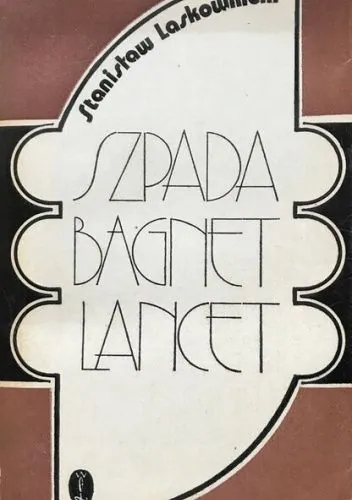

Stanisław Laskownicki (1892–1978), a graduate of Lviv University and a future professor of urology, left behind a collection of memoirs titled “Sword, Bayonet, Lancet” (“Szpada, bagnet, lancet“). In these writings, he described the leisure activities of Lviv’s youth, including their involvement in sports. He paid particular attention to fencing, which was highly popular in student circles at that time, and to duels as a method of conflict resolution.