Donate

Dissent

The word dissent comes from the Latin word dissidens (discordant) and in political theory means a refusal to collaborate with a recognized authority (social, cultural, or governmental). In the former USSR, dissidents were people who disagreed with specific aspects of Soviet ideology and spoke out against them. Small groups of marginalized intellectuals, self-identifying as dissidents, lived under party-state systems, yet embraced non-conformism, which they believed was for the good of society.  Their views were often punished by official ideology. This theme is important, as dissent has often been associated with the act of critical thinking and reading, which is how historians seek to understand and approach source material. Our Educational Platform offers materials involving politics and political prisoners, but we also focus on other forms of non-conformism, such as alternative urban life, or subcultures. When looking at the topic of dissent, history reveals that the struggle for recognition that defined the experiences of those with dissenting identities (minorities, or other excluded groups of people) is central to democratic politics. This theme promotes more meaningful understandings of identity and, with that, a historical conception of politics that is more inclusive and diverse.

Filter by periods:

Primary Sources

Documents (22)

icon
\\
The excerpts presented here are drawn from the memoirs of Fanya Gottesfeld, a Jewish girl from the Galician town of Skala, who survived the Holocaust. In her recollections, she revisits her youth, which unfolded in interwar Poland. Her account bears a distinctive quality: at the onset of the Holocaust, she was eighteen years old—old enough to perceive and record the events unfolding around her, yet still young enough for her reflections to remain free from the hardened frameworks of political dogma or inherited prejudice. Her memories can be interpreted through five overlapping contexts—cultural, economic, political (interethnic), and ethical. The following analysis engages with each of these dimensions to reconstruct the anthropological perspective of...
icon
Leisure Time of Workers through the Eyes of a Soviet Dissident: Oleksa Tykhyi on Reading Practices
Oleksa Tykhyi (1927–1984) was a rural teacher who worked near the Donbas town of Druzhkivka. In 1956, he was sentenced to seven years in a Mordovian labour camp for criticising the Soviet invasion of Hungary. There, he took part in a rebellion against the prison administration and spent a year in solitary confinement. While in the camp, he met many dissidents, including Levko Lukiyanenko, with whom he became friends. After returning to Ukraine in 1964, Tykhyi was banned from intellectual work and forced to leave teaching, taking up manual labour instead — a common path for Soviet dissidents. Most of his journalistic articles were written during this period: “Reflections on the Ukrainian Language...
icon
Letter from Vasyl Stus to PEN International, 11 August 1976
This letter, written by Ukrainian poet, literary critic, human rights activist, and dissident Vasyl Stus, was addressed to PEN International, the global association of writers. Stus penned the letter while serving a sentence in a labor camp in the village of Matrosovo, Tenkivsk District, Magadan Oblast, USSR. He was convicted under Article 62 of the Criminal Code of the Ukrainian SSR (analogous to Article 70 of the Criminal Code of the RSFSR), which charged him with “Anti-Soviet agitation and propaganda.” The letter later became evidence in a new criminal case initiated against Stus in 1980, following his return to Kyiv after completing his initial eight-year sentence. This appeal to the international literary community...
icon
Nestor Makhno on Ukraine in late 1910-1920s
Nestor Makhno’s essays “The Great October in the Ukraine” and “A Few Words on the National Question in the Ukraine” were written in 1926-1927 during his exile. In Paris, where many Ukrainian and Russian political emigres ended up, the community of anarchists organized around the Maknovist movement established the Delo Truda anarchist journal, for which these essays were written. The group was reflecting upon the failure of the anarchist movement and the reasons for Bolshevik’s success among the working masses. One of the main reasons was thought to be the lack of coherent organization, hence this group aimed to produce a set of theoretical and tactical positions for coordination and organization, which would...
icon
Declaration of State Sovereignty of Ukraine, 16 July 1990
The Declaration of State Sovereignty of Ukraine, adopted by the Verkhovna Rada of the Ukrainian SSR on 16 July 1990, was the key document that marked the beginning of Ukraine's path to independence. Its adoption took place in the context of the first pluralistic elections to the Verkhovna Rada of the Ukrainian SSR in March 1990 and the so-called "Parade of Sovereignties" during the late 1980s, a process in which the republics of the USSR proclaimed their autonomy against the backdrop of a weakened union center and Soviet censorship. The document, consisting of a preamble and ten articles, laid down the basic principles of the republic's autonomy policy, reflecting the desire to dismantle...
icon
Hrytsko Chubai’s “prison” poetry
Hrytsko Chubai is one of the most prominent Ukrainian poets of the 1970s and a central figure in the Ukrainian underground culture of Lviv during this period. Below, two poems by Hrytsko Chubai, “Easter - Kosmach, 1970” and “Vertep” are analyzed as part of the course “(Re)thinking “Soviet”: Modern Ukrainian Identity and the Legacy of Communism” (Course Director: Olena Palko, University of Basel).  
Show more Collapse all

Images (1)

Image for Privatization and Economic Transformation in the Post-Soviet Space: The Photo Archive of the Druzhkivka Newspaper Okno, 1990s
Privatization and Economic Transformation in the Post-Soviet Space: The Photo Archive of the Druzhkivka Newspaper Okno, 1990s
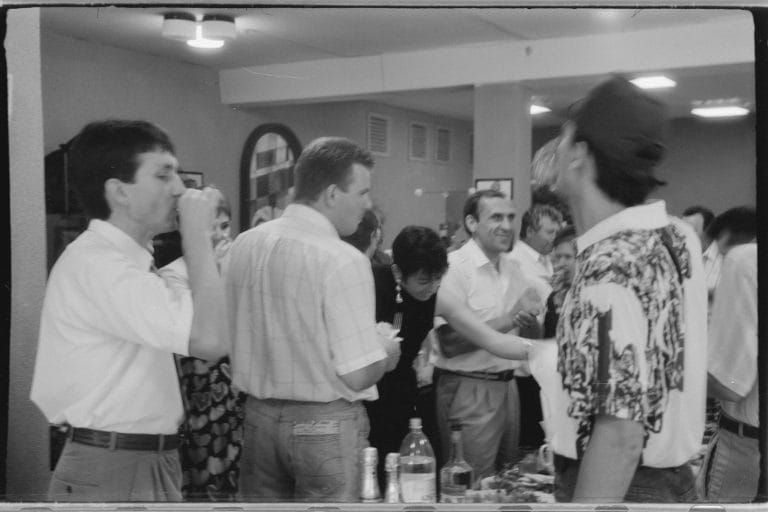
The photographs presented here from the archives of the newspaper Okno [literally “window” — tr.note] document the creative work of its editorial staff, who sought to critically reflect on the realities of Ukraine’s economic transformation in the 1990s through artistic and allegorical means. Founded in 1994 by local entrepreneurs, the newspaper positioned itself in opposition to the old communist nomenclature, which still retained control over local government bodies and capitalized on the widespread disappointment and confusion following the collapse of the Soviet Union. The founders of Okno were the insurance company ASKO-Donbas Pivnichny (established in 1991) and its affiliated printing company PrimaPress. The emergence of the paper ended the local authorities’ monopoly over...
Show more Collapse all

Videos (1)

icon
Bilka, ‘Murator’ People’s Studio Film
  A film by amateur filmmaker Roman Buchko, co-directed with Volodymyr Bordiuk and Roman Chyzhyk. The film is named after the Bilka River in Lviv Oblast, a right tributary of the Poltva (Vistula River basin). It was created at the Murator People’s Film Studio of the Lviv House of Culture of Builders. The triple authorship reflects the specifics of amateur filmmaking in the USSR, where any amateur activity had to be collective. The chosen topic and content of the work were characteristic of Roman Buchko, who systematically worked with this theme. Buchko hailed from the area depicted in the film, the village of Hai, near Zvenyhorod. Noteworthy is that Volodymyr Bordiuk, head...
Show more Collapse all

Audio (1)

icon
“Oh, in the meadow blooms the red viburnum,” a Ukrainian resistance song
This source is an audio recording of the folk version of the one of the most popular Ukrainian resistance songs. It is known by various titles: “The rifleman’s Anthem,” [Cтрілецький гімн] “The song of the viburnum,” [Пісня про калину] or “Oh, in the meadow blooms the red viburnum” [Ой у лузі червона калина]. The song’s worldwide spread was facilitated by the performance of Andriy Khlyvnyuk, the lead singer of the Boombox band, who on February 28, 2022, the fourth day of Russia’s full-scale attack on Ukraine, sang only the first stanza of the song. His performance on St. Sophia Square in Kyiv led to the emergence of remixes. Among the many performers are...
Show more Collapse all

Modules (1)

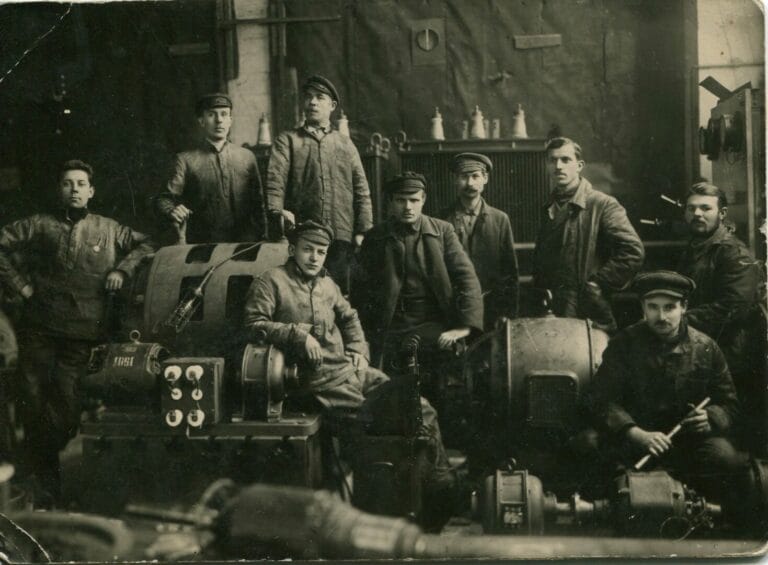
The Soviet government aimed to profoundly transform the styles and structures of people’s everyday lives, encompassing housing, leisure, and work. Particularly ambitious projects were conceived and executed during the 1920s and 1930s. Workers were at the forefront of Soviet social policy, with the Bolshevik Communist Party depicted in Soviet discourse as the avant-garde of the proletariat, primarily serving the interests of the working class. Did these ideas correspond to practice, and at what cost were they realized? This will be discussed in the module by historian Roman Liubavskyi.

Digital stories (0)

Reflections

Texts (1)

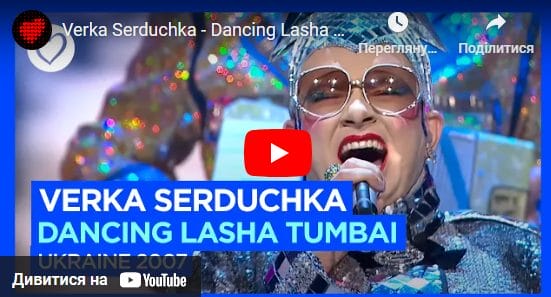
Image for Verka Serdiuchka and Ukrainian National Identity at Eurovision 2007
Verka Serdiuchka and Ukrainian National Identity at Eurovision 2007
This video is a recording of Verka Serdiuchka’s representation of Ukraine in the Eurovision Song Contest 2007 with the song “Dancing Lasha Tumbai.” Verka Serdiuchka is a drag persona performed by a male Ukrainian comedian, actor and singer Andriy Danylko. The character of Serdiuchka embodies a unique cultural archetype: a strong yet simple post-Soviet woman with Ukrainian rural origins. This is usually reflected in the lyrics, her costume designs and her use of “Surzhyk,” a mixed language combining Ukrainian and Russian elements. Danylko’s persona is often labelled as a "jester", both by nationalist-leaning audiences and in some academic circles (Yekelchyk 2010). Some others refer to it as "drinking songs" with heavy use of...
Show more Collapse all

Podcasts (0)

Show more Collapse all

Videos (0)

Show more Collapse all

Syllabi (5)

This Lesson/Unit plan was developed within the Curriculum Development Project: On Ukraine, organized by the Davis Center, Harvard University in partnership with Alexander Langstaff (New York University), and the Center for Urban History in 2024. The project was intended for middle, high school, or community college educators, living and working in the U.S. The author: Paul R. Huard, Ashland High School (Oregon, USA).
This course, created by Prof. Sonya Bilocerkowycz, will examine how Ukrainian writers, filmmakers, and artists depict experiences of war, displacement, ecocide, colonial resistance, and other urgent concerns. Not only that, but we’ll consider how thinking alongside the work of Ukrainian creators can help us strategize ways to address global challenges as well as issues in our local communities. In signing up for this course, students agree to read and write frequently, to share their thoughtful impressions with others, and to help foster an environment of respectful dialogue and collective curiosity.
The course aims at a critical, in-depth exploration of how sexuality is intertwined with other epistemic categories and social differentials from a decolonial perspective and how the project of decolonization might look in the context of Ukraine. The course was created for Invisible University for Ukraine certificate program of the Central European University.
This lecture course comparatively and transnationally investigates twentieth-century communism as a modern civilization with a global outreach. It looks at the global spread of communism as an ideology, an everyday experience, and a form of statehood in the Soviet Union, Europe, Asia (i.e.Mao’s China), and post-colonial Africa. With the exception of North America and Australia, communist regimes were established on all continents of the world. The course will examine this historical process from the October Revolution (1917) to the Chernobyl nuclear disaster (1986), which marked the demise of the communist state. The emphasis is not just on state-building processes or Cold War politics but primarily on the social, gender, cultural and economic policies that...
This course covers the period from the partitions of Poland through the Russian and Habsburg Empires, the Soviet Union and interwar Poland. Students will familiarize with the geopolitical results of Russia’s westward and Austria’s eastward expansions and will focus among other overarching themes on the shtetl, the unique East European Jewish habitat; on Hasidism, a Ukraine-born popular movement of religious enthusiasm; on the interaction between Zionists and Ukrainian nationalists in Galicia; on the development of Ukrainization and Yiddishization (or Ukrainian and Jewish korenizatsiia) in the 1920s and the situation of Jews in Poland in the 1920s; on the Holocaust and its aftermath; on Ukrainians and Jews in the dissident movement; and on Jewish-Ukrainian...