
MINUTES
of the closed party meeting of the primary party organization
Svitoch All-Ukrainian Association
dated June 13, 1989
Registered with the party organization: 262 members of the CPSU
8 candidates for membership in the CPSU
Present: 173 members of the CPSU
6 candidates for membership in the CPSU
Absent due to illness: 14
on vacation – 58
on business trips – 3
at work – 16
AGENDA:
I. On the tasks of the association’s party organization to strengthen party-political work at the present stage.
Speaker: V.K. Sereda
I. HEARD: V.K. Sereda — secretary of the Party Committee, member of the Shevchenkivskyi District Party Committee.
Comrades! Lately, party organizations and labor collectives have increasingly raised questions about how to explain and assess the events currently unfolding in the country, the republic, and the city, aiming to determine the role of communists in these developments.
The Bureau of the District Party Committee and the Party Committee of the Association have decided to address these issues in closed-door party meetings within all labor collectives and to summarize the results at a plenary session of the District Party Committee. We must clearly define our position and adopt a serious, concrete decision that will serve as an action program for communists throughout the district party organization.
As you know, on May 16, 1989, the Central Committee of the Communist Party of Ukraine (CPU) held a plenum, which, following the April (1989) plenum of the Central Committee of the Communist Party of the Soviet Union (CPSU), once again emphasized that “the party remains the political leader, the only real force capable of bringing about revolutionary changes in our society…” The ideas of political, socio-economic, and spiritual renewal are taking root among the broad masses and are being put into practice.
Numerous primary party organizations have seen many noteworthy developments in their efforts to mobilize labor collectives to address specific, socially significant issues.
Perebudova [perestroika — tr.note] is increasingly touching all aspects of organizational and political work. However, numerous problems persist — nationally, within the republic, in the city, the district, and every collective. The variety and complexity of these issues, along with the difficulty many Communists face in analyzing the current situation from a party perspective and defining their own position, have resulted in decreased public activity and a lack of self-confidence among some Communists.
At the same time, a calm and reasoned analysis of four years of perebudova reveals that many positive changes have been achieved.
In foreign policy, guided by a new political mindset, we have significantly raised the prestige of the country, the party, and its leaders on the international stage. As a result, we have secured broad international support for our peace initiatives, improved business ties with the United States, China, and other countries, taken initial steps toward disarmament, ended our troops’ involvement in Afghanistan, and more.
In domestic policy, we have developed a position for the further advancement and improvement of socialism. Stalinism and the era of stagnation have been condemned, and the rehabilitation of those unjustly repressed is underway. We are pursuing a course toward democratizing the country’s political and public life, reforming the electoral system, establishing the rule of law, and strengthening the sovereignty of the union republics. An atmosphere of glasnost and openness is taking hold, and the full authority of the councils is being revived — as evidenced by the Congress of People’s Deputies of the USSR taking place in Moscow — and more.
In the economy, reforms are underway: enterprises are introducing self-financing, self-sufficiency, and self-funding; cooperatives, contracting, and leasing are developing further; and the countryside is being revitalized.
The spiritual sphere of society is also evolving, with international relations emerging as one of the main issues.
The dynamism that marked the initial stage of forming a multinational state was significantly lost and undermined by deviations from Lenin’s principles of national policy, violations of the rule of law during the cult of personality, and the ideology and psychology of stagnation. These negative phenomena were long ignored, suppressed, and never properly assessed by the Party.
Perebudova, democratization, and glasnost, as highlighted in the resolution of the 19th Party Conference, brought these issues to the forefront while simultaneously creating the necessary conditions for their democratic resolution.
Over the past decades, we have made notable progress in promoting internationalism and in the mutual praise it receives. However, in practice, internationalism means that everyone in our country, regardless of nationality, should feel confident, free, and equal wherever they are.
Recently, many questions have arisen about the official status of the Ukrainian language. Our position is clear: we have a state — the Ukrainian Soviet Socialist Republic, an equal member of the Union of Soviet Socialist Republics. We have a government, a national flag, a national anthem, and representation in the UN. We have our own legislative body — the Supreme Council of the Ukrainian SSR. Therefore, there must also be a language. The issue of the Ukrainian language’s official status is currently being addressed.
Recently, interest in national symbols has surged in Lviv. On April 26 of this year, at an environmental rally, some individuals raised yellow-and-blue flags, and a group carried them in the May Day demonstration. Similar flags bearing the trident are being erected at the site where, according to some Lviv residents, a monument to T.H. Shevchenko should stand. A debate is raging over whether these are national or nationalist symbols, and calls are growing to reevaluate our attitude toward the trident and the yellow-and-blue flag—even though many people do not know their origins or meanings.
The Ideological Department of the district party committee has prepared instructional materials for ideological activists titled “National or Nationalist Symbols? In Search of the Truth”. V. Tkachenko, a candidate of historical sciences, also shared his research on this topic in the February 26 issue of the newspaper Radianska Ukraiina [Soviet Ukraine].
Prior to the establishment of Soviet power, Ukraine did not have its own statehood; it was not an independent state or a republic with national symbols. The attempt by the Central Rada of the Ukrainian People’s Republic in 1918 to adopt the trident and the yellow-and-blue flag as national symbols was merely an attempt, since at that time Soviet power had been established in Ukraine with its own revolutionary symbols—the five-pointed star, the hammer and sickle, the coat of arms, and the red-and-blue flag.
As symbols of bourgeois-nationalist ideology, the trident and the yellow-and-blue flag have become relics of a bygone era. Any attempt to revive them would only reignite confrontation and increase tensions among Ukrainians and between different nationalities.
It is deeply troubling that most of those gathering under the yellow-and-blue flags are nationalists, many of whom have previously been held accountable for anti-Soviet and nationalist activities.
Comrades! At the Plenum of the Central Committee of the Communist Party of Ukraine, party organizations in the Lviv region were criticized for not showing sufficient assertiveness in this challenging situation and for failing to respond promptly to harmful, anti-social tendencies. The strengths and weaknesses of our work became especially apparent during the election campaign. Naturally, the overall environment in which the elections were held affected the results. People are dissatisfied with increasing shortages, inflation, and crime. Sometimes, biased media coverage contributed negatively, reinforcing the public perception that leaders are detached bureaucrats — mere careerists. Various demagogues and extremists launched attacks on party cadres. Under the pretense of criticizing the command-and-control system and opposing bureaucracy, they essentially attacked the party and its leading role, as noted in the materials of the Plenum.
The recent election campaign has given us much to assess and many lessons to learn. This matter has already been discussed by the district party committee bureau. The analysis revealed that some party organizations underestimated the novelty and complexity of this election campaign; they did not always know whom to rely on, with whom to work purposefully, or whom to resolutely oppose. In some instances, the right activists were not chosen for information and campaign work. Certain campaigners from the Svitanok All-Ukrainian Association, Vocational School No. 29, and the Promtekhkompleks Central Scientific and Technical Bureau, while distributing invitations, urged people not to vote. Because of negligence by Agroproekt’s campaigners—_________________—some parts of the residential houses and sometimes even whole houses failed to receive invitations. Our informants sometimes struggled to explain the candidate’s campaign platform. There were other shortcomings as well. During the election campaign, we faced open political opponents with far-reaching goals. Not all communists proved themselves as true party fighters in these circumstances.
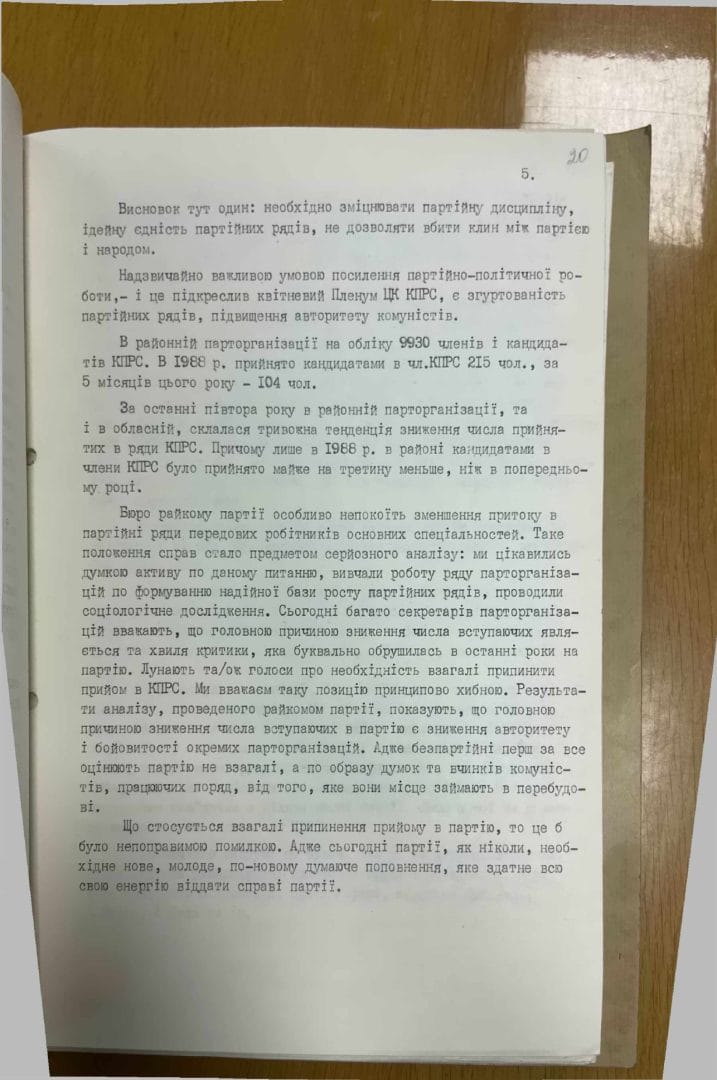
The conclusion is clear: we must strengthen party discipline and ideological unity within our ranks, and prevent any division between the party and the people.
A crucial condition for strengthening party-political work—as emphasized by the April Plenum of the Central Committee of the CPSU — is unity within the party ranks and the enhancement of the Communists’ authority.
The district party organization has 9,930 registered members and candidates of the CPSU. In 1988, 215 people were admitted as candidates for membership, and in the first five months of this year, 104 people joined.
Over the past year and a half, both district and oblast party organizations have observed an alarming decline in the number of new members joining the CPSU. In 1988, the district admitted almost one-third fewer candidates for CPSU membership compared to the previous year.
The district party committee is particularly concerned about the declining influx of leading workers in key professions into the party ranks. To address this, we consulted party activists, examined the work of various party organizations in building a solid foundation for growth, and conducted a sociological survey. Today, many party organization secretaries attribute the decline in new members to the wave of criticism that has recently crashed down on the party. Some have even called for a complete halt to CPSU admissions — a position we consider fundamentally flawed. Our analysis indicates that the primary reason for fewer new members is the reduced authority and pressure of certain party organizations. Ultimately, non-party members judge the party not in general, but by the views and actions of the communists who work alongside them and by the role they play in perebudova.
Completely suspending new admissions to the party would be an irreparable mistake. Now, more than ever, the party needs new, young, and innovative recruits who are ready to devote all their energy to its cause.
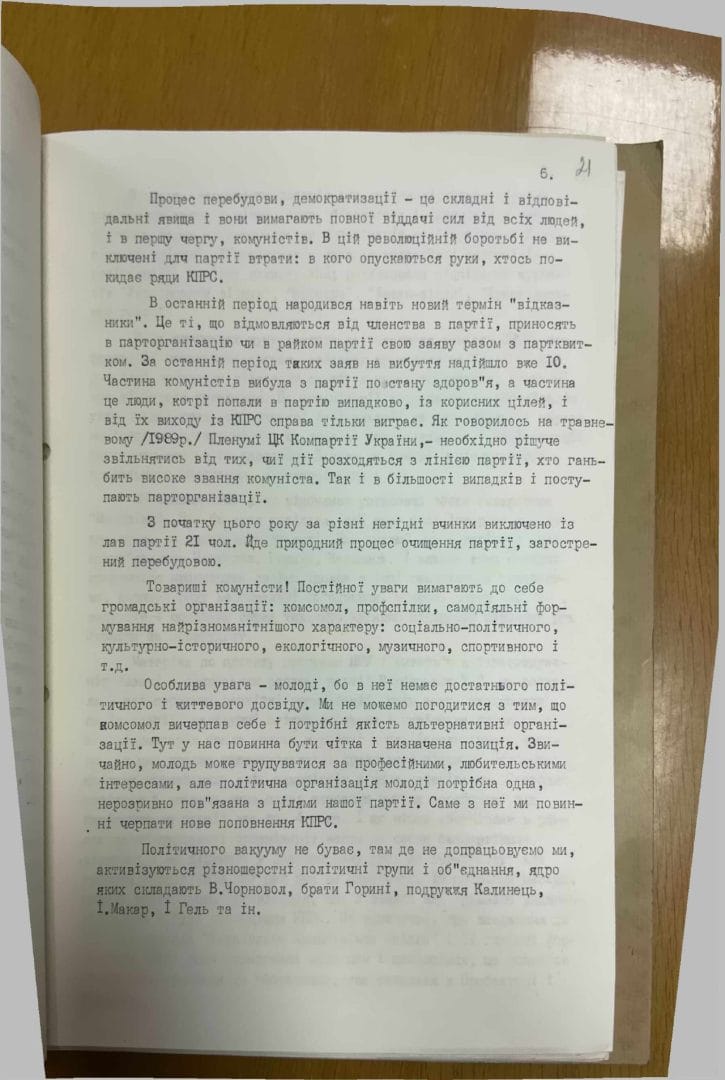
The processes of perebudova and democratization are complex and demanding, requiring the full commitment of everyone — especially Communists. In this revolutionary struggle, losses are inevitable: some lose heart, while others leave the ranks of the CPSU.
Recently, a new term has emerged: conscientious objector [vidkasznyk]. These are individuals who renounce their party membership by submitting resignation letters and party cards to the party organization or district party committee. In recent times, 10 such resignations have already been received. Some communists have left for health reasons, while others joined the party by chance or for opportunistic reasons — departures that ultimately benefit the CPSU. As stated at the May (1989) Plenum of the Central Committee of the Communist Party of Ukraine, we must resolutely remove those whose actions diverge from the party line and who bring disgrace to the high title of communist. This is precisely what party organizations are doing in most cases.
Since the beginning of this year, 21 people have been expelled from the party for various reprehensible acts. A natural process of party purification is underway, accelerated by perebudova.
Comrades! Public organizations require our constant attention: the Komsomol, trade unions, and a wide variety of voluntary groups — social-political, cultural-historical, environmental, musical, athletic, and more.
We must pay special attention to young people, as they lack sufficient political and life experience. We cannot agree that the Komsomol is obsolete or that alternative organizations are needed. On this matter, our position must be clear and well-defined. While young people may form groups around professional or recreational interests, there must be a single political youth organization, closely tied to our party’s goals. It is from this organization that we must draw new recruits for the CPSU.
There is no such thing as a political vacuum. Wherever we fail to act, various political groups and associations become active, often led by V. Chornovil, the Horyn brothers, the Kalynets couple, I. Makar, I. Hel, and others.
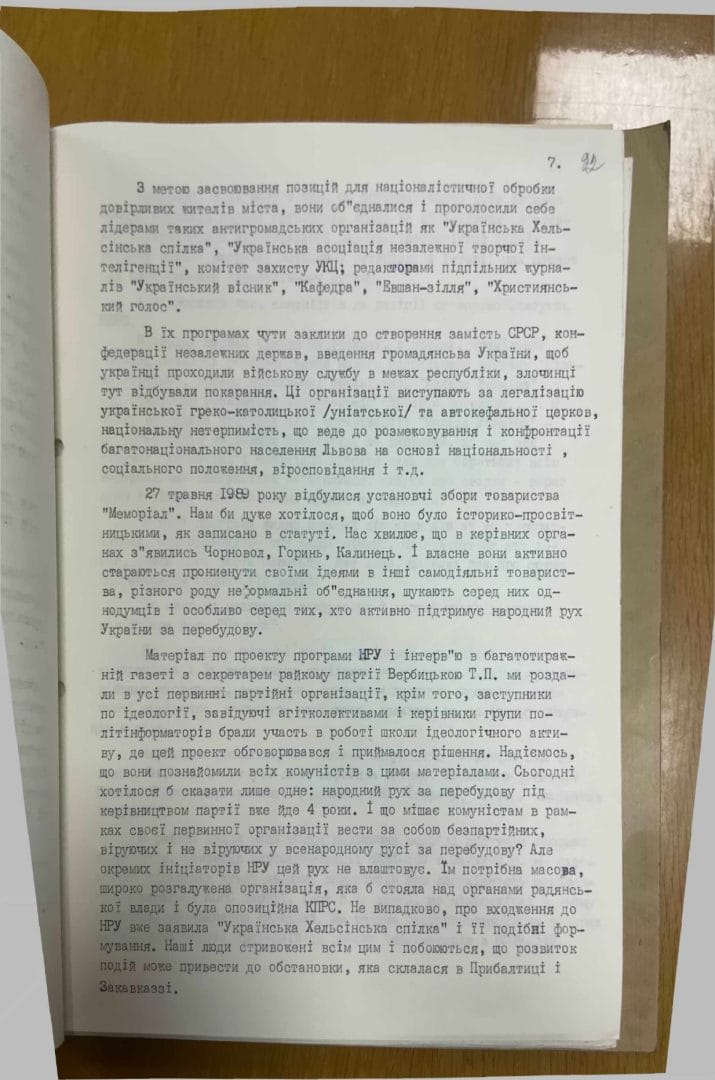
To secure a foothold for nationalist indoctrination among the city’s gullible residents, they have united and declared themselves leaders of anti-social organizations such as the Ukrainian Helsinki Union, the Ukrainian Association of Independent Creative Intellectuals [Українська Асоціація Незалежної Творчої інтелігенції], and the Committee for the Defense of the Ukrainian Catholic Church. They also serve as editors of underground journals like Ukraiinskii Visnyk [Ukrainian Herald], Kefedra [Department], Evshan-zillia, and Khrystyianskyi Holos [Christian Voice].
Their platforms call for the creation of a confederation of independent states to replace the USSR, the introduction of Ukrainian citizenship so Ukrainians would serve within the republic, and for criminals to serve their sentences here. These organizations advocate the legalization of the Ukrainian Greek Catholic (Uniate) and Autocephalous Churches, as well as promote national intolerance — leading to division and confrontation among Lviv’s multinational population along lines of nationality, social status, religion, and more.
On May 27, 1989, the founding meeting of the Memorial Society took place. While we would like it to be a historical and educational organization, as stated in its charter, we are concerned that Chornovil, Horyn, and Kalynets have joined its governing bodies. In fact, they are actively attempting to spread their ideas into other volunteer organizations and informal groups, seeking like-minded individuals — especially among those who actively support Ukraine’s people’s movement for perebudova.
We distributed materials on the People’s Movement of Ukraine draft program and an interview in a widely circulated newspaper with T.P. Verbytska, secretary of the district party committee, to all primary party organizations. Additionally, deputies for ideology, heads of propaganda teams, and leaders of political information groups took part in a school for ideological activists, where this draft was discussed and a decision was made. We trust they have familiarized all Communists with these materials.
Today, I want to emphasize one point: the people’s movement for perebudova under the Party’s leadership has been underway for four years. What prevents Communists, within their primary organizations, from leading non-party members, believers, and non-believers in this nationwide movement? Yet, certain People’s Movement of Ukraine initiators are dissatisfied. They seek a large, wide-reaching organization that would stand above the organs of Soviet power and oppose the CPSU. It is no coincidence that the Ukrainian Helsinki Union and similar groups have already announced plans to join the People’s Movement of Ukraine. Our people are alarmed by all this and fear the situation could develop as it did in the Baltic states and the Transcaucasus.
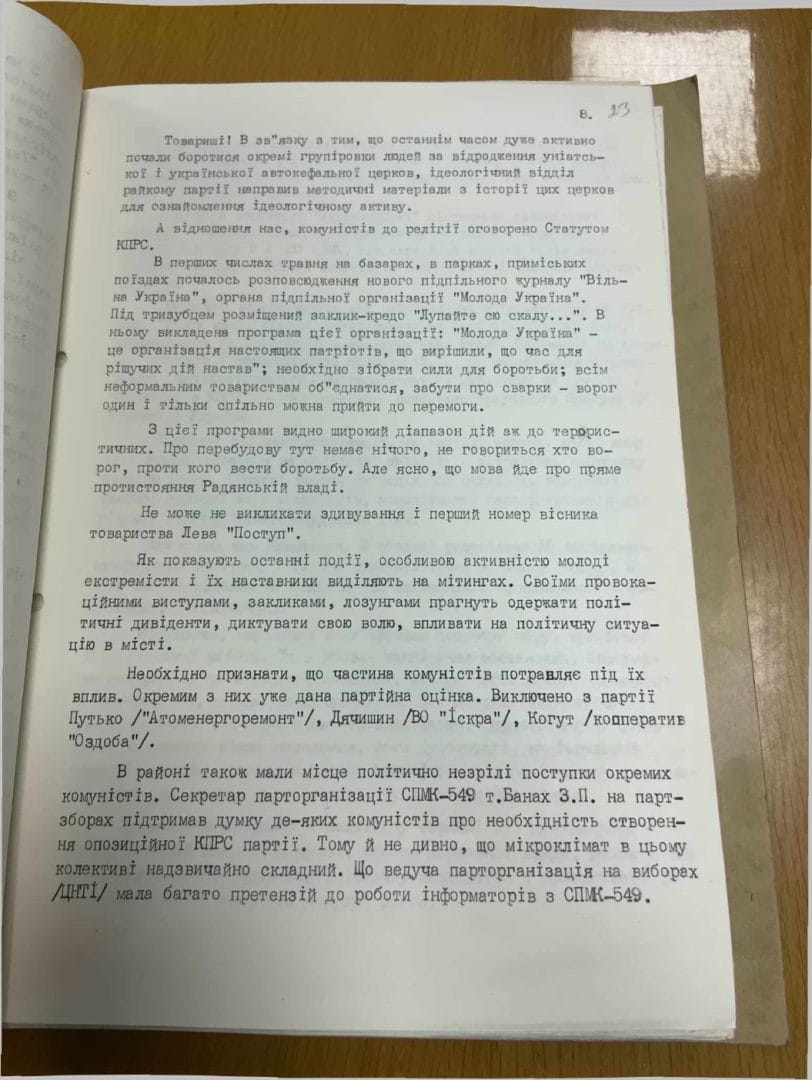
Comrades! Recently, certain groups have begun actively campaigning for the revival of the Uniate and Ukrainian Autocephalous Churches. In response, the Ideological Department of the District Party Committee has distributed instructional materials on the history of these churches for our ideological cadres to review.
Our attitude as Communists toward religion is clearly stated in the Statute of the Communist Party of the Soviet Union.
In early May, a new underground magazine, Vilna Ukraiina [Free Ukraine] — the publication of the underground organization Moloda Ukraiina [Young Ukraine] — began circulating in markets, parks, and commuter trains. Beneath the trident appears the rallying cry and credo: “Chisel away at that rock….” The magazine outlines the organization’s program: “Moloda Ukraiina is an organization of true patriots who have decided that the time for decisive action has come.” It calls for gathering forces for the struggle, uniting all informal groups, and putting aside quarrels—declaring that there is only one enemy and that victory can be achieved only through unity.
This program reveals a broad spectrum of actions, extending even to terrorist acts. There is no mention of perebudova, nor is it specified who the enemy is or against whom the struggle should be waged. However, it is clear that the text refers to direct confrontation with the Soviet authorities.
The first issue of Tovarystvo Leva’s newsletter, Postup [Progress], is also noteworthy.
As recent events show, young extremists and their mentors are particularly active at rallies. With provocative speeches, appeals, and slogans, they aim to reap political dividends, impose their will, and influence the city’s political situation.
It must be acknowledged that some communists have fallen under their influence. Party disciplinary action has already been taken against several individuals. The following have been expelled from the party: Putko (Atomenerhoremont), Diachyshyn (Iskra All-Union Association), and Kohut (the Ozdoba cooperative).
Politically immature actions by individual Communists have also occurred in the district. At a party meeting, the secretary of the Specialized Mobile Mechanized Column No. 549 party organization, Comrade Z.P. Banakh, supported the view of some Communists regarding the need to create a party opposed to the CPSU. It is therefore not surprising that the atmosphere within this collective is extremely tense. The leading party organization in the elections (Center for Scientific and Technical Information) received many complaints about the work of informants from Specialized Mobile Mechanized Column No. 549.
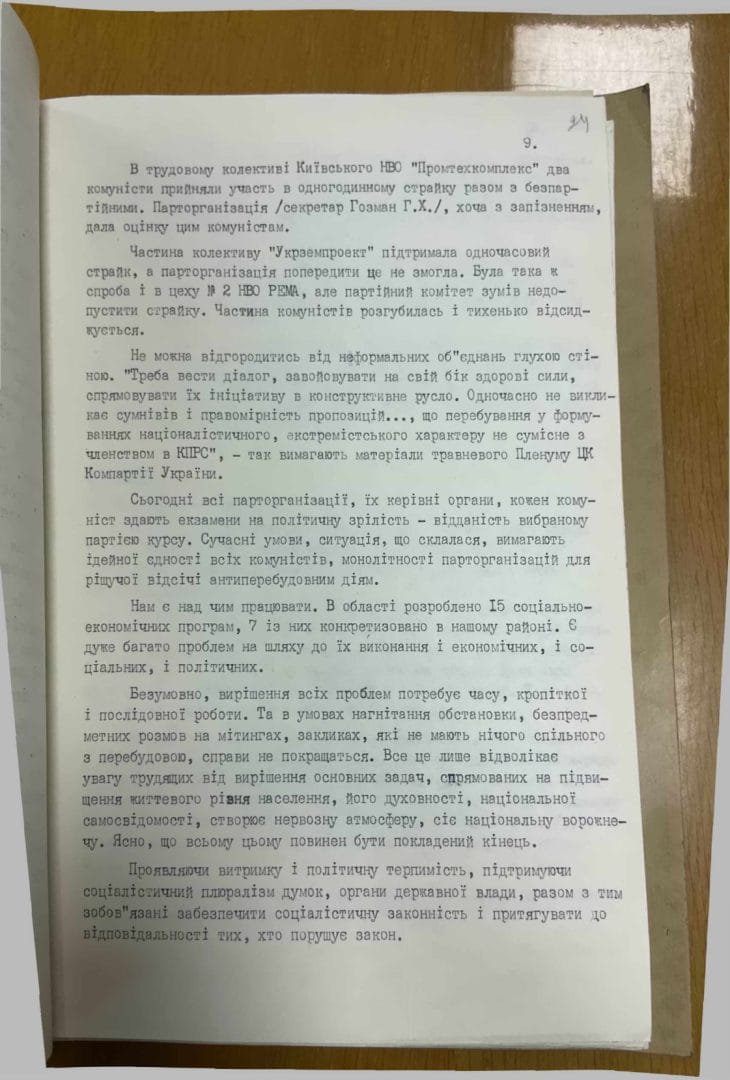
At the Kyiv Scientific and Production Association “Promtekhkompleks,” two Communists participated in a one-hour strike alongside non-party members. The party organization, led by Secretary H. Kh. Hozman, assessed its actions — though belatedly.
Part of the Ukrzemproekt workforce supported a one-hour strike, which the party organization was unable to prevent. There was a similar attempt in Workshop No. 2 of the Lviv Plant of Radioelectronic Medical Equipment, but in that case, the party committee managed to prevent the strike. Some Communists remain uncertain and are quietly biding their time.
We cannot wall ourselves off from informal groups. “We must engage in dialogue, win over healthy forces to our side, and channel their initiative in a constructive direction. At the same time, there is no doubt about the legitimacy of the proposals… that participation in nationalist or extremist groups is incompatible with membership in the CPSU”, as noted in the materials from the May Plenum of the Central Committee of the Communist Party of Ukraine.
Today, all party organizations, their governing bodies, and every Communist are being tested for political maturity — their loyalty to the party’s chosen course. The current situation demands ideological unity among all Communists and solidarity among party organizations to decisively repel anti-perebudova actions.
We have much work ahead. Fifteen socioeconomic programs have been developed in the region, seven of which have been implemented in our district. Yet, numerous economic, social, and political obstacles stand in the way of their implementation.
Naturally, solving all these problems requires time, painstaking effort, and consistent work. However, amid escalating tension, baseless rhetoric at rallies, and calls unrelated to perebudova, the situation will not improve. All of this only distracts working people from tackling the core tasks of raising living standards, spiritual well-being, and national self-awareness. It creates a tense atmosphere and sows national discord. Clearly, this must be brought to an end.
While demonstrating restraint and political tolerance, and upholding socialist pluralism of opinion, state authorities are also obligated to ensure socialist legality and hold lawbreakers accountable.
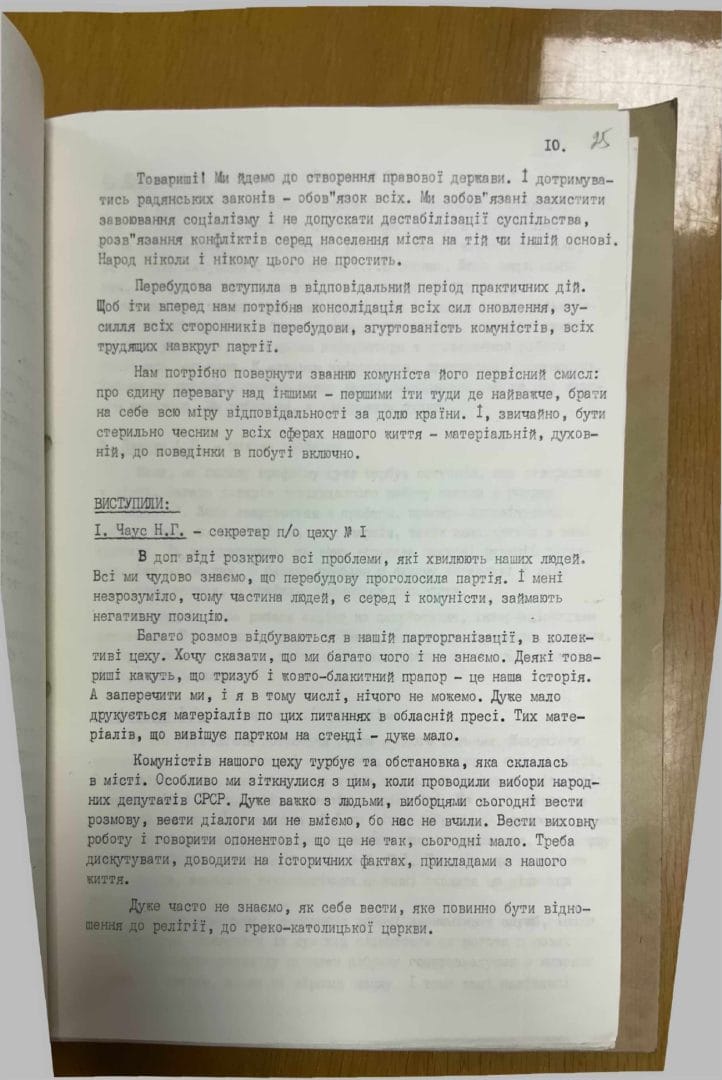
Comrades! We are moving toward creating a state governed by the rule of law, and it is everyone’s duty to abide by Soviet laws. We must defend the achievements of socialism and prevent the destabilization of society or the outbreak of conflicts among the city’s population on any grounds. The people will never forgive this, regardless of who is responsible.
Perebudova has entered a critical phase of practical action. To move forward, we need to consolidate all forces of renewal, harness the efforts of all supporters of perebudova, and unite Communists and all working people around the Party.
We need to restore the original meaning of the title “communist”: the unique distinction of being the first to go where it is most difficult, taking full responsibility for the fate of the country. And, of course, being absolutely honest in every aspect of our lives — material, spiritual, and even in our daily conduct.
SPEAKERS:
I. N.H. Chaus — Secretary of the party organization of Workshop No. I
The report addressed all the issues that concern our people. We all know that the party initiated perebudova, so I do not understand why some people, including certain communists, take a negative stance.
There is much discussion within our party organization and among the workshop staff. I must say, there is a lot we do not know. Some comrades claim that the trident and the yellow-and-blue flag represent our history — and I, for one, cannot dispute that. Very little is published on these topics in the oblast press, and the Party Committee posts few materials on the bulletin board.
The Communists in our workshop are concerned about the situation unfolding in the city. We especially noticed this during the elections for deputies to the Supreme Soviet of the USSR. Today, it is very difficult to talk to people — to voters — since we were never taught how to engage in real dialogue. Simply doing educational work or telling an opponent they are wrong is no longer enough. We need to debate our position, using historical facts and examples from our own lives.
Very often, we are unsure how to conduct ourselves or what our attitude toward religion — and the Greek Catholic Church — should be.
2. S.F. Tsykalo — Secretary of the party organization of Workshop No. 2
I agree with many of the issues raised in the report. Today, it is difficult for me to carry out educational work within the collective. I cannot answer the communists’ or workers’ questions regarding symbols, and the situation with the T.H. Shevchenko monument remains unclear. People are dissatisfied with the rising crime rate; it has become frightening to leave the house. I believe members of the Party Committee need to visit the workshops and conduct explanatory work. We received feedback regarding the elections; perhaps there were some oversights, but overall, the informants took their work seriously. Communists were assigned to assist the young informants. Recruitment efforts should be carried out daily, but not under pressure from the Party Committee. We are working, and the results will follow.
3. A.H. Diakova — Chair of the Trade Union Committee
As chair of the trade union committee, I am deeply concerned about the situation in the city; many everyday household goods have become scarce. People are turning to the trade union committee, asking us to help organize the sale of these goods. Trade unions, like the party, are also facing criticism and are accused of having lost their role in protecting workers. But that is not the case. There are many challenges in our collective, and whenever people reach out, the trade union committee does its best to help.
Today, we must place greater emphasis on patriotic and internationalist education. We need more contact with soldiers and should organize evening events and debates. We must not fear new ideas and viewpoints; rather, we should seek out what is rational in them and compare different perspectives.
4. I.R. Leshchyshyn — Secretary of the party organization of the Administration
The party organization of the administration is organizing a meeting on this issue. The Communists in the administration are also concerned about the situation in our city. The report highlights the positive changes that have taken place in our society — in foreign and domestic policy, as well as in the economy. This is evident in our own enterprise: since January 1, the enterprise has been operating under a lease agreement. This achievement resulted from the efforts of our entire collective, especially the party organizations of Workshops No. 4 and No. 1. I believe Communists in other shops, particularly the production shops, should take the lead in this area of work.
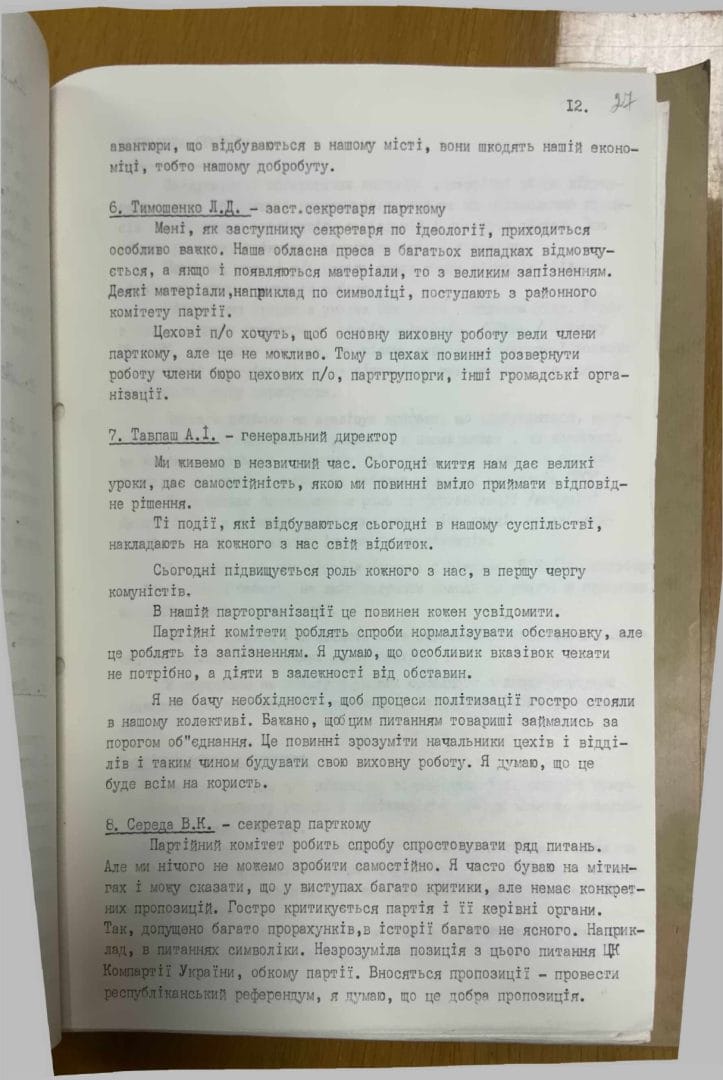
It is important to understand and support the work of the economic departments and other specialists. We must listen to their reports on preparations for operating under the new conditions. Hosprozrakhunok [khozraschyot—tr.note] should be further developed at the lower level. I believe we are on the right track. Therefore, the political upheavals occurring in our city are harming our economy — and, by extension, our well-being.
6. L.D. Tymoshenko — Deputy Secretary of the Party Committee
As deputy secretary for ideology, I am encountering particular challenges. Our oblast press is often silent, and even when articles are published, they appear with significant delay. Some materials — such as those concerning symbols — come from the district party committee.
The workshop party organizations expect the main educational work to be done by members of the Party Committee, but this is not feasible. Therefore, bureau members of the workshop party organizations, party group leaders, and other public organizations must take the lead in this work within the shops.
7. A.I. Tavpash — General Director
We are living in extraordinary times. Today, life is teaching us important lessons and giving us the autonomy we need to make the right decisions.
The events unfolding in our society today leave a mark on each of us.
Today, the role of each of us is growing — especially that of communists.
Everyone in our party organization must realize this.
Party committees are trying to normalize the situation, but they are acting too late. I believe we should not wait for specific instructions but instead act according to the circumstances.
I do not see the process of politicization as a pressing issue within our collective. It is preferable for comrades to address these matters outside the association. Workshop and department heads must understand this and structure their educational efforts accordingly. I believe this approach will benefit everyone.
8. V.K. Sereda — Secretary of the Party Committee
The Party Committee is working to address a number of issues, but we cannot accomplish anything alone. I often attend rallies and can attest that, while speeches contain much criticism, they rarely offer concrete proposals. The Party and its governing bodies face sharp criticism. Certainly, many mistakes have been made, and there are still many unclear aspects in our history — for example, the issue of symbols. The position of the Central Committee of the Communist Party of Ukraine and the oblast party committee on this matter remains unclear. Proposals have been made to hold a republic-wide referendum, and I believe this is a good idea.
RESOLUTION OF THE MEETING:
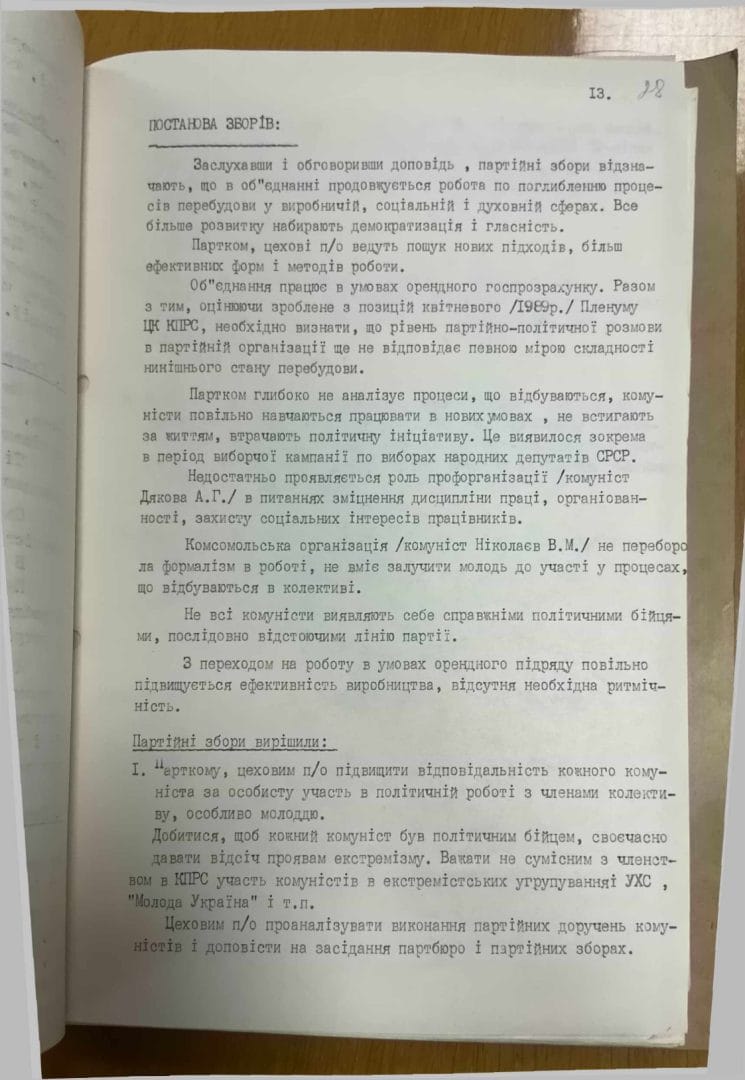
Having heard and discussed the report, the party meeting notes that efforts within the association to advance perebudova processes in the economic, social, and spiritual spheres continue. Democratization and glasnost are steadily gaining momentum.
The Party Committee and workshop committees are seeking new approaches and more effective methods of work.
The acossiation operates under a lease-based hosprozrakhunok. However, in light of the April 1989 Plenum of the Central Committee of the Communist Party of the Soviet Union, it must be acknowledged that the level of party-political discourse within the organization does not yet fully match the complexity of the current stage of perebudova.
The Party Committee does not thoroughly analyze ongoing processes; Communists are slow to adapt to new conditions, are falling behind the times, and are losing political initiative. This was especially evident during the campaign for the election of People’s Deputies of the USSR.
The trade union organization (headed by Communist A.H. Diakova) plays an insufficient role in strengthening labor discipline, organizational cohesion, and protecting workers’ social interests.
The Komsomol organization (led by Communist V.M. Nikolaev) has not overcome formalism in its work and is unable to engage young people in the processes taking place within the collective.
Not all Communists have proven themselves to be true political fighters who consistently follow the Party line.
With the transition to a lease-contract system, production efficiency is gradually increasing, but the necessary pace is still lacking.
The Party meeting resolved:
I. The Party Committee and workshop party organizations shall enhance each Communist’s responsibility for personal involvement in political work with members of the collective, especially the youth.
Ensure that every Communist serves as a political fighter and promptly counter any manifestations of extremism. Participation by Communists in extremist groups such as the Ukrainian Helsinki Union, Moloda Ukraiina, and similar organizations shall be considered incompatible with CPSU membership.
Workshop party organizations should analyze how Communists fulfill Party assignments and report on this at Party Bureau meetings and Party meetings.
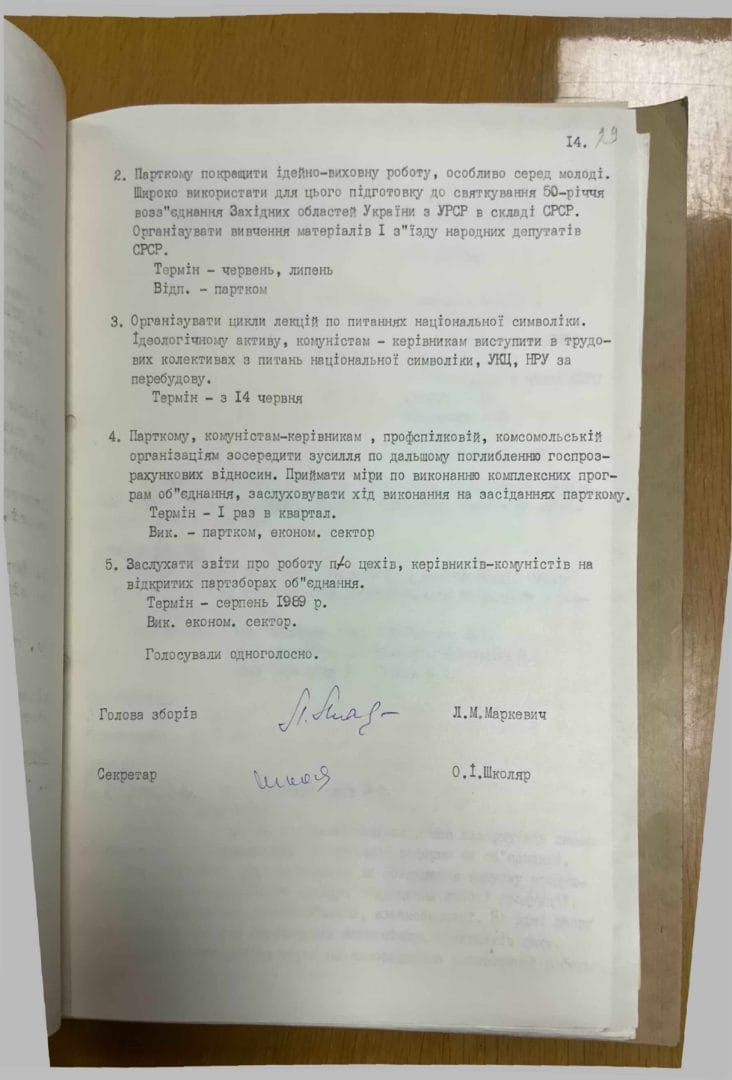
2. The Party Committee should strengthen ideological and educational work, especially among young people. To this end, make extensive use of preparations for the celebration of the 50th anniversary of the reunification of the Western Regions of Ukraine with the Ukrainian SSR as part of the USSR. Organize the study of materials from the First Congress of People’s Deputies of the USSR.
Deadline: June, July
Responsible: Party Committee
3. Organize a lecture series on issues related to national symbols. Ideological activists and Communist Party leaders should address labor collectives on topics such as national symbols, the Ukrainian Catholic Church, and the People’s Movement of Ukraine for perebudova.
Deadline: starting June 14
4. The Party Committee, Communist leaders, and trade union and Komsomol organizations should focus their efforts on further developing the relations based on hosprozrakhunok. Take measures to implement comprehensive programs of the association and review progress at Party Committee meetings.
Deadline: Once per quarter.
Responsible party: Party Committee, Economic Sector
5. Hear reports on the work of workshop party organizations, as well as from Communist managers, at open party meetings of the association.
Deadline: August 1989
Responsible party: Economic Sector.
The vote was unanimous.
Chair of the Meeting [signature] L. M. Markevych
Secretary [signature] O. I. Shkoliar
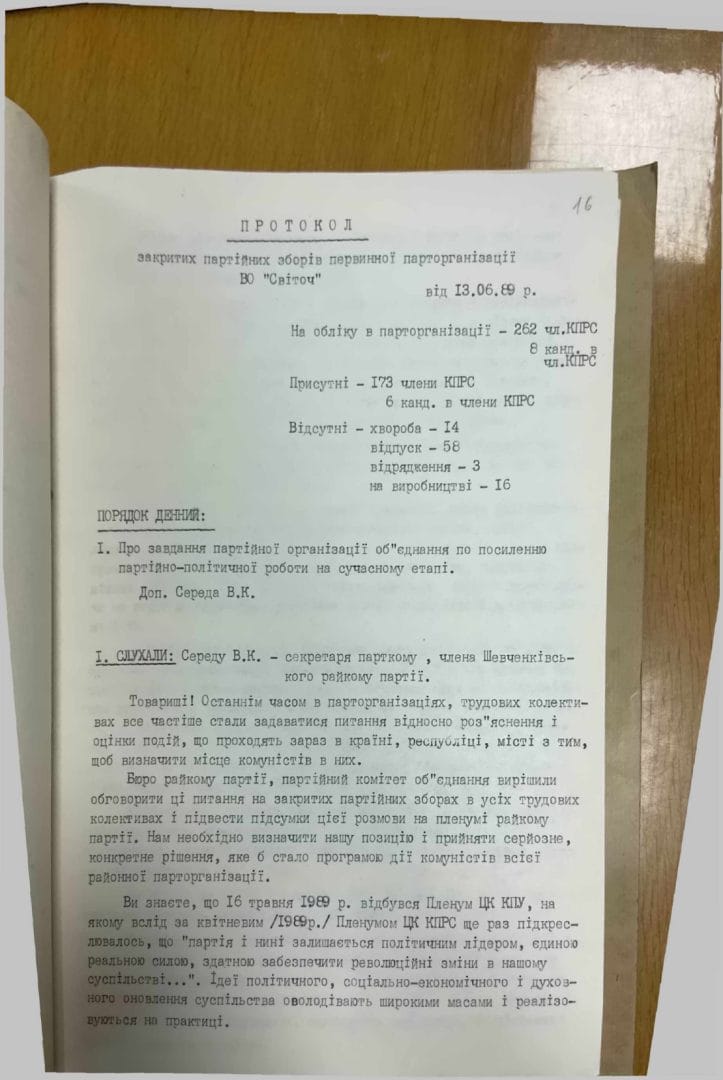
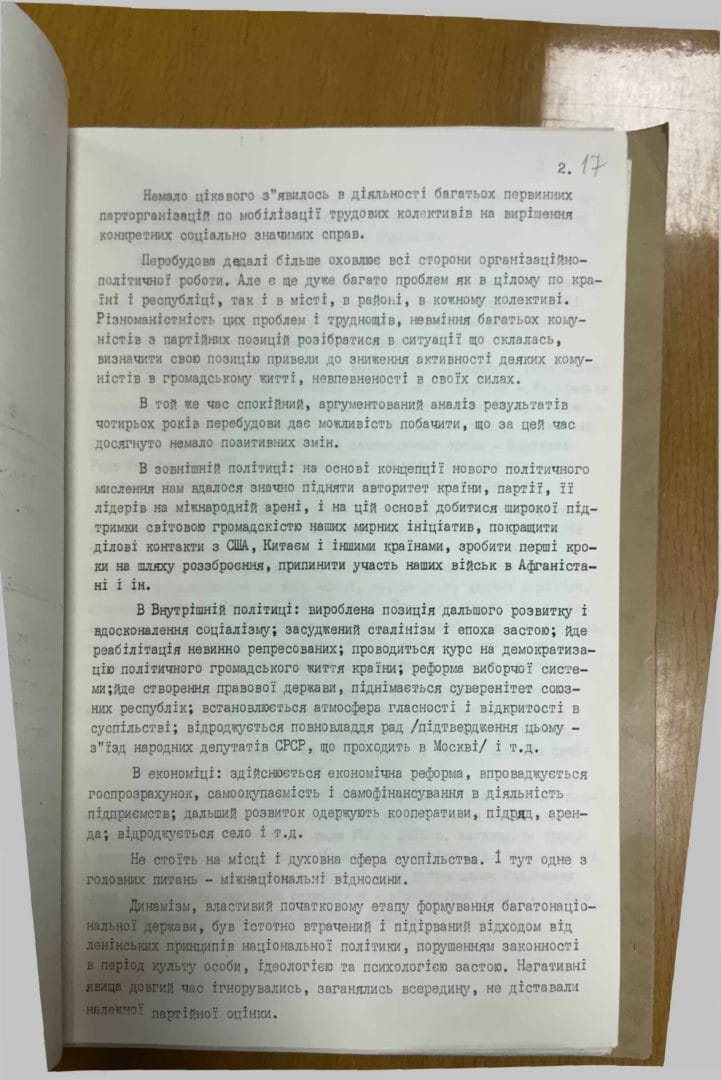
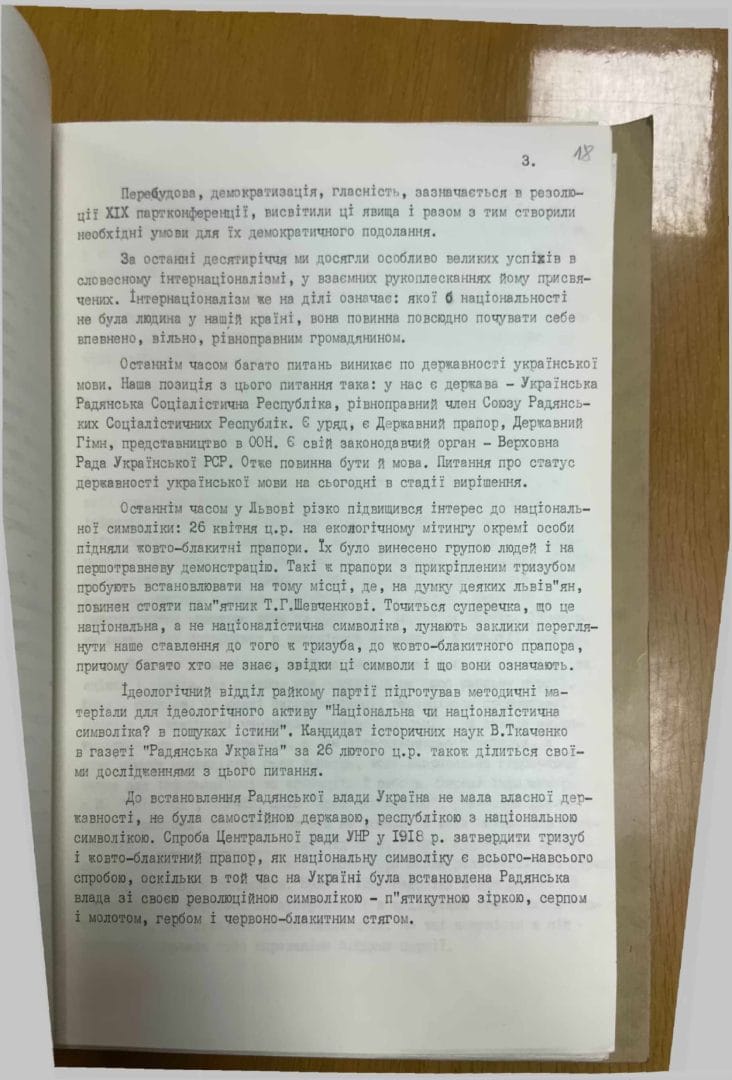
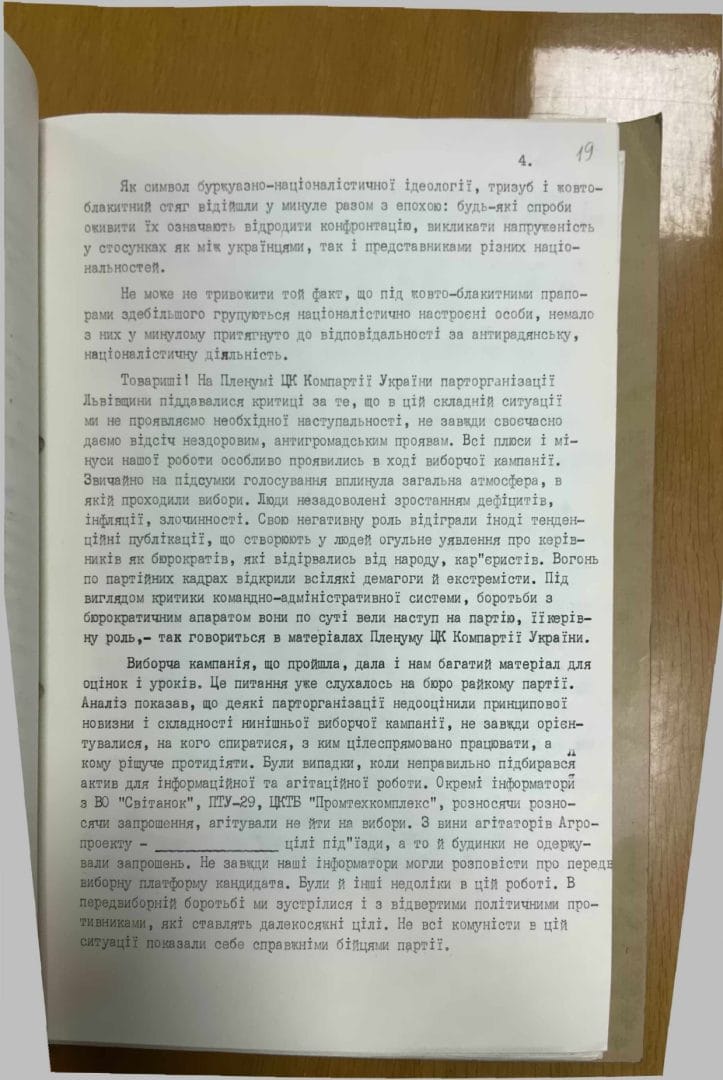


This document presents the minutes of a closed party meeting of the primary party organization of the Svitoch Confectionery Industry Association in the Shevchenkivskyi District of Lviv, held on June 13, 1989. Only party members and candidates for party membership attended. The sole agenda item was party-political work amid the reforms of perebudova (perestroika). The minutes record speeches by the secretary and deputy secretary of the association’s party committee, the secretaries of the workshop party organizations, the head of the trade union, and the association’s general director. Ukrainian was the predominant language used at the meeting.
The keynote speaker — the secretary of the Svitoch Association’s party committee and a member of the Shevchenkivskyi District Committee — traditionally began by discussing changes in domestic and foreign policy, the economy, and public life, as interpreted in the resolutions of the Plenums of the Central Committee of the CPSU/CPU (April–May 1989) and the 19th All-Union Party Conference (June 1988). The main part of the speech focused on analyzing the Communist Party’s activities during the February–March 1989 election campaign and outlining the directives of the top leadership regarding the activities of newly formed associations, national symbols, the status of the Ukrainian language, and the legalization of the Ukrainian Greek Catholic Church.
The 1989 elections — the first alternative elections — were held in accordance with the new Election Law, adopted following the resolution of the 19th All-Union Conference of the Communist Party of the Soviet Union “On the Democratization of Soviet Society and the Reform of the Political System”. Authorities permitted active public participation in the pre-election process, relying on the numerical superiority of the Communists and administrative resources. Alternative candidates promoted slogans advocating for the decentralization of power, full sovereignty for the republic, and the expansion of the opposition. Unconventional campaigning methods and formats were used, including political debates, street concerts, caricature displays, open-air discussions of public affairs, and campaigning on public transportation. After the second round of voting, opposition figures R. Bratun, I. Vakarchuk, and Y. Sorochyk were elected as People’s Deputies of the USSR.
Party members in Lviv acknowledged that party organizations had underestimated the complexity and novelty of the election campaign, and that campaigners were insufficiently trained and had lost the initiative. Following the recommendations of the Central Committee of the Communist Party of Ukraine, local authorities were advised to strengthen party discipline and ideological unity, enhance the authority of party members, and pay closer attention to public organizations such as the Komsomol, trade unions, and informal groups. The examples cited in the report illustrate a loss of control over socio-political processes. Notably, the director of the Svitoch Association advised the party committee to carry out its work outside the enterprise.
The document mentions public associations not controlled by the CPSU: the Ukrainian Helsinki Union, the Ukrainian Association of Independent Creative Intellectuals, the Memorial Historical and Educational Society, the Committee for the Defense of the Ukrainian Catholic Church, Moloda Ukraiina, Tovarystvo Leva, the People’s Movement of Ukraine, and the Taras Shevchenko Society of the Ukrainian Language — all of which played an active opposition role during the elections. According to Article 6 of the Constitution, their charters did not pursue a communist agenda and were therefore deemed illegal. Their activities are described as antisocial, nationalist, extremist, and terrorist. Calls for the legalization of the Ukrainian Greek Catholic and Autocephalous Churches were equated with inciting national intolerance.
It is worth noting that the document acknowledges ongoing work on legislative amendments in the Ukrainian SSR to grant official status to the Ukrainian language. At the same time, Ukrainian national symbols (the blue-and-yellow flag, the trident), which publicly reappeared on April 26, 1989, at a rally marking the anniversary of the Chornobyl disaster in Lviv, are described — according to official ideology — as symbols of bourgeois-nationalist ideology. Campaigners are advised to read the article by V. Tkachenko and O. Reyent, “National Symbols: Past and Present,” in the newspaper Radianska Ukraiina [Soviet Ukraine] (February 26, 1989), in preparation for organizing a series of lectures for the celebration of the 50th anniversary of the reunification of the Western Regions of Ukraine with the Ukrainian SSR as part of the USSR.