
“[…] But back then, in ’88, the thaw had already begun. I joined — even though there weren’t any political parties yet, just the Ukrainian Helsinki Group. So I joined. Levko Lukianenko, Chornovil, Horyn — they were the main figures, and that was it. I became part of that group […]”
“[…] In the late ’80s and early ’90s, people had such different views. Some were like that, and others, you know, even warned me. An older guy — a war veteran who was friendly toward me—said, ‘Mykhailo, you know, they’ll lock everyone up eventually for speaking out. You’re speaking out too sharply. I also spoke out against the director — but [the thaw] is only temporary, people will be locked up […]”
(Employee of the “Polaron” Production Association, 1960–1989)
“[…] Politics, I’ll tell you, wasn’t really our thing. The only time politics truly took off was during Gorbachev’s era — around ’86 or ’87 — when it spread throughout the workshops. That’s when I became active in rallies and demonstrations near the university. At first, we gathered at Stefanyk’s, in what used to be the gas plant’s club. Later, I don’t quite remember how it changed. We’d meet there in the evenings, where Chornovil and the leaders of the People’s Movement would speak. Eventually, they kicked us out — someone reported that certain groups were gathering there, so the club’s management banned it. So we moved on. I remember Chornovil saying: since they’ve shut us down and won’t let us meet indoors, let’s go to Ivan Franko. That’s when the rallies truly began. I took an active part in the rallies and demonstrations of ’88–’89 and ’90–’91. I was really involved. Afterward, there were conversations in the workshops; the guys knew I was at the rallies, so they’d ask, “Vlodko, what happened there? I was still working and going around the workshops […]”
(Elektron employee, 1959–1997)
“[…] Well, to be honest, I was a party member — and, on top of that, a member of the factory’s party committee. That was a serious thing, as they say. I’m not saying I was eager to join, or that I joined the party consciously, or that I didn’t want to join. When I started working as a foreman, the shop’s party organization approached me and said: ‘You work with people, you’re young, you’ll learn, you need to grow. You know that if you’re a party member, you have a better chance of moving up in your career’. Well, I’m neither ashamed nor particularly proud of it. It was just the situation at the time. Since we’re talking politics and the party, I want to say that when perestroika began, many people were filled with euphoria — everything was changing. And so, a person who had dedicated his whole life to the cause of an independent Ukraine came to me with a proposal: ‘Mykola Dmytrovych, we’ve known you for many years. Even though you were a party member, we’ve consulted with our comrades, and we’re now forming the Party of Romantics of Ukraine’. I said, ‘The Party of Romantics of Ukraine?’ This was when the Movement was gaining strength, when the democratic party, led by Levko Lukianenko, had already been established. I said, ‘Good people, first of all, I have no intention of joining any party right now, at least not in the near future, no matter what they offer me. Second, as someone who has been dealing with people for a long time, I’ll tell you — it’s just one step from love to hate. And now, with such a surge of enthusiasm and with organizations already putting forward ideas that are, in my view, correct, we shouldn’t scatter our efforts; we need to rally around them, roll up our sleeves, and get to work.’ […]”
(Deputy Technical Director of LAZ, 1986–1997)
“[…] Probably sometime in ’89 — yes, ’89 — after my second maternity leave, I had already been elected secretary of the Komsomol organization at the Lviv Yeast Factory. But when I looked at those Komsomol members working there, I went to the district party committee and said: ‘There is no Komsomol organization at the Lviv Yeast Factory’. It was impossible to even collect membership dues, let alone hold a Komsomol meeting or resolve any issues. It was unrealistic because everyone was just minding their own business. And at that time, the Komsomol was already losing its influence. That was it. So, in fact, I successfully dismantled the Komsomol organization at the Lviv Yeast Factory. I shut it down […]”
(Employee of the Lviv Yeast Factory since 1984)

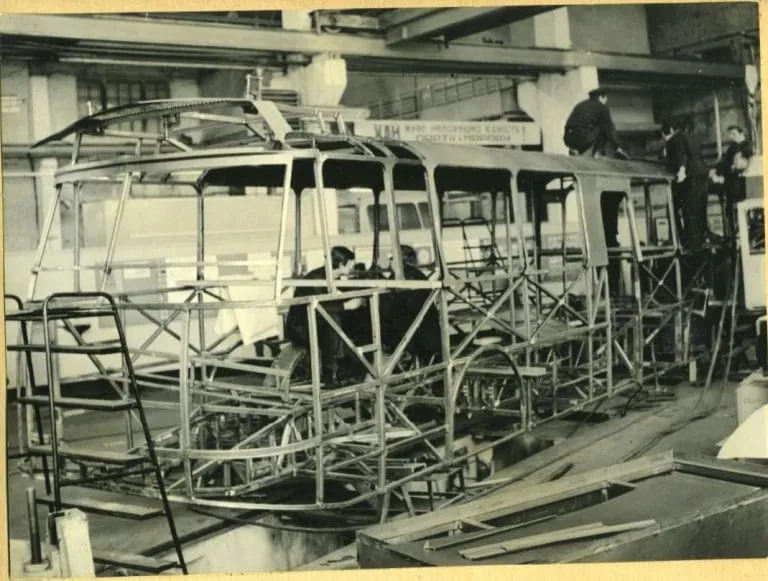
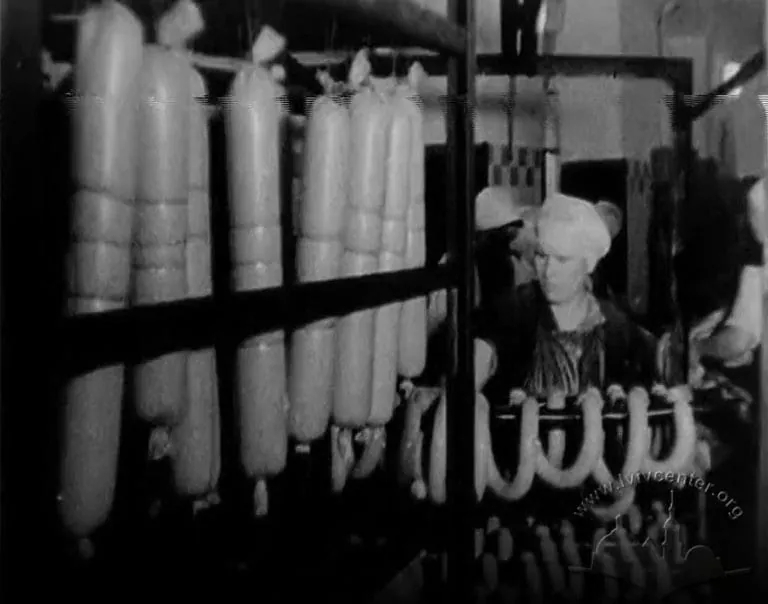
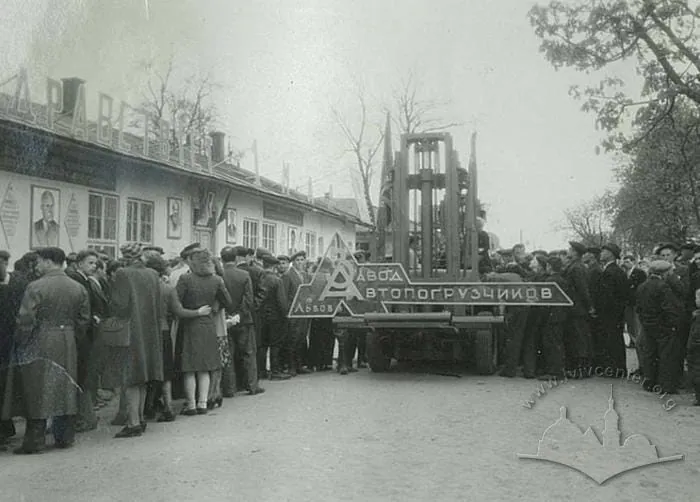

The materials presented here are excerpts from interviews with workers in Lviv’s radio-electronic, machine-building, processing, light, and food industries. These interviews are part of the Un/Archiving Post/Industry project, carried out in 2020–2021, which aimed to collect surviving materials related to the industrial heritage of the Lviv and Donetsk regions and to foster dialogue between generations, regions, and institutions. The recorded bibliographic conversations have been incorporated into the Urban Media Archive’s oral history collection, “Industrial Biographies of the City.” This collection preserves respondents’ memories and reflections on their childhoods and families, the city, education, work, and society, dating back to the 1950s.
The selection presented here covers memories and reflections on one of the main components of the Perestroika policy: “glasnost.” Glasnost and broad democracy were discussed at the 27th Congress of the Communist Party of the Soviet Union, held from February 25 to March 6, 1986. The authorities permitted discussion of the shortcomings and weaknesses of the existing system, as well as sensitive issues from both the past and present, and eased censorship. The introduction of glasnost began in Moscow and Leningrad. Periodicals started to acknowledge the mistakes of previous decades of Soviet rule, criticize the leadership, and discuss the privileges of the party nomenclature. Information taboos in the republican press were lifted more slowly, as there was a habit of waiting for instructions from the center.
At the same time, there was a surge in historical research aimed at filling numerous “blank spots”. Ukrainian historians began studying the Holodomor of 1932–1933 and the Great Terror. Works by figures of the “Executed Renaissance” and the Ukrainian Revolution were published.
It is worth noting that liberalization and glasnost were introduced more slowly in Ukraine than in other republics. The prevailing view in research is that this was linked to the central government’s fear of losing control over the republic, which until 1989 had been governed by a conservative party nomenclature led by Volodymyr Shcherbytskyi. Meanwhile, a significant portion of the population regarded the new slogans as yet another formality.
The dismissive attitude of the Communist Party leadership — and of General Secretary Mikhail Gorbachev personally — toward the lives and health of the people of the Ukrainian SSR after the Chornobyl nuclear disaster became a catalyst for the awakening of society. This was especially true in regions that had joined the USSR most recently and retained patriotic sentiments. Lviv Oblast became one of the centers of this movement.
After their release from prison, Vyacheslav Chornovil, Mykhailo and Bohdan Horyn, Levko Lukianenko, Vasyl and Petro Sichko, Ivan Kandyba, and Mykola Matusevych resumed their activities. In August 1987, Chornovil revived the magazine Ukrainskyi Visnyk (Ukrainian Herald), where he addressed Mikhail Gorbachev with his vision of perestroika and argued that glasnost had amounted to little more than giving writers the chance to superficially discuss the dire state of their peoples’ cultural heritage and national languages.
Regional informal associations emerged: the cultural and educational Tovarystvo Leva, the Union of Independent Youth, the Taras Shevchenko Society of the Ukrainian Language, the historical and educational “Memorial” Society, and the Ukrainian Helsinki Union, a human rights organization. In 1989, the socio-political People’s Movement for Perebudova [perebudova is Ukrainian for perestroika—tr.note] was formally established. Between September 1990 and June 1991, the Democratic Party of Ukraine split from the movement.
In June 1988, the first unsanctioned rally took place in Lviv. Participants demanded the rehabilitation of Ukrainian Insurgent Army (UPA) soldiers and the construction of a monument to the victims of Stalinism. On January 21, 1990, at the initiative of the People’s Movement, a Chain of Unity was held to mark the 71st anniversary of the Act of Unification between the Ukrainian People’s Republic and the West Ukrainian People’s Republic.
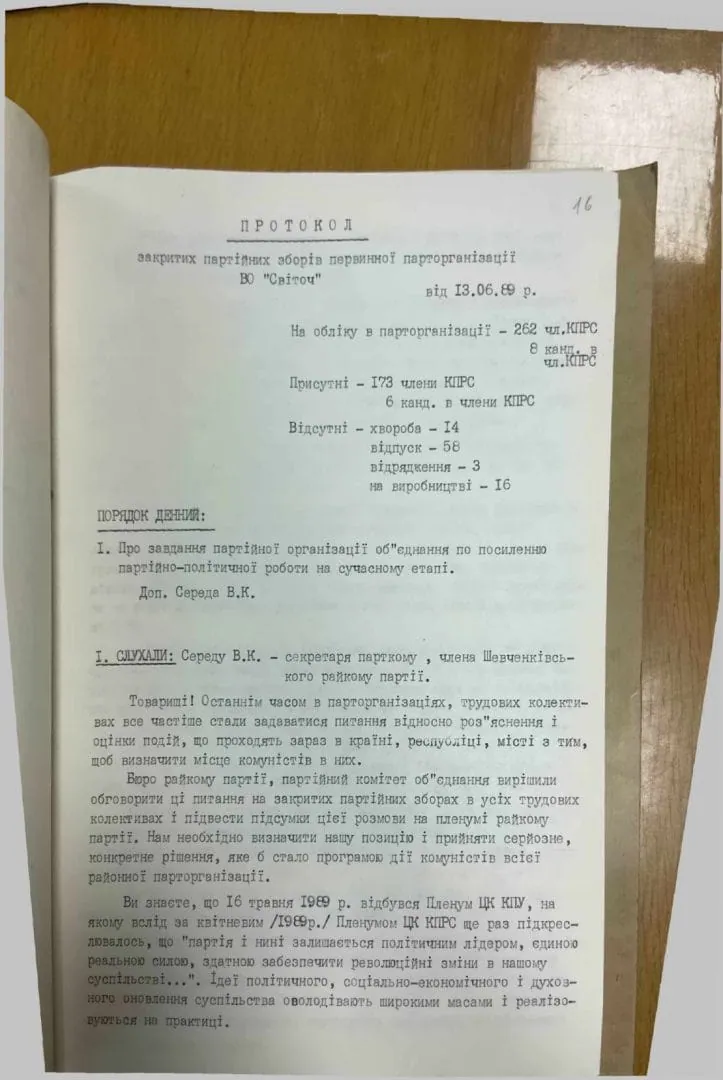
The defense of freedom of speech and the politicization of society were outside the scope of the reforms announced by the authorities, as they were seen as threats to the interests of the state and the ruling party. Since the CPSU was rooted in primary party organizations at enterprises and institutions with the authority to oversee administrative activities, all aspects of an enterprise’s operations were discussed at party meetings and conferences. The document below illustrates the content of discussions at one such meeting. At the 8th Party Conference on October 22, 1988, the secretary of the Party Committee of the “Poliaron” Association declared: “The glasnost of recent years has given us clear information that our ideological work is at a rather low level; events in the Baltic states and the South Caucasus, the summer rallies in Lviv — all of this indicates that we, comrades, have ‘rested on our laurels’ in matters of international education. M. S. Gorbachev was right when he said, ‘[…] The time of ideological comfort is over’. We must not forget that the struggle on the ideological front has never ceased. If we voluntarily abandoned the struggle, we simply underestimated the enemy. We have weakened our political vigilance. Here, both the Party Committee and every Communist must step up their work. Certain events that have taken place at our plant indicate that our political (and perhaps not only political) opponents are right here among us” (State Archive of Lviv Oblast, P-1444/1/353/82)