Wien, March 1, 1899.
To the esteemed Directorate of the J. C. A.,
PARIS
In immediate response to your esteemed letter of the 27th, I would like to refer, regarding the current situation of the Boryslav miners, to my more detailed report from that period. This report must now be supplemented by the fact that several hundred workers, foremen, and others have since become unemployed, which has made the situation in Boryslav considerably more dire. It hardly needs to be emphasized that numerous small merchants who relied on the Boryslav Jewish workers are also suffering greatly from the catastrophe that has befallen them. It is undeniable that at least 600–700 working-class families in Boryslav have been left without bread so far. However, if one were to believe the figures provided by Boryslav officials — who, as elsewhere in Galicia, tend to exaggerate without having acquired or possessed any accurate information, which seems hardly credible — the number of those without bread would have more than doubled. This figure cannot be verified, since at least two-thirds of the Jewish population in Boryslav, that is, about 4,000 souls, are also living on the brink of starvation. This is precisely what makes a successful relief effort for the laid-off miners exceedingly difficult.
To illustrate the current situation in Boryslav and the willingness of the local authorities to intervene constructively, I am enclosing two Boryslav petitions addressed to the local Alliance and forwarded by it to the foundation, as well as one of the many that reached me personally. The fact is that the situation in Boryslav, even by Galician standards, is quite bleak; but it was already so months ago, long before the Jewish journalists so unanimously raised their outcry about it. The impetus for this came from the Drohobych Newspaper (Drohobyczer Zeitung), a Jewish-German business paper published in Drohobych. Drohobych is about 10 kilometers from Boryslav, and every day, Jews from Drohobych travel en masse to Boryslav and vice versa. Accordingly, the residents of Drohobych are always, indeed at every hour of the day, well aware of what is happening in Boryslav. Yet this Drohobych paper only discovered the catastrophe in Boryslav about three weeks ago. The paper then published a call for help (which I include in the appendix) on behalf of Boryslav, requesting that all Jewish journalists print it. From this lament, the Jewish journalists, after hearing the call and the request from the Drohobych Newspaper, began a clamor, speaking in generalities just as the newspaper did, without having subsequently informed themselves about the Boryslav danger. Regarding the relevant article by Dr. Landau in the Jued. Prose that you mentioned, I had no knowledge of its existence until I received your letter.
While I don’t have the text in front of me, I can nevertheless assume from memory that its approach is similar. Dr. Landau raises his voice everywhere — at every appropriate and inappropriate opportunity—and is always only superficially informed, listening half-heartedly to certain trends. Such empty shouting should not be taken too seriously. There will be complaints when nothing is being done, and even more when something beneficial is done. Therefore, one must remain unconcerned, keep one’s goal firmly in mind, and pursue it despite such habitual and professional noise. In our case, the only goal is to evacuate Boryslav as much as possible by promoting the emigration of strong workers to America and, in part, to other Austrian provinces and regions. If the JCA is now able to provide assistance here, then for the aid to be successful, it must be done in the manner indicated.
At the same time, the relevant Viennese circles — particularly the Vienna Alliance, which consistently emphasizes that it exists for precisely such cases and bases its existence on this mission — were strongly urged by Paris to fulfill their duty. They were called upon to secure at least enough funds to provide immediate assistance to the starving and freezing families in Boryslav and to help them endure the hardships of winter.
The JCA’s task, however, would be to allocate a corresponding — though not insignificant — sum to support the emigration of younger Boryslav workers. If, with their help, a thousand workers gradually emigrate to America, it will be as great a benefit for the emigrants as for those remaining in Boryslav. Transporting a thousand workers from Boryslav to North America requires a sum of 11,120,000 pounds, specifically to cover the cost of rail and ship tickets at 96 florins per person (with possible discounts for larger groups). In addition, each emigrant must receive 1.30 florins in cash.
The initial selection of workers destined for America can be made by the local relief committee in Boryslav; however, this process must be thoroughly and conscientiously reviewed, as the local committees are neither sufficiently reliable nor independent. The review will be conducted by your official, Mr. Rotter, who will inevitably have to exclude those unsuitable for emigration. I will provide him with all necessary details, and he will not be permitted to remain in Boryslav for more than a day at a time, since a longer stay would result in not only the countless local poor besieging him, but also beggars from all over Galicia converging on Boryslav, making any action impossible. If the process is organized in this manner, then, with little difficulty and as discreetly as possible, 20–30 workers — some, under certain circumstances, with their families — can be transported to America each month.
In my opinion, the JCA should devote its full attention here to facilitating emigration and, as I have mentioned, leave all other assistance to the Austrian parties, who are primarily responsible for providing it.
Mr. Rotter, who is only awaiting your approval of the advance payment fund statute before proceeding immediately to Galicia, will be able to provide you with all further details from there.
Respectfully
(signed M. Friedländer.)
original in German:
Wien, 1. Maerz 1899.
An die geehrte Direction der J.C.A.,
PARIS
In umgehender Beantwortung Ihrer g. Zuschrift vom 27. gestatte ich mir im Bezug auf die gegenwaerige Lage der Boryslawer Grubenarbeiter auf meinen seinerzeitigen ausfuehrlichern Bericht hinzuweisen, welcher noch dahin zu ergaenzen ist, dass inzwischen wieder mehrere hundert Arbeiter, Aufseher, etc. brodlos geworden sind, wodurch selbstverstaendlich die Nothlage in Boryslaw eine bedeutend drohendere geworden. Dass unter der Katastrophe, von welcher die Boryslawer jued. Arbeiter betroffen wurden, auch zahlreiche kleine Handelsleute, die von denselben lebten schwer zu leiden haben, braucht nicht erst besonders hervorgehoben zu werden.
Es ist ganz zweifellos, dass bisher mindestens 600-700 Arbeiter-Familien in Boryslaw brodlos geworden sind; wenn man aber den Angaben der Boryslawer officiellen Personen, die wie ueberall in Galizien, starke Uebertreibungen lieben, ohne – was kaum glaublich erscheinen duerfte selbst genaue Kenntnis sich verschafft zu haben und zu besitzen, Glauben schenken wollte, so wuerde die Zahl der Brodlosen auf mehr als das Doppelte gestiegen sein. Controlirbar ist diese Angabe nicht, da ja auch sonst in Boryslaw mindestens 2/3 der jued. Bevoelkerung – also etwa 4000 Seelen – am Hungertuche nagen. Das ist es ja eben, was eine erfolgreiche Hilfsaction fuer die entlassenen Grubenarbeiter unendlich erschwert.
Zur Illustrierung der dermaligen Lage in Boryslaw und der Geneigtheit der hiesigen berufenen Kreise, hier irgendwie hilfreich einzugreifen, schliesse ich zwei an die hiesige “Allianz” gerichtete und von dieser an die Stiftung “abgetretene” Boryslawer Petitionen sowie eine der vielen an mich selbst gelangten bei.
Thatsache ist, dass die Lage in Boryslaw, selbst nach galizischen Begriffen, eine ganz trostlose ist; aber das war sie auch schon vor Monaten, lange bevor noch die juedischen Journale so einmuetig ihr Geschrei darueber erhoben. Die Anregung zu demselben gab die “Drohobyczer Zeitung”, ein in Drohobycz erscheinendes juedisch-deutsches Geschaeftsblatt. Drohobycz liegt kaum 10 Kilometer von Boryslaw entfernt, und taeglich sind Drohobyczer Juden en masse in Boryslaw und umgekehrt. Man weiss also in Drohobycz zu jeder Zeit, ja zu jeder Tageszeit ganz genau, was in Boryslaw vorgeht; und doch hat dieses Drhobyczer Blatt erst vor ungefaehr drei Wochen die Katastrophe in Boryslaw entdeckt. Dieses Blatt brachte also einen Hilferuf (den ich in der Anlage beischliesse), zu Gunsten Boryslaw’s mit der Aufforderung an alle juedischen Journale denselben abzudrucken. Hinc illae lacrimae. Die jued. Journale huben also nach dem Muster und der Aufforderung der “Drohobyczer Zeitung” ein Geschrei an, sich dabei wie diese in Allgemeinheiten ergehend, ohne ueber die Boryslawer Gefahr irgendwie naeher unterrichtet zu sein. Was den von Ihnen erwaehnten einschlaegigen Artikel des Dr Landau in der “Jued. Presse” betrifft, so hatte ich bis zum Empfang Ihres Briefes von der Existenz eines solchen keine Kenntnis, ich darf aber gleichwohl auswendig annehmen, dass diese sich auf demselben Niveau bewegt. Herr Dr Landau schreit ueberall und bei jeder passenden und unpassenden Gelegenheit und immer oberflaechlich informiert, ueberall mit halbem Ohr hinhorchend, zu bestimmten Tendenzen. Man darf solch hohles Geschrei nicht allzuernst nehmen. Es wird geschrien, wenn nichts geleistet wird, es wird noch mehr geschrien werden, wenn selbst das Erspriesslichste geleistet werden wird. Man muss also unbekuemmert um solch quasi Gewohnheits- und Professionsmaessiges Laermen sein Ziel unentwegt im Auge behalten und verfolgen, und das einzige Ziel in unserem Falle ist: Evacuirung Boryslaws soweit als moeglich durch Foerderung der Auswanderung dortiger kraeftiger Arbeiter nach America, zum Theil auch nach anderen oesterr. Provinzen, etc. Wenn nun die JCA in der Lage ist, hier Hilfe zu leisten, so darf dieses, wofern die Hilfe erfolgreich sein soll, nur in der angedeuteten Weise geschehen. Gleichzeitig muessten von Paris aus die berufenen Wiener Kreise und insbesondere die Wiener Allianz, die ja immer darauf hinweist, um solcher Faelle willen da zu sein und darauf ihre Existenzberechtigung gruendet, mit grossem Nachdruck aufgefordert werden ihre Pflicht zu thun und wenigstens soviel Mittel herbeizuschaffen, um den hungernden und frierenden Familien in Boryslaw momentane Hilfe zu schaffen und ihnen ueber die Unbilden des Winters hinwegzuhelfen.
Aufgabe der JCA aber waere es, fuer die Zwecke der Auswanderung der Boryslawer juengeren Arbeiter einen entsprechenden allerdings nicht unbedeutenden Betrag zu widmen. Wenn mit ihrer Hilfe allmaelig tausend Arbeiter nach America auswandern, so ist dieses eine ebenso grosse Erloesung fuer die Auswandernden, wie fuer die in Boryslaw Zurueckbleibenden. Die Befoerderung von tausend Arbeitern ab Boryslaw nach Nordamerica erfordert einen Fonds von fl. 120.000: und zwar Kosten Eisenbahn-und Schiffskarte pr. Kopf fl. 96 (bei groesserer Anzahl vielleicht reducierten Preise). Ferner muss jedem Auswanderer ein Betrag von fl. 30 auf die Hand gegeben werden.
Die erste Auswahl der fuer America bestimmten Arbeiter kann durch das lokale Hilfs-Comité in Boryslaw vorgenommen werden; sie muss aber unbedingt, und mit grosser Strenge und Gewissenhaftigkeit ueberprueft werden, da die Ortscomités nicht zuverlaessig und auch nicht unabhaengig genug sind. Die Ueberpruefung wird durch Ihren Beamten, Herrn Rotter erfolgen, der unnachsichtlich die fuer die Auswanderung nicht Geeignete wird ausstreichen muessen. Ich werde ihn in allen Stuecken eingehend informiren, und wird er jedesmal nicht laenger als einen Tag in Boryslaw verweilen duerfen, da bei laengerer Anwesenheit nicht nur alle die zahllosen Ortsarmen ihn bestuermen, sondern auch alle Bettler Galiziens sich in Boryslaw zusammenfinden und jede Action unmoeglich machen wuerden. Wenn nun die Sache entsprechend organisiert wird, koennen ohne viel Schwierigkeit und unauffaelligst 20-30 Arbeiter, theilweise (unter Umstaenden) mit Familie, und darueber, monatlich nach America befoerdert werden.
Nach meiner Ansicht sollte die JCA hier ihr ausschliessliches Augenmerk auf die Befoerderung der Auswanderung richten und, wie gesagt, den oesterreichischen Factoren, welche ja zu allererst dazu verpflichtet sind, die sonstige Hilfeleistung ueberweisen.
Alle sonstigen Details wird Ihnen Herr Rotter, der nur Ihre Genehmigung des Vorschusscassen-Statuts abwartet, um sich dann unverzueglich nach Galizien zu begeben, von dort aus liefern koennen.
Hochachtungsvoll
(gez. M. Friedlaender.

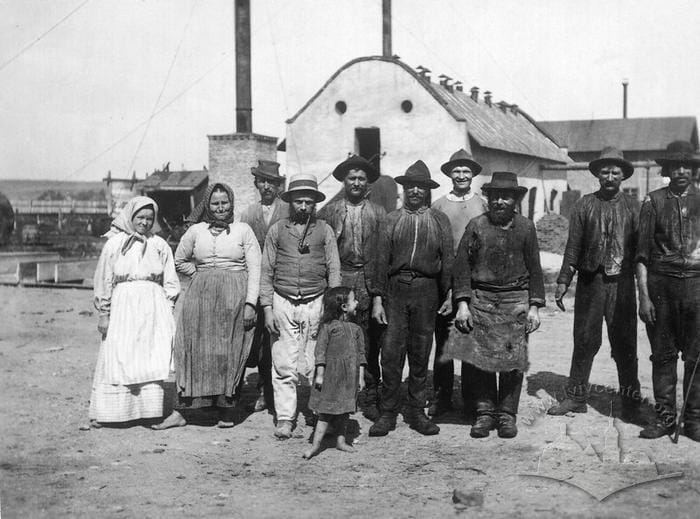

The Boryslav oil and ozokerite industry, which emerged in the latter half of the 19th century, employed around 9,000 workers by century’s end. This workforce was diverse, both ethnically and professionally. Many workers were Ukrainians from nearby villages who took seasonal jobs in the oil mines. Polish workers, often from Western Galicia, usually arrived temporarily to fill more skilled roles. Jewish workers accounted for about a third of the workforce and were generally involved in surface tasks, particularly ozokerite purification. A notable segment of the Boryslav community comprised Jewish middlemen — cashiers responsible for hiring other workers, paying wages, supervising the mines, and providing infrastructure such as housing and shops. In the 1880s, the Mining Office in Kraków, which oversaw the industry, began efforts to reform the Boryslav oil sector. Their aim was to reduce the prevalence of small entrepreneurs, strengthen oversight of working conditions, and improve mine safety. The most significant reform was the 1898 law, which regulated many aspects of the oil industry, including mine spacing, and introduced requirements for workers’ self-organization and qualifications. As a result, numerous small-scale entrepreneurs, mainly Jewish, who could not meet these requirements, had to leave the oil business. At the same time, this law adversely affected many Jewish workers and supervisors, who lost their jobs as they were typically employed by small enterprises. In response, a relief campaign — supported by the municipality along with local and international Jewish organizations — was launched to address the crisis.
The two sources presented here illustrate two contrasting responses to the unemployment crisis in Boryslav: one found in the local Jewish newspaper Drohobyczer Zeitung, and another in a letter from Moritz Friedländer, a representative of Baron Moritz Hirsch’s foundation, addressed to the Jewish Colonization Organization. The authors’ observations and search for solutions offer insight into broader perceptions of Jewish labor. Additionally, the communication among the various parties seeking to address the crisis highlights the hierarchies that shaped the actions of individuals and both local and international organizations. Local agents had limited resources to address the problem independently, and their perspectives were often dismissed as unreliable and overly emotional.
Drohobyczer Zeitung (1883–1914) was a Jewish newspaper published in Drohobych, a town near Boryslav and a key logistics hub for the oil industry. Its publisher, Aron Zhupnik, was a prominent member of the local Jewish community. Although the worker unemployment crisis in neighboring Boryslav began as early as 1898, the report and the “call for help” were published only in 1899. Notably, the author of the appeal encourages potential benefactors by appealing to religious and ethnic solidarity among Jews and requests that editors of Jewish newspapers help spread the message. The plea for assistance is directed to local branches of international organizations active in Galicia — the Vienna Israelite Alliance and the Baron Moritz Hirsch Foundation. Both organizations aimed to establish vocational education centers for Jews and reshape the occupational structure of Galicia’s Jewish population to promote greater integration into society. As a poor region with a significant Jewish population, Galicia became the focus of their activities in the final third of the 19th century. These organizations were also active in Boryslav, where the presence of Jewish manual laborers was seen as a model for others. Drohobyczer Zeitung regularly reported on the Alliance’s and Hirsch’s school’s activities and was aware of their strategy; for this reason, the author stresses that unemployed Jews from the oil industry do not seek charity, but rather opportunities for employment where they can realize their potential.
The following letter, which highlights communication between the organizations themselves, exposes the prejudices that existed toward Galician Jews. Moritz Friedländer, an activist from Tarnów, represented Baron Hirsch’s Vienna foundation and served as a mediator in correspondence with the Jewish Colonization Association. He positioned himself as a trusted representative capable of accurately reporting the situation in the city. Friedländer clearly asserts his authority and seeks to correct what he describes as exaggerated data from the Boryslav administration. He contrasts his own impartial perspective with the subjectivity and emotional tone of Galician officials and other parties, including the newspaper Drohobyczer Zeitung and other Jewish publications. His criticism is not limited to local agents; it also extends to the Viennese journalist Saul Raphael Landau, one of the first to call attention to the Boryslav situation. Friedländer contrasts Landau’s “uninformed” and emotional approach with his own measured viewpoint. According to Friedländer, emigration to America—facilitated by the Jewish Colonization Organization — is the only viable solution for the workers. He considers the prospect of finding employment in Galicia, or even the Austro-Hungarian Empire, unlikely, in contrast to the call made by Drohobyczer Zeitung. Friedländer’s letter can be seen as evidence of a loss of faith in the possibility of improving the situation for Jews in Galicia. From his perspective, charity — or more precisely, the creation of opportunities — should focus solely on the most productive young segment of the workforce, whose future he believed lay in the United States, not in Galicia.