
Religion
Filter by periods:
Primary Sources
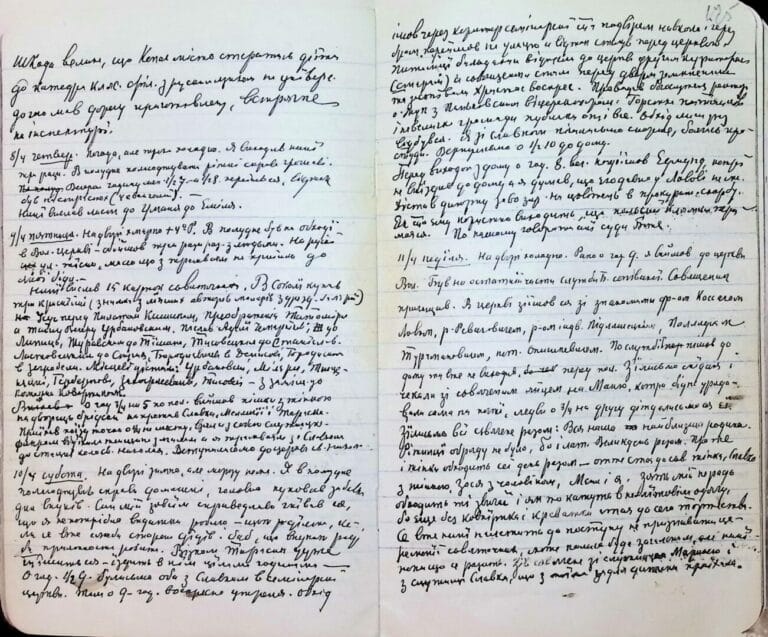
Christmas and Easter in Lemberg in 1908: The Case of One Multidenominational Family
Teofil Hrushkevych a teacher of classical languages at the Second (German) Gymnasium in Lviv, commenced his diary in 1895, though it was only after his retirement in 1906 that his entries became regular. The extant handwritten diary comprises eight notebooks, documenting entries for 1895, 1903, and 1906 (intermittent), and for 1908-1915 (almost daily). Typically, the author penned his notes in the evening, commencing with a depiction of the weather, followed by an account of the day's events: personal matters, such as receiving a pension, settling bills, visiting friends or acquaintances, attending church services, and social engagements, such as participating in meetings of Ukrainian societies to which he belonged, attending the theatre or a...
Reflections
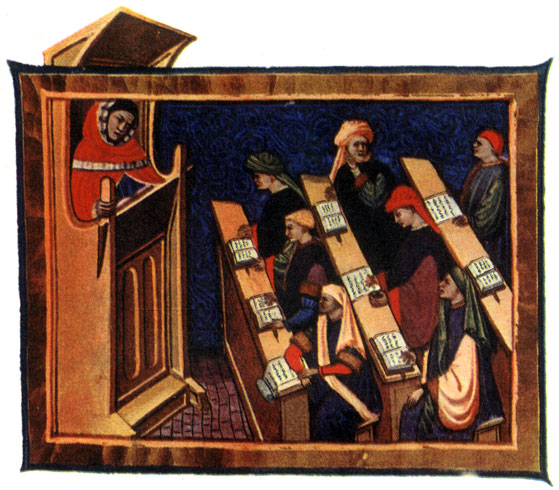
Historian and Faith: Relationship Between Historical Studies and Religion in University Teaching
The proposed reflection by Dr. Pavlo Yeremeev concerns the issue of possible styles of teacher interaction with those students who, for religious reasons, do not accept the approaches of modern historical science in the field of ancient history and biblical studies. These considerations are based on the author's experience of teaching courses that include the history of religion at the Department of History, V. N. Karazin Kharkiv National University.
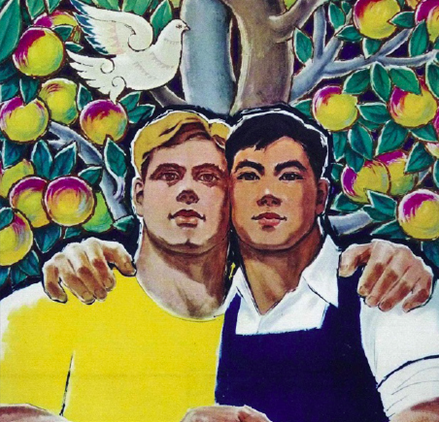
This lecture course comparatively and transnationally investigates twentieth-century communism as a modern civilization with a global outreach. It looks at the global spread of communism as an ideology, an everyday experience, and a form of statehood in the Soviet Union, Europe, Asia (i.e.Mao’s China), and post-colonial Africa. With the exception of North America and Australia, communist regimes were established on all continents of the world. The course will examine this historical process from the October Revolution (1917) to the Chernobyl nuclear disaster (1986), which marked the demise of the communist state. The emphasis is not just on state-building processes or Cold War politics but primarily on the social, gender, cultural and economic policies that...
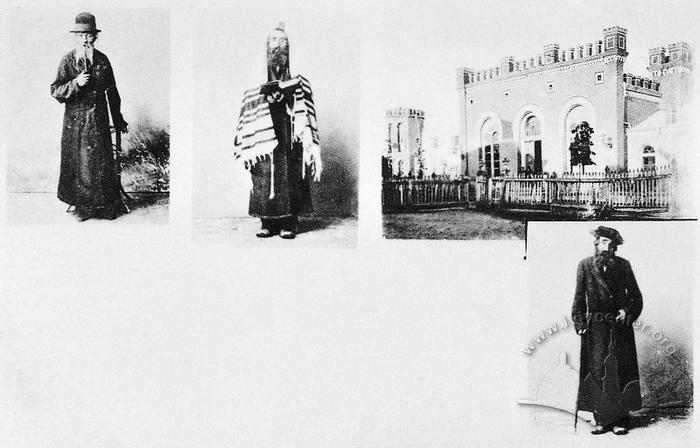
This course was a part of Jewish History and Culture of East Central Europe in the 19th-20th Centuries summer school. The syllabus is written in Polish.
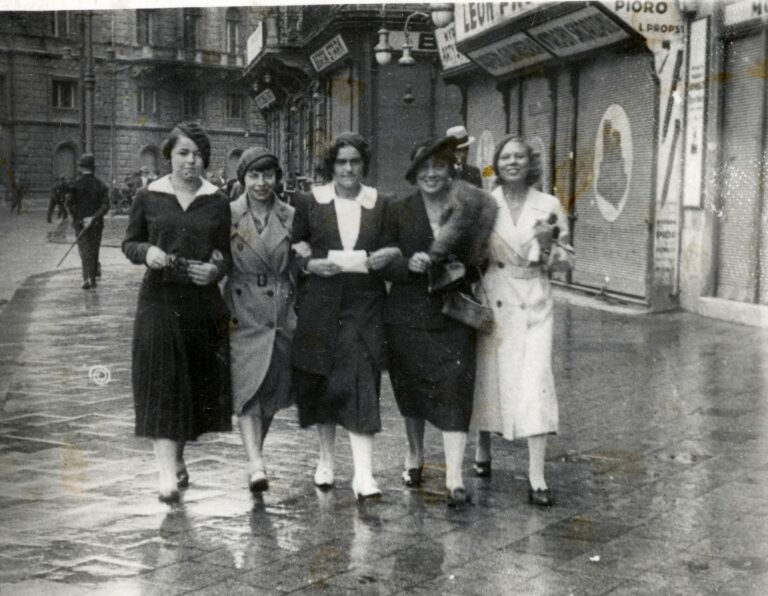
The course intends to show the possibilities afforded by applying the gender (cultural sex) perspective in the study of Jewish culture. Proceeding from the analysis of the role of the woman and man in traditional Jewish society, we will present gender difference in the process of modernization among Jewish women and men. In looking at autobiographical materials, we will trace characteristic stages and stories, as well as life’s choices of Jewish maskilim (advocates of Haskalah, the Jewish Enlightenment). We will use the examples of the life and work of Pua Rakowska (known as "the Grandmother of Zionism") and Sara Szenirer (reformer of the traditional education system of Jewish girls) to analyze the problem...

This course covers the period from the partitions of Poland through the Russian and Habsburg Empires, the Soviet Union and interwar Poland. Students will familiarize with the geopolitical results of Russia’s westward and Austria’s eastward expansions and will focus among other overarching themes on the shtetl, the unique East European Jewish habitat; on Hasidism, a Ukraine-born popular movement of religious enthusiasm; on the interaction between Zionists and Ukrainian nationalists in Galicia; on the development of Ukrainization and Yiddishization (or Ukrainian and Jewish korenizatsiia) in the 1920s and the situation of Jews in Poland in the 1920s; on the Holocaust and its aftermath; on Ukrainians and Jews in the dissident movement; and on Jewish-Ukrainian...
This course forms a part of Jewish History, Multiethnic Past, and Common Heritage: Urban Experience in Eastern Europe summer school. The syllabus is available only in Polish.
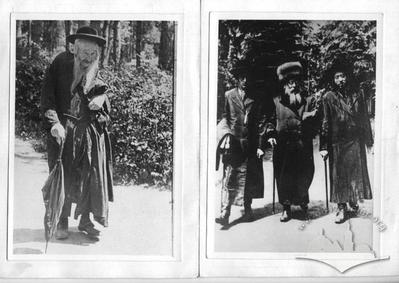
This course forms a part of Jewish History, Multiethnic Past, and Common Heritage: Urban Experience in Eastern Europe summer school.
The course offers a short introduction to some of the key concepts and literary and cultural practices that shaped the represenations of modern Jewish spaces in Eastern Europe as well as their contemporary reconstructions and exhibitions. While focusing on (Jewish) Poland and Yiddish culture, this course introduces critical tools for understanding and interpreting modern (Jewish) contructions and experiences of space and place.
In 1939, on the eve of the Holocaust, east European Jewry constituted the most important and culturally influential Jewish community in the world. As a result of half a century of mass migration, up to 90% of world Jewry either lived in Eastern Europe or were children of immigrants from there. Jews were particularly prominent in East European cities. In Galicia, for example, Jews constituted a plurality or majority of nearly every major city. (L’viv was an exception, where they made up “only” a quarter of the population.) This course will survey the modern history of this once vital community – social, economic, political, religious and cultural – from the Polish partitions until...
The field of social history has achieved the edge of its popularity in 1950-1980s. It was strongly connected with other disciplines, such as economics, demography, sociology, and allowed historians to reach a much wider range of research themes. Since the 1960s, the social history of the Jewish people became important and influential part of the studies. Historians were exploring the possibilities to study Jewish community with new tools and integrating different representatives of Jewish community – workers, women, immigrants, criminals - in a research. Since 1990s historians of Jewish past shifted their interest to cultural studies. However, in the last years, we can see an economic turn, which signifies the search for a...