How Jews Wait for a Letter: The Modern Postman
From the very first day I spent back in my town, I felt an overwhelming urge to visit the post office just as the postman was about to depart with the letters. The image of Jews gathered there, waiting for the postman, has never left my memory. I can still see it as vividly as if it were happening right now. They would arrive an hour early, before the postman set off, so they’d have plenty of time to talk.
And who didn’t show up there! Oil industrialists (back then, the town still had active oil production), owners of textile shops and merchants; sons-in-law on kest with plenty of free time, confident they wouldn’t leave empty-handed because they subscribed to the daily German newspaper Neue Freie Presse (New Free Press) or the Viennese Tagblatt (Daily Press). There were also young Zionists waiting for Zionist newspapers or Hebrew booklets, and socialists eager for a socialist newspaper.
Even I, still quite young at the time, was already receiving mail. I had ordered book catalogs and trial issues of newspapers (both German- and Hebrew-language papers sent one free trial copy).
But they didn’t come to the post office only for newspapers or letters. Representatives of every political party in the shtetl gathered there.
For the merchants, it served as a kind of informal stock exchange. For the Zionist youths, the maskilim, and the sons-in-law on kest, it was a battlefield where they fiercely defended their opinions. It was never dull there. The fiercest quarrels erupted precisely over Palestine. The Zionists fought their battles armed with editorials they had carefully studied in the Zionist newspapers.
The Zionist opponents had one — a son-in-law on kest — who countered Zionist ideas with sharp, well-timed jokes. He truly knew how to deliver a punchline. For instance, he would mock the way people sang “Od lo avoda,” and his quips would spark uproarious laughter that left the boys utterly speechless. The Zionists had no one who could respond with a joke on the spot. It was only on their second visit that they came better prepared. This time, they brought along a boy — the son of a butcher — who wrote letters and articles for Jewish newspapers. He wasn’t a joker like that maskil, but he had a quick and piercing wit. Before the other could land another joke, he would fire back with a cutting remark. Everyone has a weak spot. The opponent would quickly become offended, then furious that the butcher’s son had outwitted him so effortlessly.
As for socialism, at that time no one quarreled over it. There were only a few socialists in the shtetl, and even they didn’t fully grasp what it meant. They simply wished for a representative who could explain it properly.
In other cities, Zionists and socialists were already clashing over their differing views. But here, peace and harmony prevailed between them. The Zionists themselves were eager to hear a socialist speaker. Yet in my time, it was difficult to arrange: the speaker would have had to be brought from Lviv, and the costs covered, something these few socialist supporters could not afford.
Twice a day — in the morning and again in the afternoon — these party gatherings took place near the post office, continuing until the postman emerged and interrupted the debates. The postman, often a Jew and sometimes a Pole, was friendly toward everyone. He would step out carrying a heavy bundle of letters that was hard to manage. He was always grateful when half the letters were taken off his hands right there at the post office. He even allowed people to look through them themselves. Many even helped him sort the foreign postcards.
I remember it well, and that’s exactly why I was so eager to visit the post office and see what was happening there. The first morning, I couldn’t go — the many friends who had come to see me kept me occupied, and I was held up. Finally, in the afternoon, after a bit of a struggle, I managed to slip away from everyone and head to the post office. I went with my cousin Kalman (who absolutely wouldn’t let me go alone) and a few other friends. I didn’t tell them why I was so keen to get there. They assumed I just wanted to see the post office building itself, and they kept saying there was nothing worth seeing.
And here I am at last at the post office. The building itself held no interest for me — it looked almost exactly as it had before, though it seemed smaller now (everything in town, all the houses, appears smaller than it did in my memory). I didn’t see a single person standing there.
I scanned in every direction.
“What are you looking for?” they asked me.
“I’m looking for the people who come to collect the letters,” I replied.
Everyone stared at me in surprise.
“Why would you need to come here to pick up letters?” they asked.
“Why not?” I countered.
“It’s still early,” one of them said. “The postman won’t come out for another fifteen minutes.”
Someone suggested I go inside to see what the post office looked like now.
“No,” I answered. “I want to stay outside. I want to see what happens when the postman comes out.”
“I assure you, there’s nothing worth watching,” my friend told me.
However, I feel that he was wrong. Because I did have something worth watching.
Several Jews have arrived. All of them are dressed in terribly tattered clothes. They introduce themselves to me. When I realize who they are, my heart breaks.
One Jew, with a gray beard, comes running. He runs straight toward me.
“I was told that you had gone to the post office, so I ran here,” he said.
I looked at him, at his gray beard. I couldn’t make out who he is.
“It is I, Nachman-Moshe,” he told me.
I immediately remembered. This was the very man who once got punched near the post office for insulting a Jew who opposed the Zionists.
“I remember you well, sir” I told him. “I even remember how you were beaten near the post office.”
“But why do you address me so officially?” he asked.
“How can I not address a person with a gray beard officially?” I replied.
“If you had stayed here in the shtetl, you’d have a gray beard too,” he said.
“What about fights? Do they still beat people near the post office?” I asked.
“Those days are over,” he answered. “There’s no one left to beat, and nothing to fight over. We are all Zionists, because we would all run away from here at the first opportunity.”
“And what about the pogroms by the Arabs?”
He laughed.
“Why are you laughing?”
“A Galician Jew afraid of pogroms?” he asked. “On the contrary — if the Arabs are organizing pogroms, we should go there immediately to fight them.”
“And what about Birobidzhan?” I asked.
“What, do we lack another galut?” he replied.
“As long as the Jews there do not suffer for being Jews,” I said.
“I assure you,” he said, “you won’t find a single Jew here — even in the greatest need — who would want to go to Birobidzhan. Everyone here wants to go to Palestine, even the rich ones. Everyone here is ready to go to Eretz Israel, everyone.”
I stood there for a while, lost in thought about what he had said. Why, then, was there so much excitement in New York about Birobidzhan? On my way from New York, I had met an American who was traveling to visit Birobidzhan. Yet here in Poland I hadn’t encountered a single Jew who wanted to go there. In truth, Birobidzhan wasn’t meant for American Jews — it was intended for Polish Jews.
While I stood there lost in thought, the postman finally emerged. He carried a bundle containing several letters. Without pausing, he hurried off with the mail, and immediately the Jews rushed after him.
I stood and watched the scene unfold. First, I noticed how few letters there were, as if that was all the postman had for the entire town. Second, I was struck by the arrogance of the Polish postman. It would have cost him nothing to stop and tell a couple of Jews whether he had a letter for them or not. If a postman had run off like that with the letters in my day, he would have been torn to pieces. He wouldn’t have even dared.
The Jews came back from chasing the postman, out of breath and empty-handed.
“I ran for nothing,” one said. “I was waiting for a letter from relatives in America. If they don’t write, it won’t come.”
“I knew I wouldn’t get anything,” another added. “My relatives in America haven’t written to me in years — they’ve completely forgotten about me. Yet I come to the post office every day. Maybe someone will remember me, maybe. And anyway, I have no other hope.”
“I tell you,” said the third, “if they only knew how important their letters are to us, they would write more often. But they don’t know.”
“And what good are letters anyway?” I asked. “When they send money, I understand that. But letters?”
“A letter is good too,” said my friend — the one who had once been beaten at the post office.
“What’s the use of it without money?” I pressed.
“Because you can get a loan with it,” he replied. “Once, thanks to a letter from a relative, I received money for trade and for what I needed.”
“But they don’t know what a letter from America means here,” one of them explained to me.
So, I left the post office together with the other Jews. Their words stirred me deeply, urging me to explain, when I returned to America, just how much those letters truly meant to them.

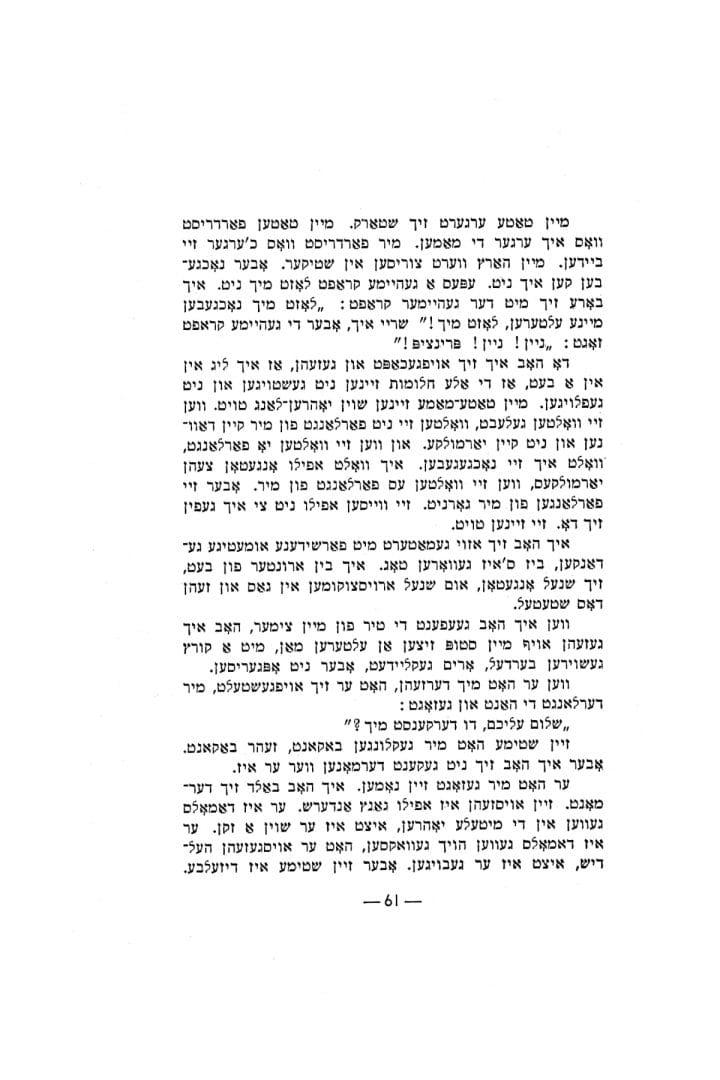
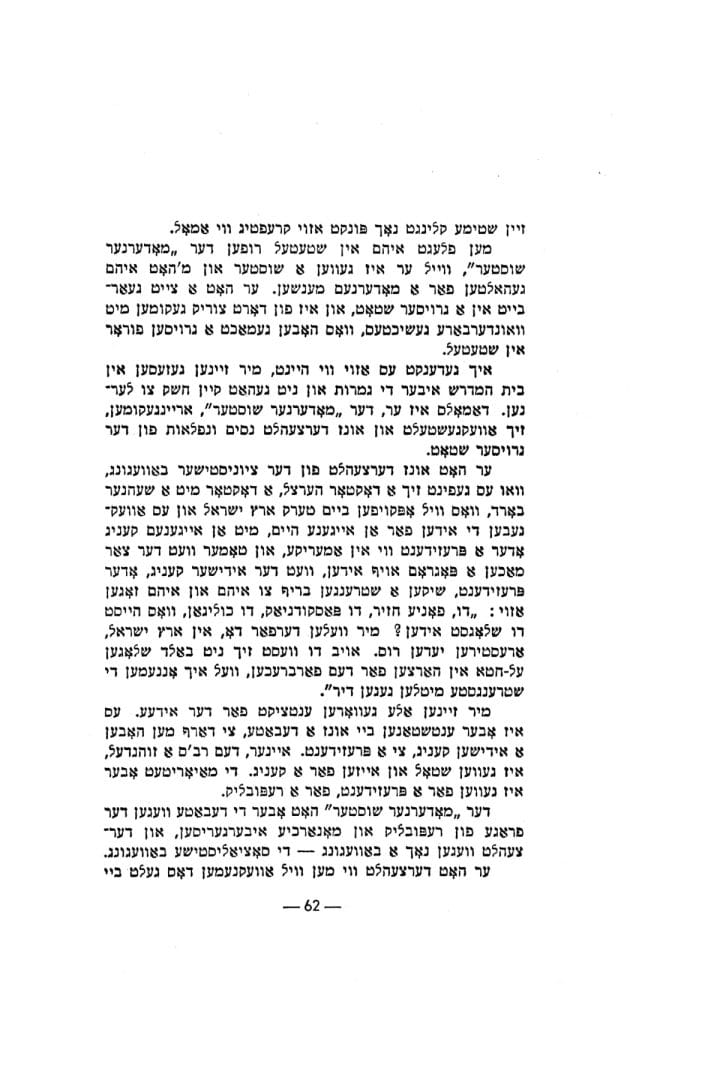
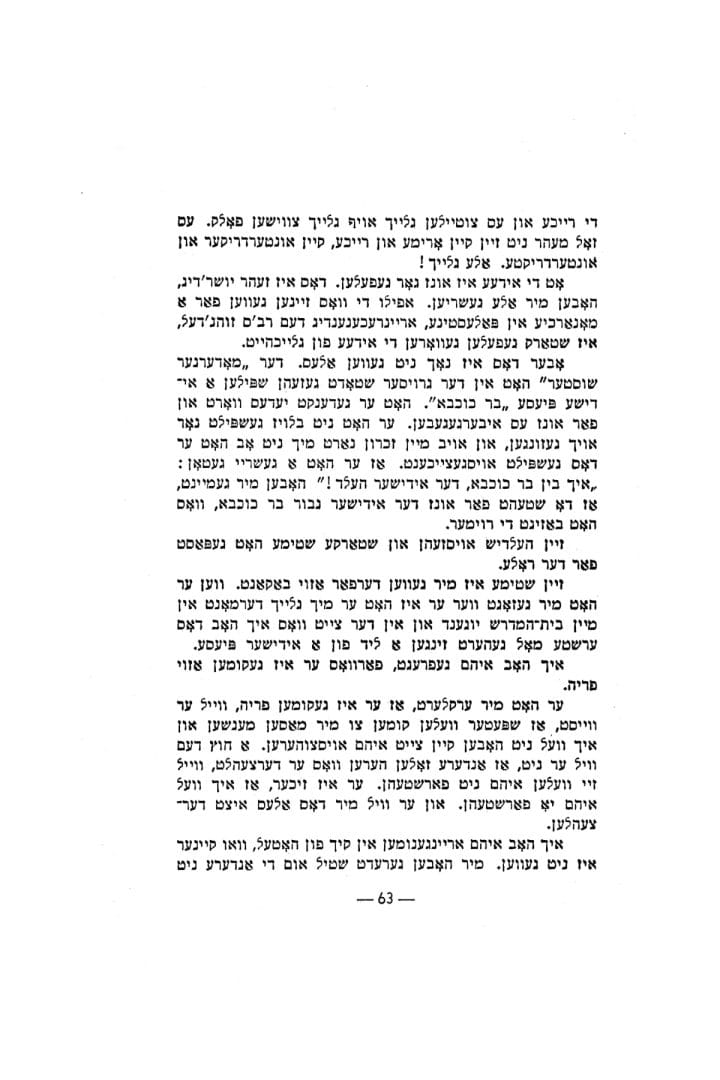
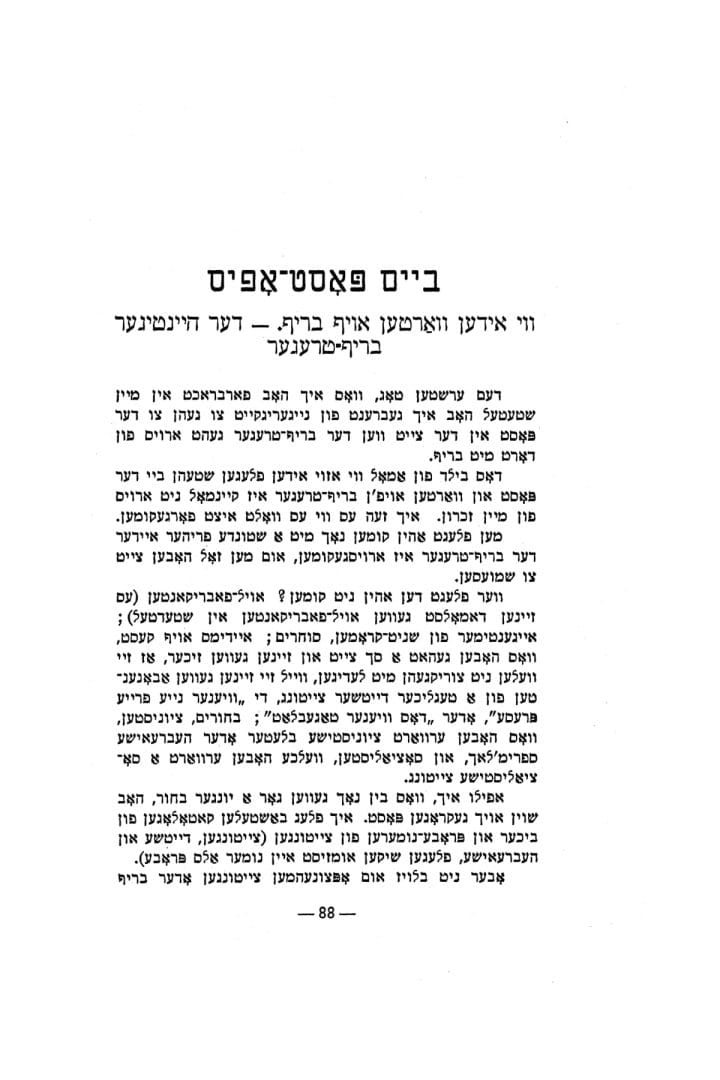
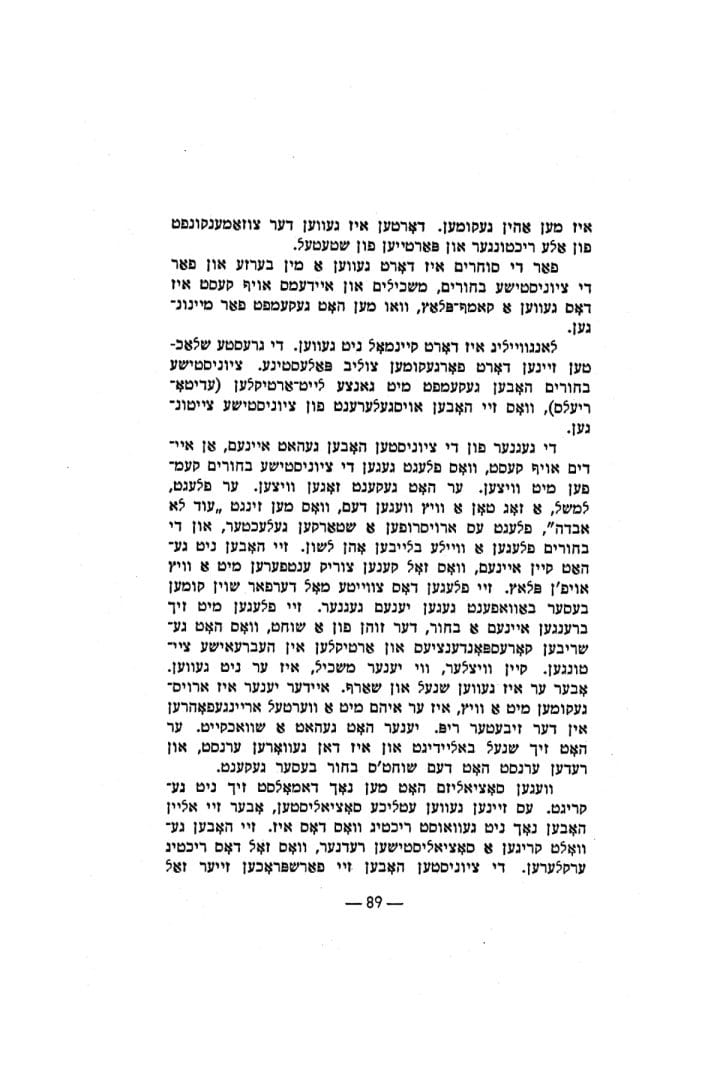
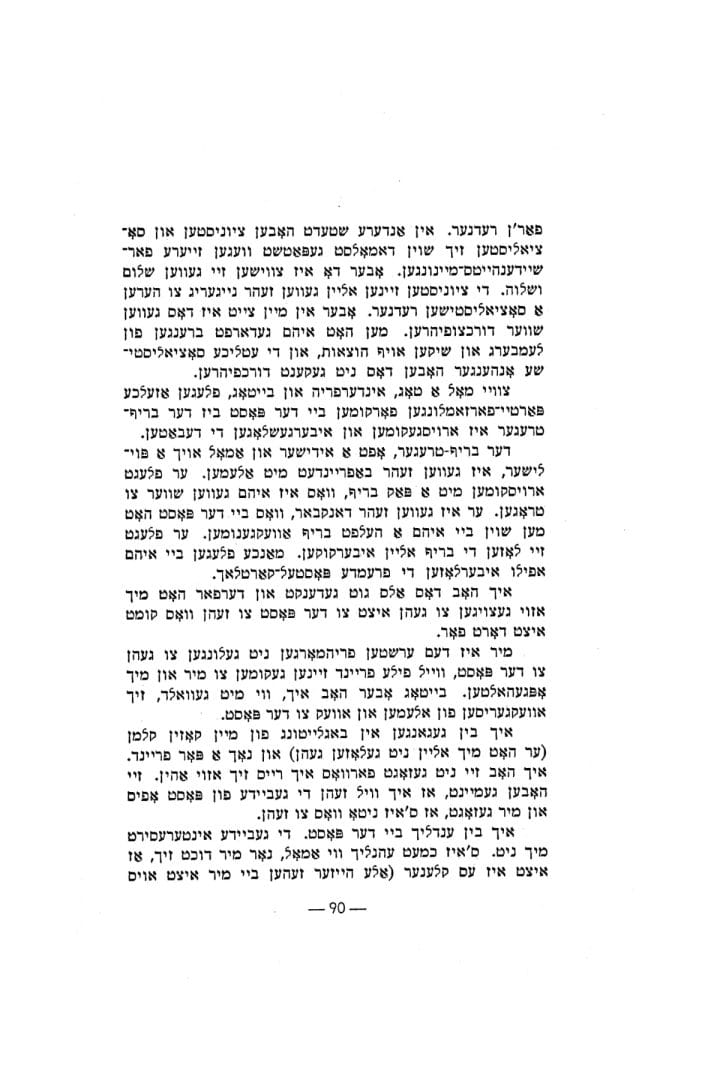
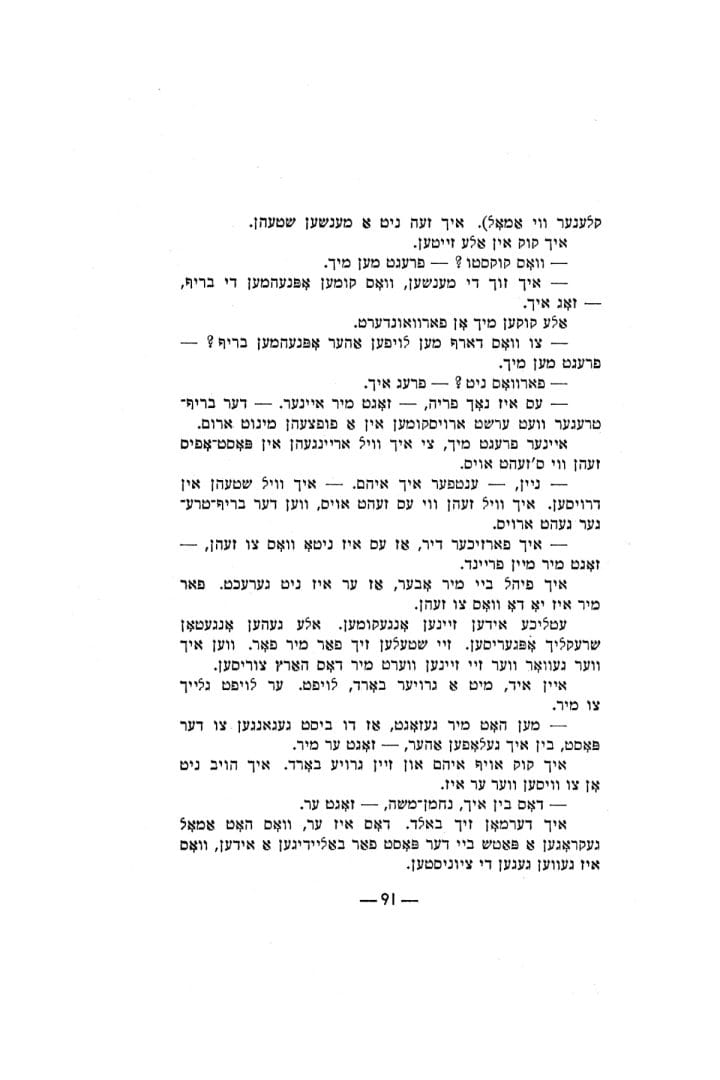
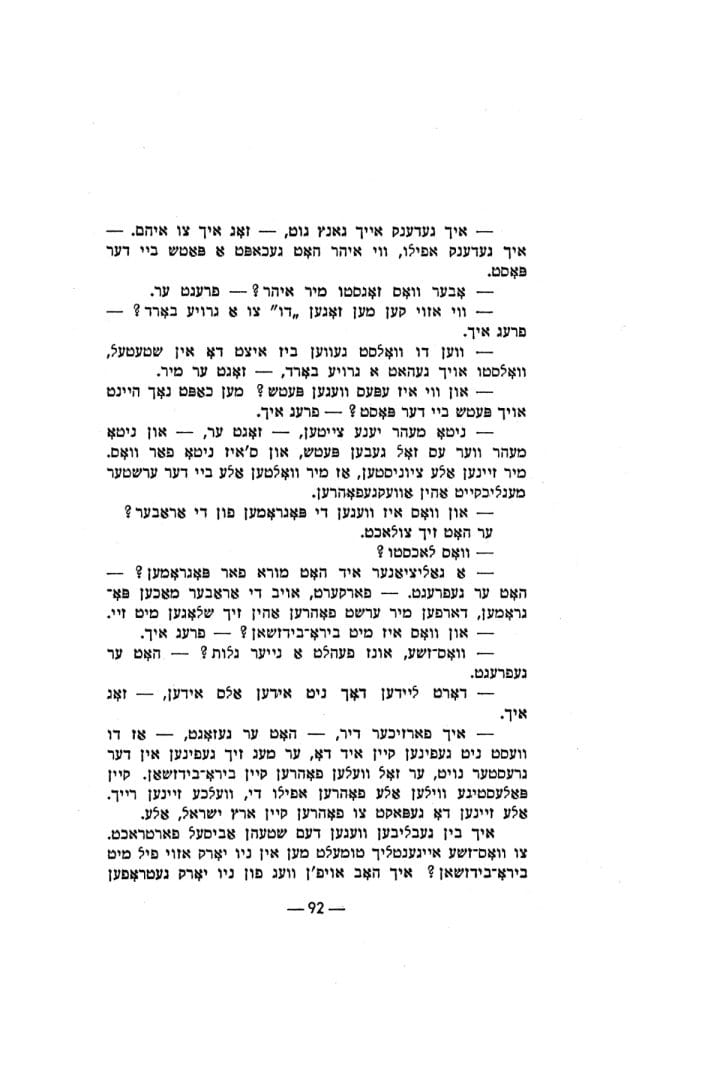
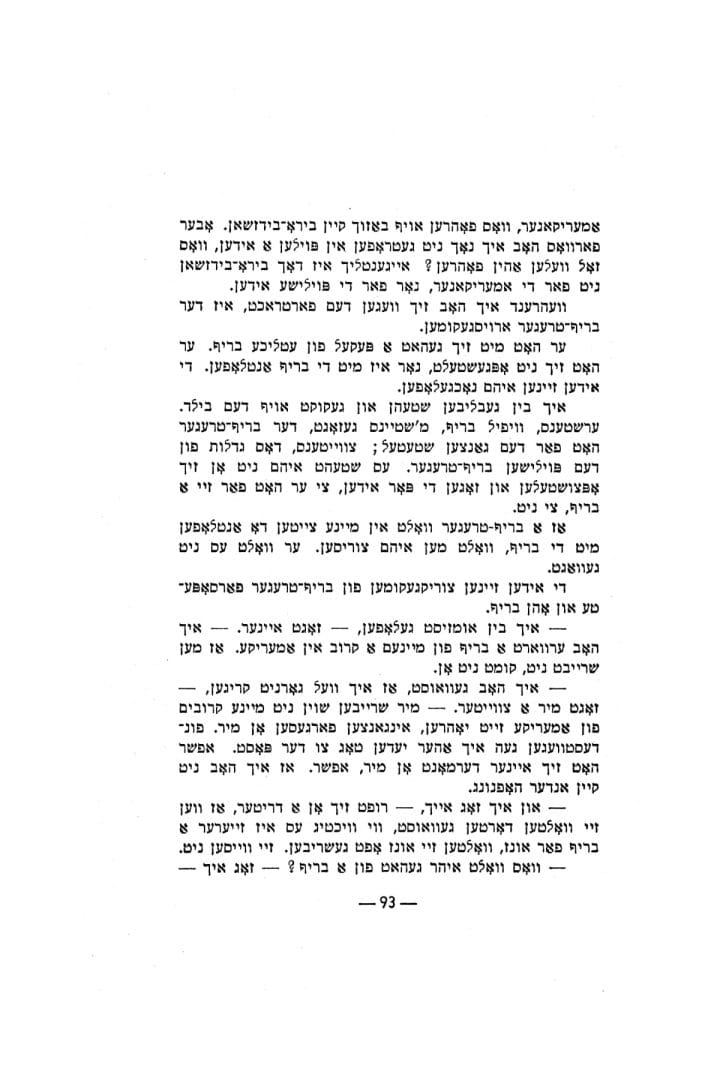
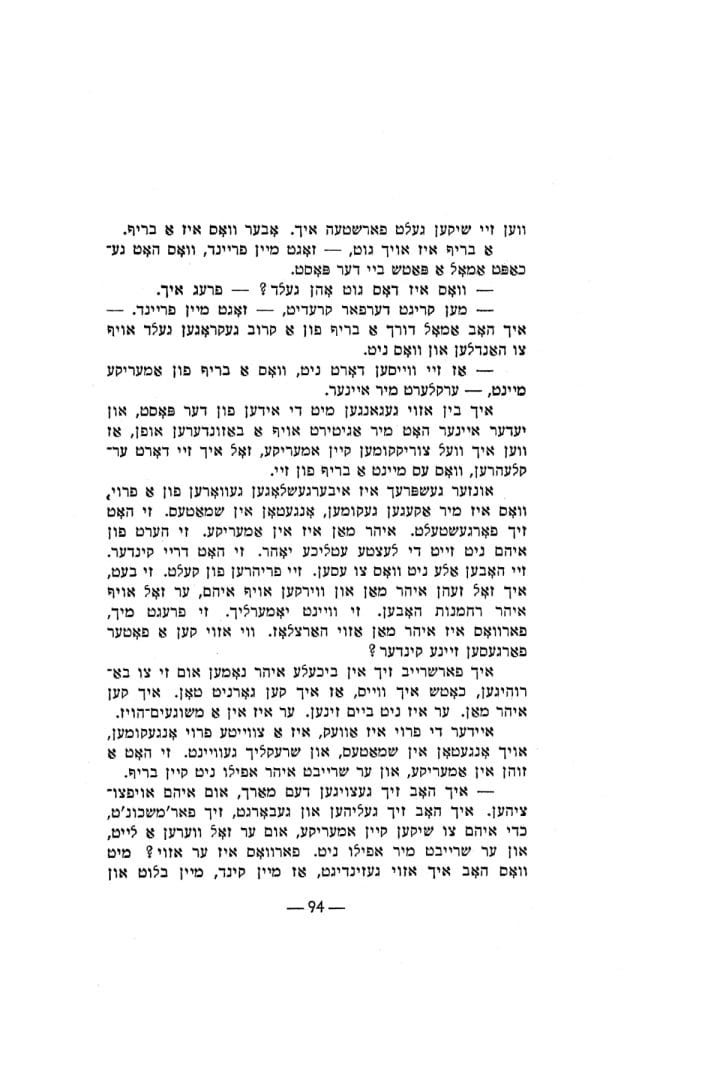



The two excerpts presented here are drawn from Chone Gottesfeld’s travelogue and describe events in Skala, a small Galician town in the Second Polish Republic. In these passages, the author contrasts his experiences of Skala from his youth with what he encountered upon returning many years later after emigrating. His observations illuminate the complex processes through which modern Jewish identity took shape. Both excerpts recount events in which the author himself participated. The central theme of each fragment is the comparison between past and present experiences, which reveals how the politicization of the Jewish population in the Galician province unfolded in practice.
The first passage examines the formation of the political worldview of a city cobbler. Having once worked in a large city, he absorbed political views and perspectives that earned him the label of “modern” among his peers. Upon returning to his native shtetl, he eagerly shared his newfound insights with the students of the beit midrash, speaking passionately about Herzl, Zionism, socialism, Turkey, the Jewish pogroms in the Russian Empire, and his impressions of the play Bar Kokhba. These conversations illustrate how the mental landscape of Galician Jews evolved during the interwar period: Palestine shifted in their consciousness from a mere biblical symbol to a concrete political project; the memory of the pogroms in the Russian Empire — events that had taken place more than two decades earlier — remained deeply embedded in the collective awareness; and political ideas gradually penetrated even the remote provinces. Political parties in these areas often struggled with significant obstacles, including inadequate infrastructure, unsystematic education, limited funding, and a shortage of active supporters. The excerpt not only highlights the sporadic and prolonged nature of this process but also underscores its dependence on dedicated individuals — passionate figures capable of inspiring and leading others.
The second excerpt offers insight into the author’s perspective on the socio-political history of the region. Using the example of the post office, he illustrates the shifting role of key public spaces in a small town: during the Austrian period, the post office served as a vital hub for public discussions, but its significance waned in the interwar years. Together, the two excerpts reveal the conditions under which political ideologies gained adherents in such communities, and how deeply these processes were shaped by the prevailing information environment.
The author of the travelogue observes a striking shift in attitudes toward Palestine: from a distant, almost imaginary vision of a Jewish state to tangible, real-world practices of emigration there. This transformation in how Galician Jews perceived Palestine, as documented by the author, unfolded over the course of four decades. It demanded sustained and concerted efforts from various political movements, including the General Zionists, Mizrachi, Poale Zion, and Hitahdut. Beyond these ideological forces, other critical factors played a role: the severe economic hardships following the First World War, the trauma of numerous pogroms, and the growing wave of anti-Semitism in the Second Polish Republic.
The formation of modern Jewish political consciousness in Galicia has been extensively studied by historian Joshua Shanes. In his work, Shanes traces the development of Jewish nationalism beyond the Zionist movement and examines its interactions with other political currents. His research demonstrates how politicization unfolded among various segments of the Jewish population in Galician towns, including Stryi, Tarnów, Sniatyn, Kolomyia, and Brody. Shanes was among the first scholars to analyze the emergence of political self-identity not only through public declarations — such as those found in newspapers and party programs — but also through concrete everyday practices. He highlights how diverse political trends coexisted and how they interacted with one another in these provincial settings.