
I.: Let’s begin recording. Could you tell us a bit about your life? Where and when were you born, and who were your parents?
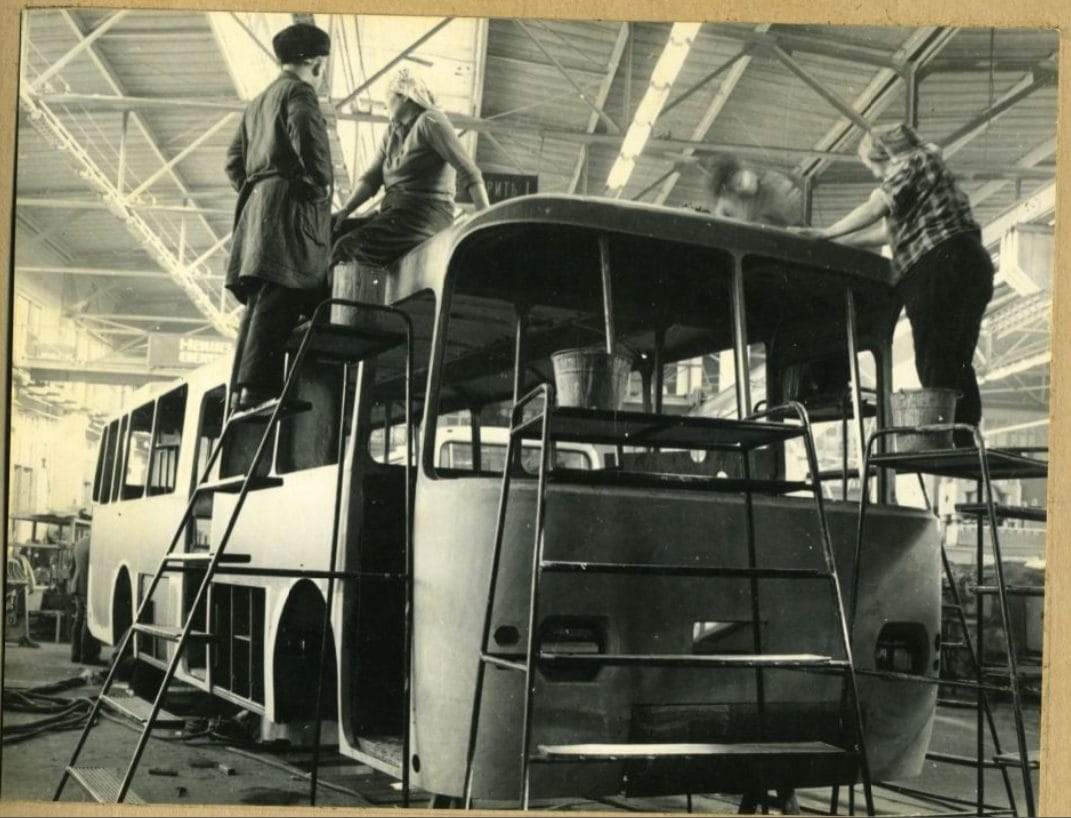
R.: I was born in the village of Sokilnyky in the Pustomytivskyi Raion. My parents were displaced during Operation Vistula, so both my father and mother, and our whole family, had to move. We were a simple family. My mother worked at a bus factory, and my father did too for most of his life. At first, he was a miner, but later he also worked at the factory. I have a sister who also worked there. She moved to Germany after getting married, and her late husband worked there. I have twins, a son and a daughter, who are now 38 and have families of their own. I didn’t only work at the bus factory. I also worked in healthcare, in transport, and at a large petrol station. [The station], it was No. 2218, on Bohdanivska Street; it has also been looted. I worked at Lviv Atomenerhoremont on Panasa Myrnyi Street, but that company closed. When my children needed to go to school, I had to leave that job because it was very strict, so I started working at the bus factory. I started in July 1989 as an accountant in the accounting department. There were about 13,500 people working there at the time. I stayed until 2012 and worked as a production worker in the workshop. Later, the factory was bought out and started to fall apart in 1997. Our pay was not very good there; I remember getting sixteen [thousand] seventy-four [rubles]. But before that, life was good. We had everything we needed at the factory until 1997. We exchanged buses for other things, and we had fish, meat, and many kinds of vitamins. The factory was in great shape back then.
I.: Fish and meat? Did they give you that?
R.: Everything was provided for us [because] we had exchanges, the salary was normal, and it was possible to live. We always made exchanges, and they also sold everything in the workshops. We had everything: cheese, butter, chicken, and meat. We had no problems. And furniture. Well, literally everything that wasn’t in the stores was at the bus factory. We had everything: vegetables, fruit.
I.: You say you made exchanges?
R.: Yes. We gave buses and exchanged them for barter.
I.: With whom?
R.: Well, different cities. Back then, the Soviet Union still existed. It collapsed in 1991. Well, I can’t say that things were very bad at the factory; it was wonderful. People weren’t getting fired at that time; they were working normally, and salaries were stable. Everything, advance payments, salaries. Then things happened in 1997. It began to fall little by little. Layoffs began. People went on strike. They paid us very little. Then the 2000s began. By the way, I hadn’t worked since 1997, but I went in to do some monthly reports. Because some people were still working in the workshop. And in 2000, Churkin bought us out. And it all began. They brought in their own security, closed the factory, and began drastic cuts. They fired people, and some people even went abroad at that time. Because there was no way out, those were hard times — the 2000s. Well, I returned to the factory. But not as an accountant. I became the workshop director’s secretary. But I didn’t last long. They took me away to work as an accountant in the secret department, because there was a shortage of accountants. At the same time, they asked me to manage the accounting for the production workshop. Because I was actually the workshop accountant as well. So, I worked in two positions. Then it became difficult. I had to return. I worked until 2007. It was very difficult. I’ll tell you what happened. Strikes began when they started taking things away: people were laid off due to cutbacks, salaries fell, and workers quit. It wasn’t even by mutual agreement, but because of downsizing. And what else did they start doing? They started taking a lot of stuff out of the factory. We saw freight cars passing through Persenkivka, and they started removing equipment from the workshop. Some workshops were closed. And he immediately started merging workshops. There was one workshop, and he made three into one. In short, that’s how the consolidation happened. Then, as far as I remember, they made several factories. Like subsidiaries. It started, well, the carve-up began in earnest. A real carve-up. And in 2007, I went on maternity leave. Well, I had a problem with my daughter, and my [grand]child was small, so I had to go and help my daughter. I went on maternity leave at 50. I would go to the factory, and the workers would sometimes call me. They complained. Because the factory was already a hundred times worse. Three years later, they offered me to come back when my granddaughter was 3 years old. Well, it was, let’s say, 2010, and the factory was already on its last legs. When I came, I even walked through the workshops I knew, the ones I supervised, and I saw there was no equipment. I even saw that, on some of the machines, I remembered where they were, the numbers had been changed. So, they brought them in. They took new machines and brought in old ones. I was confused; I was so shocked. And I said, you know, I’m not going to do this. So, I actually continued my maternity leave. It was possible to do so for up to six years. And in 2012, I went back to work, but there was nothing to do there anymore. The factory was basically gone, and only a few people were left, so I went to the employment office. I went to the employment office and found out they had paid me like a student because my salary hadn’t been transferred to the Pension Fund. People faced that too. I met many workers from the bus factory at the employment office. People were living on pennies. And when I started applying for my pension in September, I realized that I wouldn’t even get a normal pension. Because they were basing the amount of pension on that salary we had in 1995–1996. And what was the salary back then? You can imagine, perestroika had just begun, and people lost their pensions. The winners were those who went to work elsewhere, you know, somewhere else, and they got those salaries. More than half of us stayed on European pensions, as I call them, 2100 [hryvnia]. With 38 years of service. How it hurt!
I.: Please tell me, I heard that at some point in 2012, they started transferring a lot of documentation to Electron, various drawings, and that many employees switched to working at Electron.
R.: I heard about it, I even know that many people left then, and they didn’t lose out. In fact, it was the bus drivers who promoted that Electron. Our buses went there right away. Because there was an idea that the bus company would not only manufacture buses but also trams. All the documentation and the employees, those who were there: engineers, designers, left immediately. Some went to Avtopohruzchyk. Many of our people went to Avtopohruzchyk. And there, well, they dispersed. People were satisfied. I met people who worked at Electron, and they were very satisfied with their jobs. They said the salary was good and that they worked steadily. Even the older employees. And, back in 2012, when it was falling apart, they made Bogdan — that Bogdan concern. And a lot of our employees and management went there to promote the factory. Then they promoted Bogdan, our employees, our management, and their department in Lutsk, where our buses were also located. If you look, they are literally identical, only the colors are different. Well, when he started exporting, where did he do it? Which city, I mean?
I.: Churkin, you mean?
R.: Churkin. Where did he take it to? To Dzerzhynsk or Dniprodzerzhynsk? I guess he took it to Dzerzhynsk…
I.: To Kamiansk, I think.
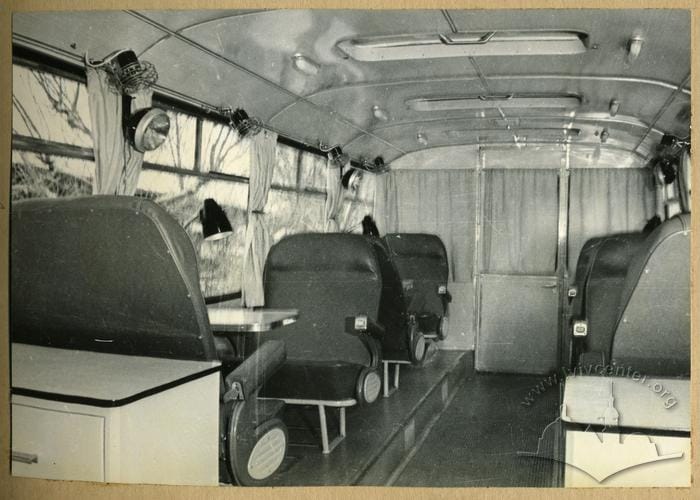
R.: Maybe. But I know that he took all the equipment in that direction. At first, I’m saying, some buses disappeared, then others. And then we basically stopped using those long buses. And there were many different bus models. There were 5, 9, 695, 695N, and 699. Then we had a bus-café, as far as I remember. We assembled them very nicely. They were like mobile buses.
I.: What is a bus-café like?
R.: Well, they served people on the streets. They drove out, supplied, and then stopped — it was like a mobile café. Then there were the one-and-a-half-story buses. We had those, as well as Liners. We had very nice buses, really very nice. Now, I don’t know if anything is left; I just see people walking around. I don’t even have anyone to ask who’s still there. The workshop remained after Persenkivka closed. We used to have three passageways, but now that Persenkivka is closed, I see people coming from Khutorivka. Only one workshop remained there. The assembly line is still there, and one line still operates. I heard that some buses are still running. In the end, he didn’t pay the workers. They went on strike. Thanks to our wise Sadovyi — you can’t say otherwise. Instead of returning the money to the workers, he gave it to Churkin — I heard that. The people were left without salaries, and now many court cases are pending because they still haven’t been paid. I know for a fact that some people are still waiting. They owe 100,000 [hryvnia] people, and possibly even more. The workers still haven’t received their pay. We had another, I don’t know if he’s still alive — I think his name was Pak. He organized those rallies. He was a chief designer, I believe. He was the one who organized it. There were many others, but most have already passed away. I think Pak is still alive, and I believe his daughter works for you on the city council — I recognized her surname. I often see his wife, Slava.
I.: Let’s go back to your childhood for a moment. You said you were born in Sokilnyky and that you and your family lived there your whole lives, right?
R.: Yes, after Poland.
I.: Your parents also worked at LAZ. Did they commute to LAZ from Sokilnyky?
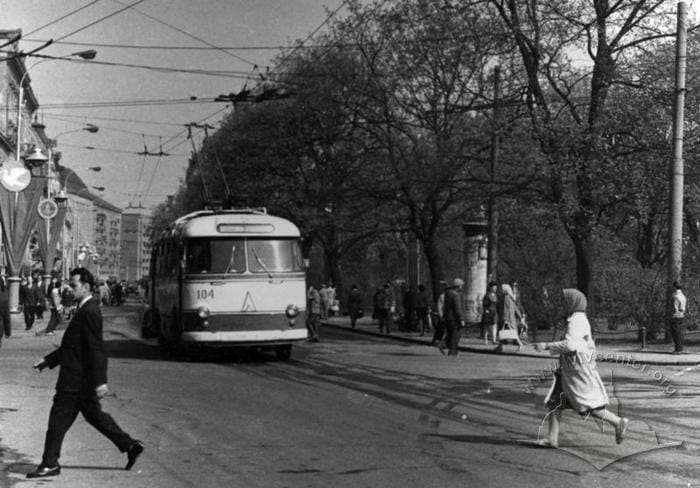
R.: Yes. Half of Sokilnyky worked at LAZ. Really, half of the village. There was hardly anywhere else to go. Back then, there were buses and trolleybuses; people got to work easily. We worked two shifts, sometimes even three, at the factory. My father was a milling machine operator, and my mother worked as a cleaner. My mother died young, at 47. My sister also worked there.
I.: And what did your sister do?
R.: She worked in the housekeeping department. She was like a postwoman; she delivered things, wrote receipts, and delivered them. My husband worked as an electrician, but not for long; he’s passed away now. My children didn’t follow in our footsteps, and honestly, there was already nowhere to go.
I.: How did your parents end up working at LAZ?
R.: Back then, it wasn’t a problem — factories were always hiring. There were many factories then. You could say more than half the people worked in factories. There were no small businesses back then, just factories: Bus factory, Poliaron, Kineskop, and Lvivprybor. Many factories that no longer exist. In fact, the last one, Lvivprybor, is falling apart.
I.: When you were a child, did you often go to Lviv to walk around?
R.: I lived near the bus station, but there was the Park of Culture and Stryisky Park, where we kids could go for walks. We didn’t go to kindergarten; there weren’t any back then. We stayed with our grandparents.
I.: Were there no kindergartens built by LAZ?
R.: Yes, my children went to kindergarten here on Ivan Franko Street. There was one near St. Sophia’s Church, one built by LAZ, and another opposite the bus factory. There was a third one somewhere else, I think at the end of Naukova Street, built by the bus factory. They were all very nice kindergartens, and the attitude toward children was very good. The children were well cared for, and the food was good. My children went to the kindergarten on Ivan Franko Street, which was part of the bus factory—now it’s a gymnasium. I don’t know if they sold it or what. People got apartments; there were opportunities. Both dormitories and apartments. Construction was going well, but when Churkin came, as far as I know, there was a court case regarding the men’s dormitory on Kulparkivska Street. They wanted the city to take our dormitories, but he wouldn’t give them to the people. We have a dormitory at 16 Naukova Street. Then there’s the large men’s dormitory on Kulparkivska Street, on the right side when driving toward Victoria Gardens. I don’t know if they won, but I know there was a court case, and he wanted to evict people and take it away. But people aren’t giving up; maybe they managed to privatize something. I wasn’t that interested. We also have a dormitory opposite Hetman Street, the nine-story one where ATB [shop] is now. That’s ours too; it was a family dormitory.
I.: Did you go to school…?
R.: In Sokilnyky.
I.: Where did you spend your weekends with your parents as a child? Did you go to the theater, for example?
R.: To the Park of Culture.
I.: To the movies, maybe? Other activities?
R.: School took us to the movies. We always went with our school group. We visited museums, as far as I remember, and went to theaters. Back then, buses would come from the theaters to pick up children from the villages. I remember they took us to the park by bus, and we also walked in Stryiskyi Park. Later, as we grew up, we went to the Park of Culture with our parents. There were concerts then. I remember the Green Theater and the swings. It was expensive but still interesting. We also went to church back then. There was already a club in Sokilnyky — not a very good one, but we had it. There were dances, but we didn’t go. We had our own clinic. Now there’s a large dermatological hospital there. Sokilnyky has developed — a large club now exists. I have a house there.
I.: Your parents worked at LAZ, and as far as I know, they often gave out various vouchers to employees’ children. Did you ever go anywhere with your parents from LAZ as a child?
R.: To Dzhankoi. In Dzhankoi, I know there was a base in Kerch, and then a base in Slavsk, in Ruzhanka. It has been sold recently. My children even went there on holiday. Where else did we go? To Odesa. We didn’t have much trouble getting vacation vouchers. At that time, if you had connections with the trade unions, you could get a vacation voucher and go. My children often went to Slavsk.
I.: So that was in the 90s.
R.: Yes, yes. But my children always went there.
I.: When you were a child, where did you go?
R.: Nowhere.
I.: And they didn’t give you any vouchers from LAZ?
R.: No, they did. My dad — well, you see, we were building a house at that time. It was hard. Since we were building, there was no question of going on vacation. Later, when we grew up, my dad and my sister went on vacation. After I became an accountant, I had no problems. I could indulge in every whim if I had the money. My children went to the seaside every year. I worked in good organizations and had a normal social circle. I went to the War Disabled Hospital on its 700th anniversary. So, it wasn’t hard for me to get vacation vouchers — I could get them myself. I had a lot of friends from my studies, and we stayed in touch. So, my children went to the sea every year.
I.: As a child, did your parents ever take you on trips to museums or get tickets through LAZ?
R.: No, but I remember we went on trips after I started working at the factory. We had buses that took us to the forest to pick raspberries, blackberries, and mushrooms. There were picnics, and buses took us there.
I.: Did they provide buses?
R.: Yes, yes. There were buses. People traveled for free. I even took my children to pick blackberries. They were still small, but we went. We got our tickets to Ruzhanka. It wasn’t a beautiful resort, but that was because they had just started operating it back then. Maybe at first it was nice, but then it went downhill, and as far as I heard, it’s private now. My children vacationed there and said, “Mom, when we arrived, we couldn’t believe this was where we came as kids”. In Rudatychi, we also had a pioneer camp. We used to go there and send the children there for vacations, but I never sent mine. The seaside was enough for us.
I.: You said half of Sokilnyky worked at LAZ. How did you communicate with each other?
R.: We were very friendly. People helped each other and always reached out. I can’t say otherwise — we had a good team. People were kinder and maybe friendlier than they are now. They weren’t so bitter. People were curious, and they knew they came to work, got their salary, and their advance payment. There were never delays, maybe a day or two, no more. But when Churkin arrived, they started withholding salaries and then stopped paying altogether.
I.: If you think back to your childhood, what did you dream about?
R.: I don’t know what I dreamed about. I was happy with my parents, good friends, and kind neighbors. I’m not confrontational; I get along well with people. I never thought I would work as an accountant; it never even crossed my mind. But I tried it — my first job was at Poliaron in 1974. It felt like a prison, and it was scary. The discipline was strict. Imagine a 17-year-old trying to cope with that — working two shifts. It was impossible. The factory was dangerous, and now it’s in ruins. I worked there until 1979. In 1980, I started working at a medical facility. The factory was harmful — my blood pressure was dropping. Many people got sick at Poliaron. There was mercury and all kinds of chemicals. Many people died, and young people became ill. I had to leave; my blood pressure dropped sharply at 17. The doctors in Sokilnyky told me to quit, or it could end badly. So, I spent another six months in medicine, trying to raise my blood pressure after Poliaron.
I.: Where did you go to study after school?
R.: I started working at 17. After ninth grade, I took some classes because I wanted to sew — I had the urge to sew. I made clothes for myself and even for friends. Then I went to Poliaron. I graduated — it was like a school at the time, a year and a half of accounting courses, though self-funded. If you wanted to go to a higher level, you had to pay more. So, I studied for a year and a half and took some evening classes. That was real money then. I studied in the evenings. Then they sent you to a vocational school and gave you a referral so you could choose what you wanted. Back then, they didn’t pay much attention to education. I spent my whole life living off those courses. Over time, people usually move on, gain experience, and work hard. Later, people called me to be a production accountant — they contacted me. I took some odd jobs here and there, and when small businesses started, I worked for them on the side. They were just starting out. But now I don’t want to be an accountant. You called me, but I’m no longer interested. Accounting is difficult now, and I’d have to learn everything from scratch. I don’t need it. I have my pension, and my children help me. That’s enough.
I.: Why did you decide to take accounting courses?
R.: I worked hard. I tried working in factories, in production, working two or three shifts. Eventually, I decided to try accounting. I had a colleague who went with me, so we both went. Then we met again at the bus factory — I was hired, and she was already there. She was ten years older than me. She’s still alive, I guess.
I.: Please tell me, did you go straight to the factory to work after school?
R.: Back then, factories, including the bus company, hired minors.
I.: So you could start right after school, without any further education?
R.: Yes, you could. All the factories had vocational schools that trained and recruited young people. For example, you could be assigned to the warehouse, where no special education is required. There were assemblers and millers, and many girls became inspectors. Every factory had its own school. So, a young specialist would join, be sent to the school, and get their qualifications there.
I.: I see. So, you finished 9th grade and went to Poliaron.
R.: I also finished a 2-year evening school after that. So, I finished 8th grade, not 9th. Then I attended evening school for two years and took those courses, since you needed a secondary education to work.
I.: How did you actually get a job at LAZ?
R.: Honestly, it was through connections. You needed connections to get a good job.
I.: Was that in 1989?
R.: Yes, it was. I needed a job and had connections — through accountants and through work — so I came. I didn’t even go directly, but transferred in. They accepted me as they should have. It was a temporary position during someone’s maternity leave, but that didn’t matter to me.
I.: What was the position?
R.: Accountant in the accounting department.
I.: What did that involve, exactly?
R.: Calculating people’s salaries. Each accountant had their own workshop to manage. I was responsible for the seventh workshop, a large assembly area. My job was to calculate the salaries. When that person returned from maternity leave, I had to change my qualification, so I became a production worker.
I.: How did your previous position differ from the new one?
R.: It was easier to be a production worker in some ways. On the other hand, it was also more difficult because you oversaw a large workshop, and all the activities went through you. You were responsible for every document. Calculating salaries and advance payments is one thing. But as a production worker, you were responsible for everything that happened in the workshop. Each workshop had its own accountant who monitored everything — salaries, timesheets, and all departments. The workshop was large. But with time, you gain experience. That’s what being a manufacturer is about.
I.: And how did your life change after you started working at LAZ?
R.: It was fun back then. We had great teams, and we communicated well with each other. We celebrated birthdays, got together, and met on weekends. It was really good. But later, when things changed, people became different. They lost their jobs and their motivation. Back then, there was motivation, which people probably don’t have now.
I.: How long was your working day?
R.: Eight hours.
I.: Did you ever have to work overtime?
R.: Yes, sometimes. Even on holidays, we had to come in, especially on New Year’s or other holidays, to finish up. We had to do our jobs, complete financial reports, and that was quite a lot. I would come in with the economist; we’d do our jobs. At first, we had heat, and it was comfortable. Later, they turned off the water and heating and closed the toilets — that was tough.
I.: Were you satisfied with your salary when you first started?
R.: Not really at first, but salaries increased as we passed certifications and recertifications. We started at one rate, and it increased over time.
I.: For example, could you afford much with your starting salary?
R.: Yes, I could.
I.: Like what?
R.: For example, a trip to the sea cost 9 rubles. Not much! The tickets were more expensive, though. I bought a trip, and we vacationed in the Caucasus — 9 rubles each. For three people, that was 27 rubles.
I.: So, you had pretty high salaries?
R.: Back then, you could buy a lot for ten rubles. My first salary as an accountant was 70 rubles, then it was 80, 85, 90. Accountants in general earned up to 140. I was earning 140 rubles later, which was a lot. My pension was 132 rubles, the highest at that time. Those with extensive service received a pension of 120 or 132 rubles.
I.: Can you describe your typical working day?
R.: I would sign paperwork. Storekeepers would come, I’d write out their requirements, and they’d go to the warehouses to get supplies. Afterward, I looked after the workshop, walked around, and checked on things. If there were issues, I’d check my own warehouses too. There was always work to do; I couldn’t just sit around. I had to go to the accounting department. Our workshop accountant sat in the workshop, and the central office was at the main entrance. We went there to hand in documentation. There were also meetings we attended. As for discipline, you could leave at any time. The workers handed in their passes in the morning and picked them up in the evening, but we had free entry and exit.
I.: So, as a workshop accountant, you also supervise the workshop’s work?
R.: Yes, that’s right.
I.: Did you inspect what, how, and why?
R.: Yes, I had to see what was happening in the workshop. Defects had to be written off, and any emergency was reported to the accountant. We also received products for the workshops. The accountant was always present — someone was assigned to that. People also took some items from the workshop home and traded them.
I.: Did people trade those products elsewhere?
R.: No, they just took them home.
I.: Just home?
R.: Yes, they bought them for themselves. In hazardous workshops, people received milk. There was always work.
I.: Did you like your job at LAZ?
R.: I got involved, and I liked it. It was my bread and butter — I had to feed my family and give my children a proper education.
I.: In Soviet times, the factory had various production plans. Did you still have any plans to fulfill in 1989–1990?
R.: Yes, we did.
I.: Tell me about that.
R.: We had once to produce a thousand buses a day.
I.: Wow!
R.: Those were really big plans. We worked hard. People worked in three shifts. There was motivation because people knew what they would earn. Now, those who stayed — mostly young people — work at other factories and have normal pensions. I have a classmate who now works at Electron. He has a pension of 3,600 [hryvnia] as a worker. He’s glad he had the opportunity. He worked in the Boryspil factory, then another factory, then Lutsk, and now here. I still meet people I know.
I.: Was there ever a time when the factory didn’t fulfill or exceeded its work plan?
R.: We always tried to fulfill the plan. Those were orders, and everything was done according to plan. If there were orders, we had to complete them. If you signed a contract for a certain number of buses with a deadline, missing that deadline was not an option. It had to be done. There was no question. Once part of the payment was made, you were motivated to get the job done. People worked in three shifts — first, second, and third — to meet the targets. Life was better then, and the buses kept running. I remember when Kuchma visited the factory, and after his visit, things started to fall apart. Yanukovych also visited, but by then, things had already changed, and it wasn’t the same.
I.: How did factory workers feel about the buses?
R.: People were responsible and took their work seriously.
I.: Did you like the products?
R.: The buses were beautiful. It breaks my heart that they’re gone. When they drove out through the gate, it was like a fairy tale. Watching them being released through the central gate was a pleasure. People had jobs, we drove those buses from city to city, and the test runs went well. There were no defects — people took pride in their work and were never careless. It’s a pity, I truly regret that the factory is gone.
I.: Did you ever go on business trips?
R.: I tried not to, because I had children. When Churkin bought the factory, he wanted to send people on trips, and those who could went, but I had no one to leave my children with. My elderly father-in-law was disabled, so I had no choice.
I.: Can you describe the workshop system and how the factory was organized? Did you have a direct supervisor?
R.: There were deputy directors — one for construction, one for production, one for sales, plus a chief accountant and their deputies. The deputies handled accounting, business trips, and production. There were four deputies when I arrived. Kudinov was the chief accountant, and Maslak was the director. I came after Maslak. Each workshop had a foreman — the top person — and his right hand was the workshop accountant. There were also deputy foremen, technologists, inspectors, a dispatch service, and a planning service. Some workshops had an accountant-economist position. In large workshops, both an accountant and an economist were required.
I.: What was your relationship like with your supervisors, the chief accountant, and the director?
R.: I was satisfied with how they treated me. They were kind, and I never had problems with them. My job was nice. If needed, I could always get help from the trade union committee, whether I needed assistance or faced trouble. For funerals, we had funds that provided help. Everything was handled by the factory; they made the coffin, the crosses, everything. There was a special woodworking shop that provided materials and a bus if needed. Some contracts included a clause that if a worker left and later died, they’d still receive funeral assistance and a bus. Or you could just borrow a bus for a while. I even helped many neighbors this way if someone died in their family.
I.: You mentioned strong relationships within the team.
R.: Our team was great. In my workshop, we got along well. Later, the accountants were consolidated into a single office, but everyone kept their own responsibilities and workshops. Some days, I’d go to my workshop in the morning and return in the evening, checking on things and reviewing documentation. We conducted an inventory every year on the first of November — everything was counted and recorded, and debit and credit were calculated.
I.: Where were your colleagues from? Were they all from Lviv, or were some from outside?
R.: Many were newcomers, but there were also people from Lviv. And those who became Lviv residents upon receiving apartments. More than half received apartments, and there were many from villages as well.
I.: You mean nearby villages?
R.: Yes, if people came from elsewhere, they were given dormitories. We had separate dormitories for women and men. At that time, any factory provided dormitories — three or four men to a room, but no one was left on the street. If you arrived with nowhere to stay, you were immediately provided with accommodation. Later, people got on the waiting list for apartments and eventually received one. There were also family dormitories. If you had a family, you got a family dormitory. We had a real dynasty there. Husband, wife, children. There could be five families under one surname, as they say. Half of the workshop could have the same surname.
I.: Wow!
R.: Yes, there were real dynasties — children, parents.
I.: What language did you speak at the factory?
R.: All the documentation was in Russian at first. When Ukraine became independent, we had to redo all the documents in Ukrainian. We mostly communicated in Ukrainian. If customers came from Russia, we spoke Russian, but in the office, we used Ukrainian among ourselves.
I.: Did you notice any difference between visitors and locals?
R.: No, not at all. Everyone was normal. There was never any hostility or tension. As they say, we shared a piece of bread in the office. We never had conflicts. Work was work — at work, you had to behave and not make a scene.
I.: How many women were there at the factory compared to men?
R.: Fewer women — a minority. There were more men because we had workshops, and only men could operate the machines. The work there was very hard. Women didn’t do welding or heavy lifting for the buses. But our job was still quite hard. The machine work was tough — standing all day and working with iron.
I.: Where did most women work?
R.: Most women worked in the warehouses, where there were easier, sitting jobs. Some had such jobs in the workshops, like knitting mesh, sewing, or woodworking. Half of them sewed covers. Very few women worked at the machines — mostly men and young people did. Guys came from the army, knowing they’d get a dormitory and might eventually get a house. There were a lot of them. In my workshop, I had a young team — most were younger, with just two or three older men.
I.: Were there any women among the management?
R.: No, not in management.
I.: What did the women do?
R.: Mostly, women worked in our planning and accounting departments. There were a few men, but it was mainly a female team. Managers could be men, but otherwise, it was mostly women.
I.: What could you be reprimanded for?
R.: Reprimands were rare back then. They weren’t given often. If you made a mistake, sometimes the cost was deducted from the person responsible. If the mistake could be fixed, it was reworked; if not, an amount might be reduced. You could be reprimanded for skipping work, but usually, you’d just get a warning. Being drunk at your desk or workbench—that happened sometimes.
I.: It did?
R.: Yes, it happened. The shop committee would meet and speak with the person. They’d get a chance to correct themselves, but if it happened again, they’d be fired. That’s how it worked. We didn’t drink at work; if we wanted to, we’d go to a café.
I.: What about personal conflicts? Say someone was rude or started a fight?
R.: That was rare.
I.: But if it happened, how did you manage to solve the problem? Did you talk to your supervisors, maybe?
R.: If it happened, we settled it on the spot. Anything can happen — there were men, some quick-tempered. But it was never taken outside. As they say, “Don’t take your trash outside”. Problems could be fixed.
I.: Did you discuss family problems at work?
R.: Sometimes, of course. Everyone has problems. When my father-in-law was sick, my colleagues knew I’d rush home if needed. I called them to say that the ambulance was waiting. Of course, I ran home. Or to the hospital, or my child was sick. I came in, signed the paperwork, and ran. Then I ran back to my work. Well, what else could I do? There had to be some way out.
I.: Did your superiors interfere in family affairs?
R.: No, the boss was understanding. Everyone knew we all had families. We helped each other — if someone was in trouble, we collected money and helped. No one was abandoned.
I.: As you have experienced life in the Soviet Union, could you tell me if you had to be a party member during the Soviet times at LAZ?
R.: No, it wasn’t required. You could join the Komsomol or not.
I.: No one checked?
R.: No, absolutely not. Joining the party was up to you. It was not a must. Those with a party card got better jobs, higher salaries, and benefits, but I didn’t feel the need to join. I realized that the Komsomol was enough for me.
I.: I see. Were there any meetings or political briefings at the factory?
R.: We had a briefing every morning at eight o’clock.
I.: What were those like?
R.: The boss, the accountant-economist, and the foremen would gather and discuss what was needed for the day. Everyone was assigned a task.
I.: What kind of tasks?
R.: For example, if a certain bus was coming off the production line, they’d say what needed to be delivered and in what amounts. Each foreman would write it down.
I.: So, was it mainly about production?
R.: Yes.
I.: Was there ever any political information shared?
R.: No, nothing like that. We had concerts at the factory, and popular ensembles would visit us. There was an open stage and lunchtime concerts.
I.: You mentioned a daily quota.
R.: Yes, everything was planned.
I.: Were there other meetings? How often did employees gather, and what did you discuss?
R.: We rarely gathered everyone. That was not the thing. Only if there were changes to discuss would we meet in the workshop. If we received goods, the foremen would announce it, and people would come to take or buy what they needed. The gatekeeper no longer checked because she knew people were carrying products. We could buy potatoes, tomatoes, cucumbers — everything was brought in. People even collected different produce and delivered it to homes: they had the surnames of the ones they needed to deliver it to.
I.: Did you have a board of honor at the factory?
R.: Yes, we did.
I.: What was it like, and what did it offer?
R.: First, those on the board received higher salaries, but very few made it there.
I.: Did party membership help you get on the honor board?
R.: No, any regular worker could be on it.
I.: For what reasons?
R.: For proving themselves, exceeding targets, good behavior, or long service, like working for 30 years. A young person might not have as much experience.
I.: How did colleagues react to those on the honor board?
R.: I don’t think anyone really reacted. If a person worked well, they were put on the board — no big deal. There was no distinction; everyone was treated the same. Simple mortals, as we would call ourselves back then.
I.: What were bonuses given for?
R.: For exceeding targets, there were always bonuses on March 8 for women and Army Day for men. These were the days of celebration. There were also bonuses for New Year’s, health improvement, vacations, accidents, or deaths. The shop committee would meet and decide the amounts; each shop had its own funds. There were always bonuses, even monthly ones.
I.: Did you have a factory newspaper?
R.: Yes, it was called Bus Builder. We had our own staff and paper, which circulated among us. People could send greetings to each other, and there was a connection throughout the factory. At lunchtime, we’d send birthday greetings. We could order them and send them personally.
I.: How did that work — was it by radio?
R.: Yes.
I.: That’s very nice. Tell me more.
R.: We had our own newspaper to take home. We could congratulate someone on their birthday by calling and placing an order. We had our own telephone station to send congratulations to the entire factory.
I.: That’s right, it was like a radio room.
R.: Yes, exactly.
I.: And what did the newspaper write about?
R.: It covered everything about production and people — what a worker was known for, birthdays, and even poems. Some workers wrote poems that were published in the factory newspaper.
I.: That’s nice.
R.: Those were the times.
I.: Did factories ever have friendships with other factories?
R.: Yes, there were partnerships.
I.: Can you tell us about that?
R.: Every factory was connected in some way. For example, we didn’t make some details for buses here, but another factory did, so we exchanged products. Some made other things, and we traded. We received many supplies from Russia. After the collapse, supplies stopped, and we had to rely on local Lviv factories. Before, everything was connected — parts arrived by train, engines from one city, other components from another.
I.: What was it like working at LAZ? Did you feel safe?
R.: It was completely normal. We went to work as if it were a holiday.
I.: If there were accidents at the factory, were there medical facilities?
R.: We had a large medical center with a full staff of doctors. Different doctors. We could get all our medical exams done at the factory. People would come to us, and we handled the exams right there.
I.: That’s impressive.
R.: It was a big polyclinic in its own way. We had our own ambulances and contracts with Lviv ambulance services. If something happened, they’d come right away. We also had contracts with Chekhov and Topolna hospitals, so people were sent there when needed.
I.: Did you know LAZ production could be harmful?
R.: Yes, we knew. Workers were compensated for harmful work — they got extra pay, milk, earlier retirement, and higher wages. If they worked overtime, they were paid for it. Regular medical exams were required.
I.: Did you talk to each other about environmental harm or city dangers?
R.: No one thought about that then. All factories polluted, and each had its own emissions. It wasn’t an issue at the time.
I.: Do you think this affected your health or your colleagues’ health?
R.: Very much so. Many people I know, especially those from the workshops, complain about joint pain from inhaling fumes, pressure issues, and troubles with their legs and arms. Many died young.
I.: Was it possible to take things from the factory?
R.: You mean stealing?
I.: Yes.
R.: It happened.
I.: What happened then?
R.: Orders were issued, and deductions were made from wages.
I.: How did colleagues treat such people?
R.: They discussed it at a meeting to decide on dismissal or a warning. Usually, there was a warning first — if the person apologized, they stayed. You couldn’t simply fire someone; you had to consider their family. But back then, people had stable salaries, so there was little need to steal. If they were sure to get a decent salary and an advance payment, they didn’t need to steal. Life was easier, prices were lower, and we had our own stores at work. Dairy products could be bought during working hours.
I.: Right at the factory?
R.: Yes, you could buy things right at work.
I.: Were prices different from those in the city?
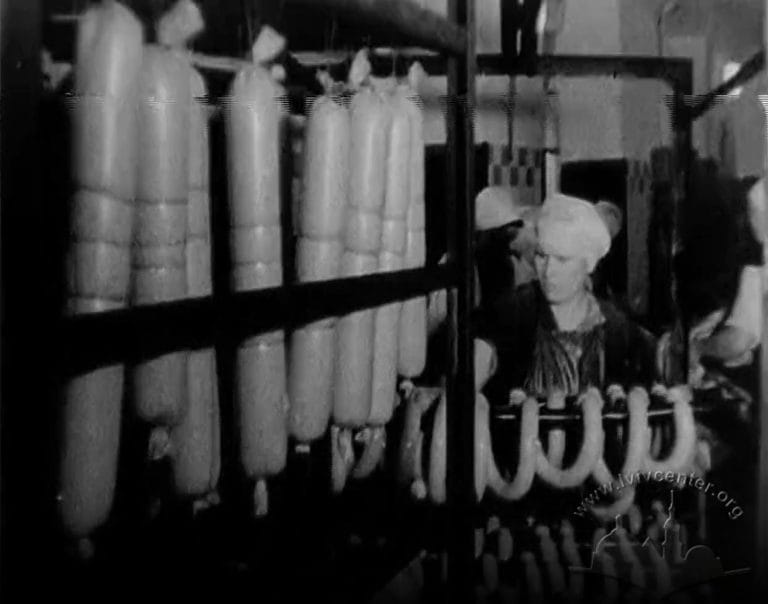
R.: Yes, there was no extra markup. It was cheaper. You could get some bread and rolls to take home. It was easy. You could buy sausage products at the factory without leaving the grounds.
I.: Great. What about cafes?
R.: We had cafes, yes.
I.: What about the canteens?
R.: Certainly, one large canteen, or maybe even two, and many cafes. But we called them the cafeteria back then. You could have lunch, but there was a time limit. Most workers brought their own food, ate in the cloakroom, or ate in special rooms. People would sit at the table and eat. Few used the cafeteria unless they were pressed for time. We usually brought food with us. The kettle was always hot, so we would eat some sandwiches here and there.
I.: Tell us about your commute from home to work. What did you see on the way?
R.: I walked there on foot.
I.: Was it easy?
R.: Yes, I walked.
I.: Where did you live?
R.: At the end of the fourth block, near the technical railway school, on Ivan Franko Street.
I.: Did you move from Sokilnyky?
R.: I was already married and lived at the end of the fourth block on Mushaka Street.
I.: So, you’re from Mushaka…
R.: Yes, so I went via Ivan Franko and through Persenkivka, by trolleybus. There were no problems — trolleybuses, trams, and buses ran until 1 a.m. It was not an issue getting to and from work.
I.: Was there organized transport from the factory?
R.: Yes, buses took people from the villages in the morning and brought them back in the evening, and for the second shift. Buses were assigned to villages. It brought people to work at 6 a.m., and then back home. Another bus would bring people for the second shift. Some buses went to Zhovkivskyi district, and drivers stayed overnight. Our LAZ buses were used for that. The fare was minimal. If someone arrived, they’d submit a statement, and we’d deduct the travel cost. If someone got sick, they’d bring a doctor’s note, and I’d record those days off.
I.: If you were to remember the factory grounds now, how would you describe it?
R.: The factory was very beautiful. There were flower beds, everything was tidy, and everyone looked after things. We had community workdays to keep everything clean. The workshops were spotless, everything was washed, and there was real discipline. There was never any mess — not like now. The entrance hall today is awful compared to what it was back then.
I.: If you were to draw a map of the factory, what would it look like? Where were the workshops and administrative buildings?
R.: I’d stick with how it used to be.
I.: Can you describe what it looked like? When you entered through the gate — which gate? From Persenkivka?
R.: No, I could enter anywhere, but we always carried our passes. People came early and handed in their passes at the workshop; a timekeeper collected everyone’s passes. But ours weren’t taken away.
I.: When you entered, where did you go? What was your route?
R.: Straight to the workshop. Sometimes to the central accounting department if needed, or I’d walk around the workshops. There were a lot.
I.: How many workshops were there?
R.: Let’s see. There was an assembly shop 7, then workshop 24, the repair and mechanical center. Workshop 3 was mechanical; workshop 5 was DOT. Workshop 6 was the foundry. Workshop 7 was a large assembly, and Workshops 8 and 9 were for diesel buses. What else? There was a bodywork shop, a small stamping workshop, a reinforcement workshop, a railway workshop, and a construction workshop. It was so long ago, I can’t really remember it all… We had a large electroplating workshop. There was even a factory sauna. People used to go there.
I.: When did people use the sauna?
R.: Mostly after work.
I.: Were there showers?
R.: Yes, in the workshops. People could wash with hot water, but their hands often stayed greasy — laundry soap and soda didn’t clean them well.
I.: Walking home from work, did you stop anywhere?
R.: Sometimes I’d stop at the shops to buy a few things, maybe during lunch. But I didn’t go often because I needed to work.
I.: Could you draw a diagram of the factory?
R.: Yes, no problem.
I.: Here’s a paper and a pen.
R.: The central entrance was here. On the right, as you entered, was Workshop 7 — assembly. Buses and finished products came out there. Then the woodworking shop, the foundry, and workshop 24, repair and mechanical. The NEEW [ЦНО] was here too.
I.: What is NEEW [ЦНО]?
R.: The non-standard equipment workshop [цех нестандартного обладнання]. Opposite the woodworking workshop was the construction workshop. What else was on that side? Behind the repair was a large canteen with a telephone and radio. Designers were on the second floor, then the cloakrooms, and a large clinic. There used to be a fountain outside; now there’s a road. Other workshops moved there. I’ll show you the right and left sides. And the gate entrance…
I.: Was it from the side of Stryiska Street?
R.: Yes, the gatehouse was at the Stryiska Street entrance. On the left after entering were departments, then a large bodywork shop, followed by a road, a stage for concerts, how do you call it?
I.: The club?
R.: No, the club was further away. That stage was on the very street. There was a ramp, cranes, and a railway line. Then what? The management was at the central entrance in a large building that’s now falling apart. There were our management and cloakrooms for the bodywork shop. Past the road was an automatic workshop, opposite the clinic, then workshop 16, the electroplating shop, and passages near it. Then the mechanical shop, and behind it, the SSMS [ЦМЛШ] — small sheet metal stamping. Then the reinforcement shop, and another large assembly. Opposite the assembly was the large railway workshop. Buses were delivered there — sales happened on platforms where all the finished buses were kept for dispatch. Past the workshops, there was a road. The ramp was behind, then this road and the warehouses.
I.: What kind of road is that?
R.: The passage, the road.
I.: On the factory territory?
R.: Yes, there were warehouses. Wait, what was the name of the workshop where I worked? The road near the mechanical shop led to the filling station, the transport workshop, and dormitories — there’s a big one on Persenkivka, still standing abandoned. The road from the gas station led to the machine counting station for paperwork. There was a club here, and now there’s a court case because a church that used to be here burned down. Behind the club was the factory and an institute; the bus factory had its own institute.
I.: Is it a research institute?
R.: Yes. It researched buses. It was ours. What was it called? Well, there were those departments I worked in — the Reserve Funds department [or NZ, from Russian “неприкосновенный запас”]. Those were the NZ warehouses, so if there was a shortage at the factory, we had everything there. Those warehouses were scattered throughout the factory. There was metal there, some components. For example, something was needed for an emergency, but it wasn’t in the supply. So, they took it from the NZ warehouse and then returned it. When it arrived, they returned it. So, there was another road here. That’s Persenkivka. Now, from that side, there was a right and a left, so there was another gate on the right side, which was Khutorivka. Here is Khutorivka, here is Persenkivka, and the central one. There was another gate where the bus stop is now, but only management used it. Ordinary people didn’t go through that gate.
I.: I see. Thank you very much. That’s very valuable. I also wanted to ask, did you have any secret departments?
R.: Those were NZ warehouses I mentioned. We submitted reports to Kyiv. We also conducted an inventory there, and those warehouses were kind of frozen. We had them in case of war or some kind of disaster. If it was not possible to bring anything in, then those NZ warehouses were opened.
I.: What did you keep there?
R.: We kept everything. We kept everything we had at the factory. From the metal to everything that was used to build a bus. And I had storekeepers in those warehouses. And we opened and closed those warehouses. And we handed them over to security. And then those warehouses were looted; they are gone now.
I.: Did you sign non-disclosure agreements?
R.: There were agreements. We had agreements, and our documents went through Kyiv. We actually signed a contract. Well, what was there to disclose? We had a manager, Hryhorii Hryhoriyevych, a retired colonel, and he was really nervous about it. I had the honor of working with him in that secret department. It was the first and second departments at the factory.
I.: And, let’s say, did anyone from the KGB come to you to check those warehouses? To you personally, in the secret department?
R.: No. Everything was frozen. We handed over the warehouses to security and rarely opened them. Only when necessary. We took them under guard in the morning and handed them over in the evening. No one ever broke in. You couldn’t remove anything because the items were too large. Everything produced at the factory, except buses, had to be stored in the regular warehouses. Not in those NZ warehouses.
I.: That’s very interesting. I also wanted to ask about housing. Were you personally provided with housing by the factory?
R.: No, I didn’t need it, I had my own.
I.: And you lived on Mushaka?
R.: Yes, I had a house, which I sold and bought this apartment.
I.: And how about your surroundings, were you satisfied with the shops and parks?
R.: There were no problems back then.
I.: How did you feel in the neighborhood? Was it comfortable? Was there anything you lacked?
R.: There were no problems. Well, it was difficult to get food in those days. I’ll tell you, there were queues for food. If you wanted to buy meat in the shops, people queued up after six o’clock for butter. Because they didn’t give it out, and they only eventually gave out two bars. Well, there was mayonnaise and condensed milk. But coffee, especially, was in short supply. Buckwheat was also in short supply at that time. But I had a disabled father-in-law, so it was easier for me. We had a store for people with disabilities, and I always got my supplies there. We had a monthly ration.
I.: I also wanted to ask, when you were walking home from work, where did you stop on the way?
R.: I could go to Stryiskyi market.
I.: Anywhere to go for a walk, a café, or something like that?
R.: If the children were in kindergarten, you couldn’t really go anywhere. Because you had to pick up the children at six o’clock. So, I could only go out on weekends.
I.: And this kindergarten was from LAZ. Please repeat, where was it?
R.: Ivan Franko Street.
I.: Alright.
R.: Where the Sophia Church is.
I.: So you left work and you…
R.: Well, I tried to buy something for myself during breaks, to buy groceries, and I went to pick up the children from the kindergarten. It was close to my home, so I could take them there. Later, they went to school. The school was across the street, which they’ve already closed, if you know. And then I transferred them to school number 27. The previous, the 14th, was across the street. And that one was a little further away. But later, I no longer needed to take the children to school [because they grew up].
I.: Did you have any amateur performances at the factory?
R.: We had a choir called Chervona Kalyna.
I.: Did you attend that choir?
R.: No, I didn’t have time for that.
I.: Did you participate in any amateur activities?
R.: No, no, I didn’t have time, there was no opportunity. Work, home, children. My father-in-law needed help. The garden had to be planted.
I.: And did this choir perform anywhere, give any concerts?
R.: Yes, they traveled around the region. Even Bilozir performed in our choir, Oksana, just so you know. And she rode a bus at the bus factory — Avtopohruzchyk.
I.: Did you go to the club at the factory, and were there any concerts there?
R.: I had friends.
I.: Any meetings?
R.: I had friends at the club. In terms of the club [premises], we would rather have some factory meetings there, as they brought us together there. But with friends I would meet outside, near an open stage. All our concerts were on the open stage.
I.: Were there any dances?
R.: I know, before my time, I heard they gave tickets to the Opera House, to Zankovetska, for New Year’s Eve. They celebrated anniversaries there. They didn’t do that at the factory. They gave referrals.
I.: Free of charge?
R.: Free, yes. And they gave tickets to the theaters. They gave out theater tickets at the factory. They gave the children circus tickets. To the circus, to the philharmonic at that time, the Opera House, Zankovetska. New Year’s for children. And there were gifts for children every year.
I.: What holidays did you celebrate at the factory back then?
R.: Well, there was Army Day, Women’s Day, and Bus Builders’ Day. What other holidays did we celebrate? I don’t really remember anything else.
I.: Did you get along well with your colleagues? Did you go out together, to a cafe or something?
R.: Yes, we did. We celebrated birthdays. When someone turned 50 or 40, we would meet at a cafe or restaurant. We would meet and get together.
I.: What places in Lviv did you fancy?
R.: It’s hard to list them all, hard. We socialized, well, we could meet at home, if someone was celebrating their birthday in their apartment, we would go there to congratulate them. I can’t list all the places. More than half of the meetings took place at home. Not everyone could afford to go to a cafe.
I.: Were there any sports teams from the factory?
R.: Yes, there were. We had our own teams, and they won prizes.
I.: What were they?
R.: I don’t even remember anymore. I know there were sports teams.
I.: Did you go to watch them?
R.: There was basketball. Opposite my workshop, there was a basketball. They always played there.
I.: So, did they play basketball at the factory?
R.: There was a special enclosed court. Everything was as it should be.
I.: Wow. A special court right at the factory?
R.: Yes, yes. You could play during lunch if you wanted to. There were benches at the factory, so if you wanted to, you could go outside near the workshop and sit on one. You didn’t have to sit in the workshop. There were special areas where people could sit and relax.
I.: Cool, there was a basketball court, that’s very interesting.
R.: And there was a sauna.
I.: Besides basketball, were there any other sports activities?
R.: I don’t remember anything else. I know there was basketball.
I.: Did you and your colleagues go to any sports tournaments?
R.: I saw it through the window from my office.
I.: And, for example, if it was a weekend, Saturday and Sunday, where did you spend your time?
R.: Well, on Saturdays, I went to Sokilnyky to help my father in the garden. My father was alone; my mother was gone. My sister had moved out and got married. She lived with her mother-in-law. So, I went to help my father. I did laundry and cooked for him. Well, at weekends, we went to the park, and my father came to me. So we went to the park, walked in Stryiskyi Park, and the children played on the swings. We went outside, usually. I had a mansion and everything in the yard. And friends came to visit me there as well.
I.: Is it the one on Mushaka?
R.: Yes, you should have seen it there. It’s one of the two houses on the right side.
I.: Well, I’ve been to Mushaka, yes.
R.: Well, there’s a light green house. I used to live there.
I.: And, let’s say, did you go to demonstrations during the Soviet Union from the factory?
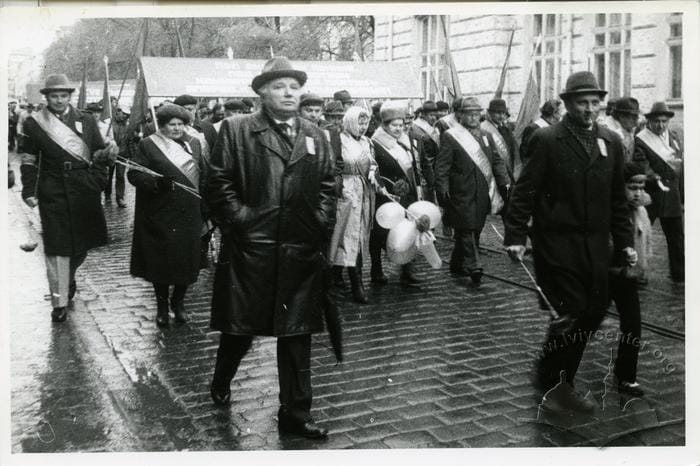
R.: Yes, we did.
I.: What was it like?
R.: Very interesting, very interesting.
I.: Tell me about it.
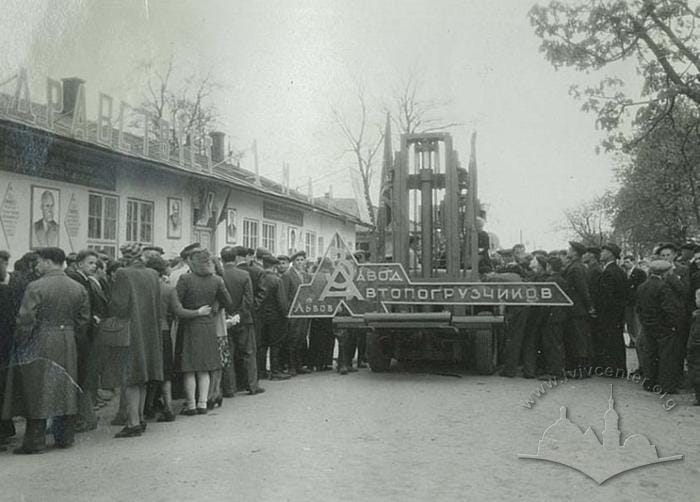
R.: It was very interesting. We were given a bonus of ten rubles. That was quite the money. I went there even back in the Polarion days. We were given a 10-ruble bonus.
I.: Was it for participating in the demonstration?
R.: Yes, yes. We took our bonuses and carried banners. After that, everyone went their separate ways. But we mostly sat in cafes.
I.: So that was after the demonstration?
R.: Yes.
I.: Please tell me how everything started to decline in the ’90s, all those difficult times…
R.: First of all, people were left without salaries. In the 90s, we were still doing okay. In the ’90s, we were doing well — the bus factory was, too.
I.: Until when?
R.: Until around 1997. We were doing fine. Around 1997, we started to fall apart. In 1998–1999, only a few people were working, and in 2000, we were bought out. And then everything started to change.
I.: Please tell me, you were there during those years, the turning point of the ’80s and ’90s, when privatization was taking place in manufacturing?
R.: Well, when I came there, the factory had already been privatized.
I.: Did you start working in 1989?
R.: In ’89. You see, how was it? Only the buildings were privatized; the land remained city property. Churkin only bought these buildings, and the rest, the land, all belonged to the city.
I.: But in 1989, the Soviet Union still existed.
R.: Yes, yes. In 1991, it was already Ukraine.
I.: Yes. And total privatization began after Ukraine became independent?
R.: I don’t even remember, I can’t tell you, and I don’t know. The looting and privatization began. Robbery. But the factory was nice. What they did to it is just painful. Ruins. To let our government take it away like that. Churkin bought many things, not only the bus company. He bought the Mykolaiv Shipyard. The ship repair yard. But he didn’t succeed. Because the people rose up there. And our people kept quiet. People just needed to rise up and not let them take it away. They should have closed the gates, removed the rails, and he wouldn’t have been able to take anything away. Maybe something would have been left. But now all our equipment is in Russia.
I.: So, you said that they took everything from the workshops en masse.
R.: The mass removal — the theft — began.
I.: And in what years exactly did this happen?
R.: Well, I’ll tell you, they started taking them away in 2010, even in 2007. Little by little. They took some away, then some more. People were leaving because there were no salaries. Mass layoffs began. If a workshop had a certain number of machines, half of them were gone. And production volumes decreased. If there were several bus brands, only one remained. Whether it was a trolleybus or a bus. Well, assembly, you come to Workshop 7, and there are crows flying around, and it’s falling apart. Even before the assembly, there was a Tire Testing Facility (TTF). It was the first to move to Riasne. That workshop, when you drive by, you see the gate, and on the other side is Stryiska-Naukova. That was TTF — Workshop 1. There’s a building next to it if you’re driving. That workshop was the first to move out. Oh, and we also had… Wait, wait, wait. I just remembered, we also had another workshop, it was the last one, and they demolished it. There’s a building there now.
I.: Modern?
R.: Those houses are gone now. That workshop also moved to Riasne. The Hydraulic Engineering Department.
I.: It moved to Riasne?
R.: Our premises are there. It was supposed to be there, the foundry, TTF, and the hydraulic workshop were supposed to move there.
I.: Where exactly in Riasne?
R.: I think if you go to Riasne, on the left side. It’s there, that’s where they were supposed to be. Our premises were unfinished, but they were later built. So, the Hydraulic Engineering Department and the TTF moved. But I heard that the Hydraulic Engineering Department was stolen, that it’s gone. There were numbers 1 and 2. Workshop 1 and Workshop 2. It’s hard to remember all that through the years…
I.: How do you remember your own work experience? How would you evaluate it? What did it give you?
R.: Well, first of all, a lot of practice, experience. And it hurts, more than anything else. It hurts because you see it yourself. People could be working and have jobs. But what now? Now there’s one building, one construction site. Nothing else.
I.: How do you feel about the fact that part of the factory is now being built up with residential complexes?
R.: By the way, the central gatehouse, that building you pass by when you drive through the gate, the tax office took it over and fined it. As far as I heard, it was because they didn’t pay taxes. And now, as you can see, they are renting it out and building something on the first floor. There are many things there now. And on the other side, the second part of that building, from the Stryiska-Naukova street side, was bought, so they started glazing the windows there. At one point, they said there would be an entertainment center there. And now it’s frozen again.
I.: Do you tell anyone about your experience working at LAZ, about LAZ in general? Your children, maybe your friends.
R.: My children came to visit me. They came to visit their mother, and I took them to the factory, where they sat with me in my office. When they needed to go to the dentist, I took them to the factory dentist. So, they grew up at the factory.
I.: Do you ever dream about the factory?
R.: Well, I rarely dream about the team because there are so few of us left. We call each other, those of us who are left. We’re on Facebook, and we communicate now.
I.: That’s nice. Tell me, please, did you have a museum at the factory itself? A factory museum.
R.: Yes, there was.
I.: Where was it?
R.: I know it was there, but I can’t remember where. There was an exhibition of our buses there; they were parked there. It was on the Khutorivka side. There were warehouses there, and our buses were parked there. And sometimes, when there was a bus builder holiday, they would drive around the city and advertise our buses. And then it was all gone.
I.: Was there a staff photographer who took pictures?
R.: Yes, we had them. We had our own photographers.
I.: Can you remember who they were?
R.: It’s been years. I didn’t communicate with them, I’ll tell you that. We didn’t need to communicate with them.
I.: I would like to fill out a short questionnaire with you. What is your date and place of birth?
R.: September 9, 1957. Sokilnyky, Lviv Oblast, Pustomytivskyi Raion.
I.: I understand you moved several times?
R.: Well, I lived on Mushaka Street. It was formerly 30 Years of Victory Street. Then it became Mushaka-Sventsitskyi and Lemika Street. I lived there for 20 years.
I.: From when to when?
R.: From 1980 to 1999. I sold that apartment and moved to Enerhetychna Street. I’ve been living here for 21 years now. My children live here — my son lives with me; my daughter lives separately.
I.: When did you finish school and take those courses? When you studied a little, what years were those?
R.: I started the courses in 1978. And I finished in 1980. Maybe even in 1981, because there were some holidays.
I.: And when did you get married?
R.: In 1980.
I.: When did you start working at LAZ?
R.: In July 1989.
I.: And in what years did you change positions?
R.: Right away in 1980. I would have started in 1979, but the person in my position left only after the New Year.
I.: At LAZ, I mean. Did you start working there in 1989?
R.: I was there since 1989, but in 1990, someone returned from maternity leave, and I had to change jobs. I became a workshop accountant. Before that, I was an accountant in the accounting department.
I.: And when did you leave your job?
R.: I quit in 2012. What month was it? I think I quit in February. I was registered with the employment service until September. And then I applied for my pension in March.
I.: Thank you very much.


The interview published here is part of the project “Un/archiving Post/industry”, implemented in 2020 – 2021, with the aim of collecting surviving industrial heritage materials from Lviv and Donetsk regions, and establishing a dialogue between generations, regions, and institutions. In 2021, biographical interviews were conducted with employees of the radio-electronic, machine-building, processing, light, and food industries of Lviv. The processed materials were included in the collection of oral narratives “Industrial biographies of the city”. The collection recorded the memories and reflections of respondents about their childhood and family, the city, education, work, and society, starting from the 1950s.